Seville - Field Report
Seville, Sunburn, and the Square Negative: A Field Report from the Streets
I arrived in Seville with two cameras and the quiet confidence of someone who has watched far too many documentaries about “light.” In my bag: the 6x9 Texas Leica, a device roughly the size of a medieval brick, and my Hasselblad, which carries itself like Scandinavian royalty. I told myself this would be a disciplined street-photography trip. Minimal gear. Clear intention. Quiet observation.
Seville responded by laughing softly in Andalusian.
The city does not do minimalism. It performs. It glows. It arranges shadows theatrically across tiled facades as if it had a lighting technician hidden behind every orange tree. And I, noble pilgrim of film, was merely trying to keep up.
Plaza de España
If cities had egos, this square would require its own assistant.
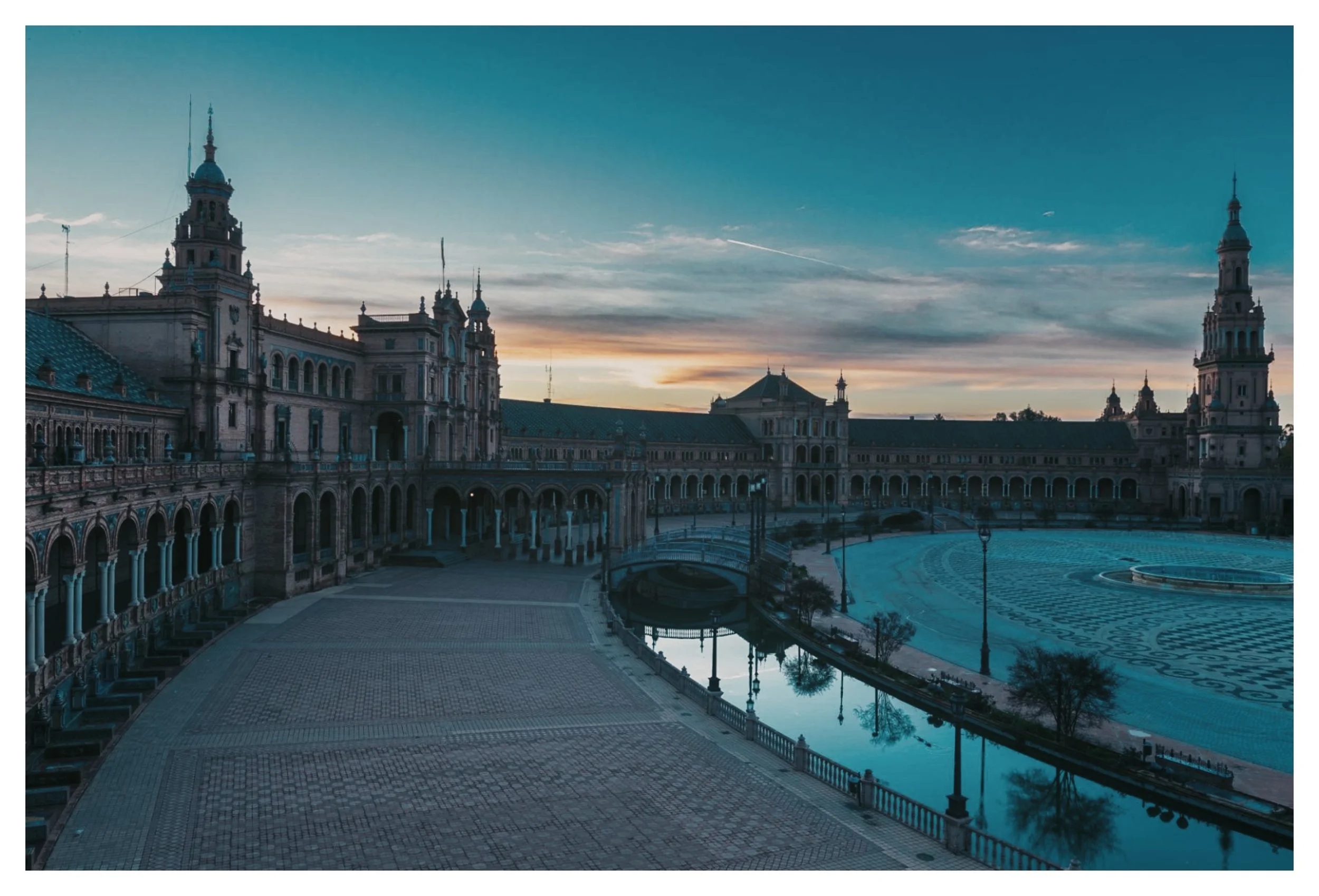
I arrived early, hoping to catch that calm, golden hour where architecture pretends to be humble. The Texas Leica came out first. Nothing says subtle street photography like unfolding a 6x9 rangefinder the size of a paperback novel about existential dread.
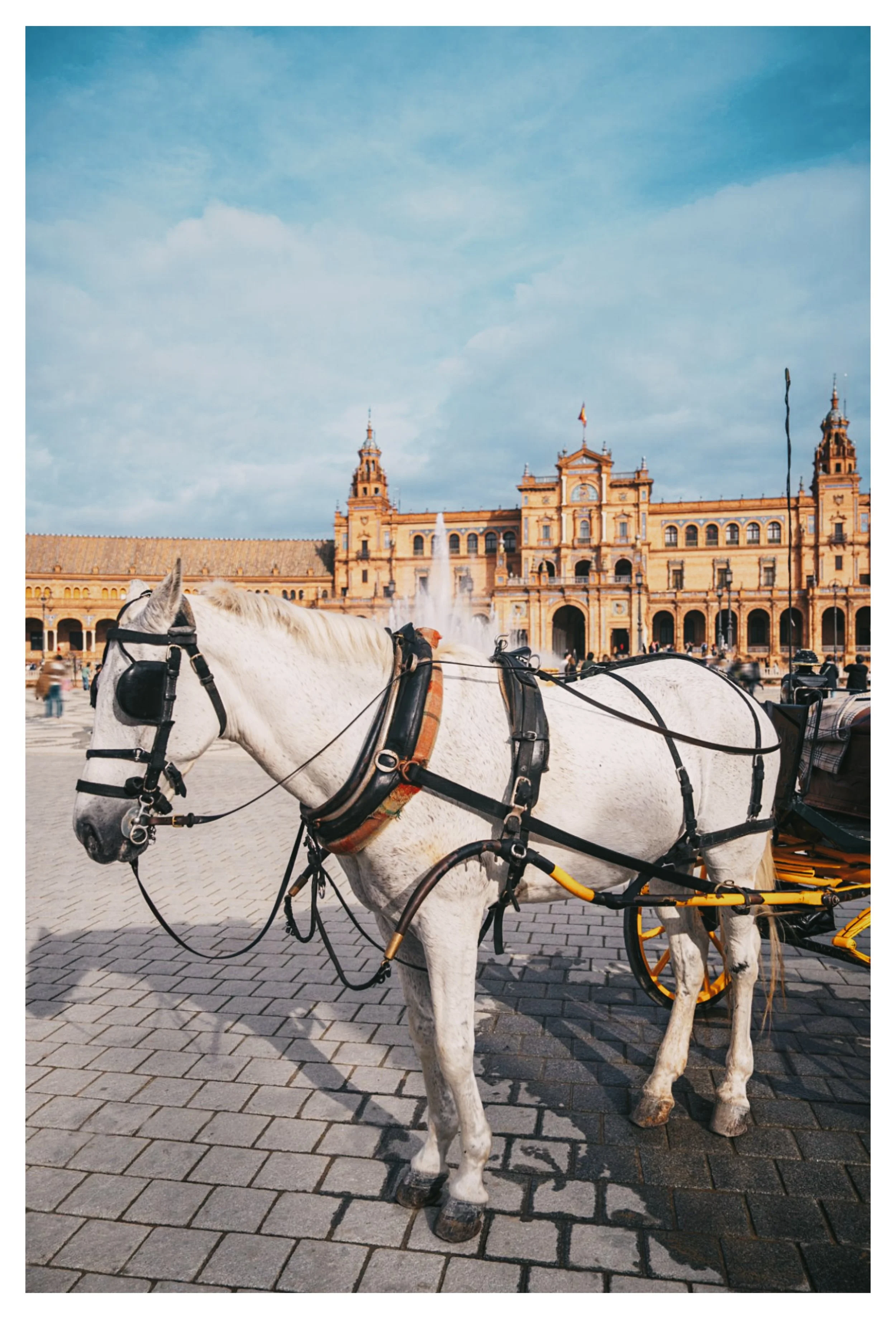
The semicircular palace wrapped around me like a stage set. Ceramics shimmered. The canal reflected arches with irritating symmetry. Even the horse carriages clip-clopped into frame on cue, as if summoned by a hidden production team.
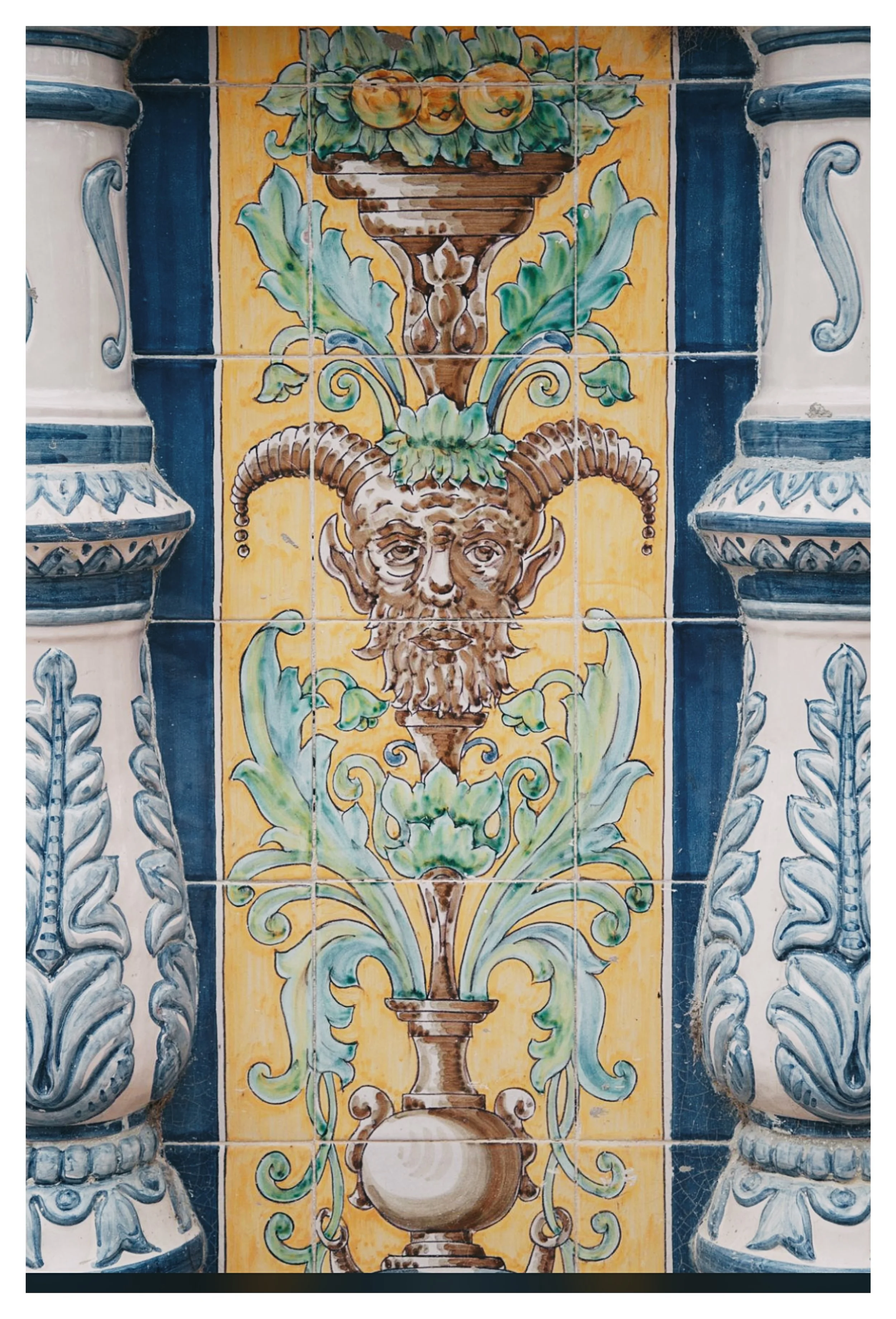
Shooting 6x9 here felt almost unfair. The negative is generous. The lines are disciplined. The tiles repeat with baroque confidence. Every composition appeared intentional, even when I was merely trying not to trip over tourists reenacting period dramas for social media.
The Hasselblad joined in, square format imposing its calm geometry on architectural flamboyance. The square has a way of humbling excess. It says: yes, you are dramatic, but let’s contain that.
By 9 a.m., the light had sharpened. Shadows cut clean lines beneath arcades. The square negative loved it. I loved it. My film wallet began to look lighter. Seville had only just begun.
Barrio Santa Cruz
If Plaza de España is theatre, Santa Cruz is whispered poetry.
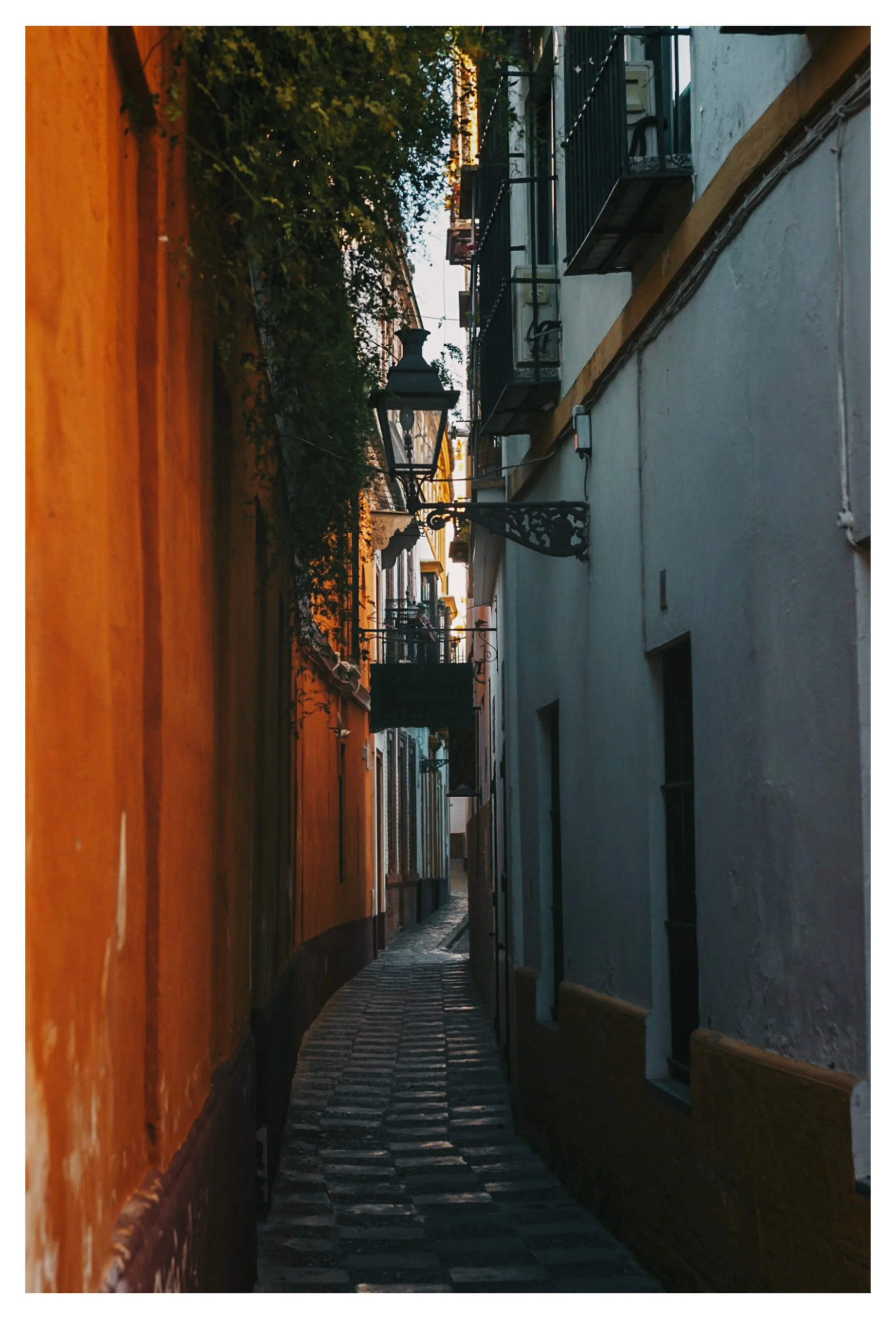
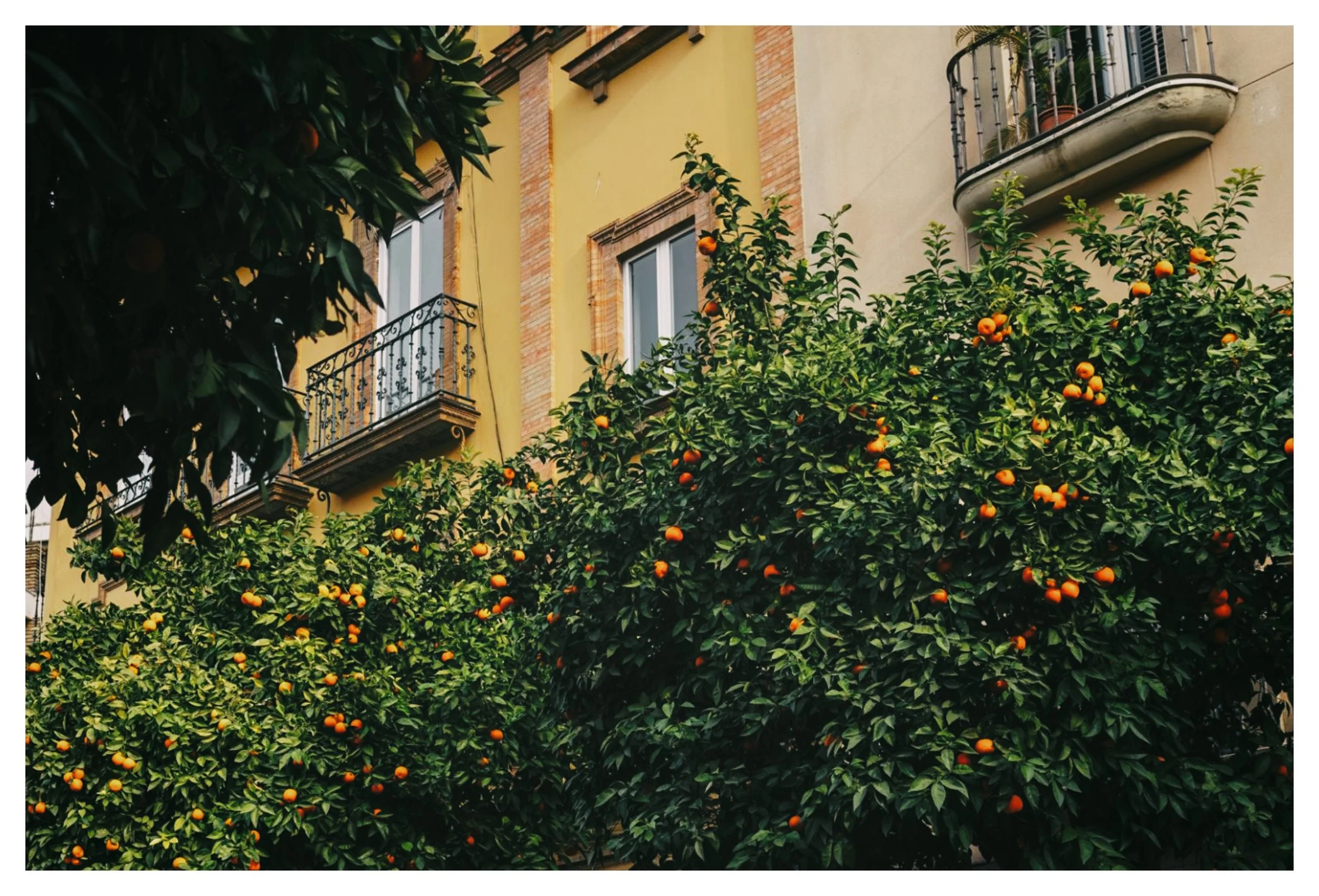
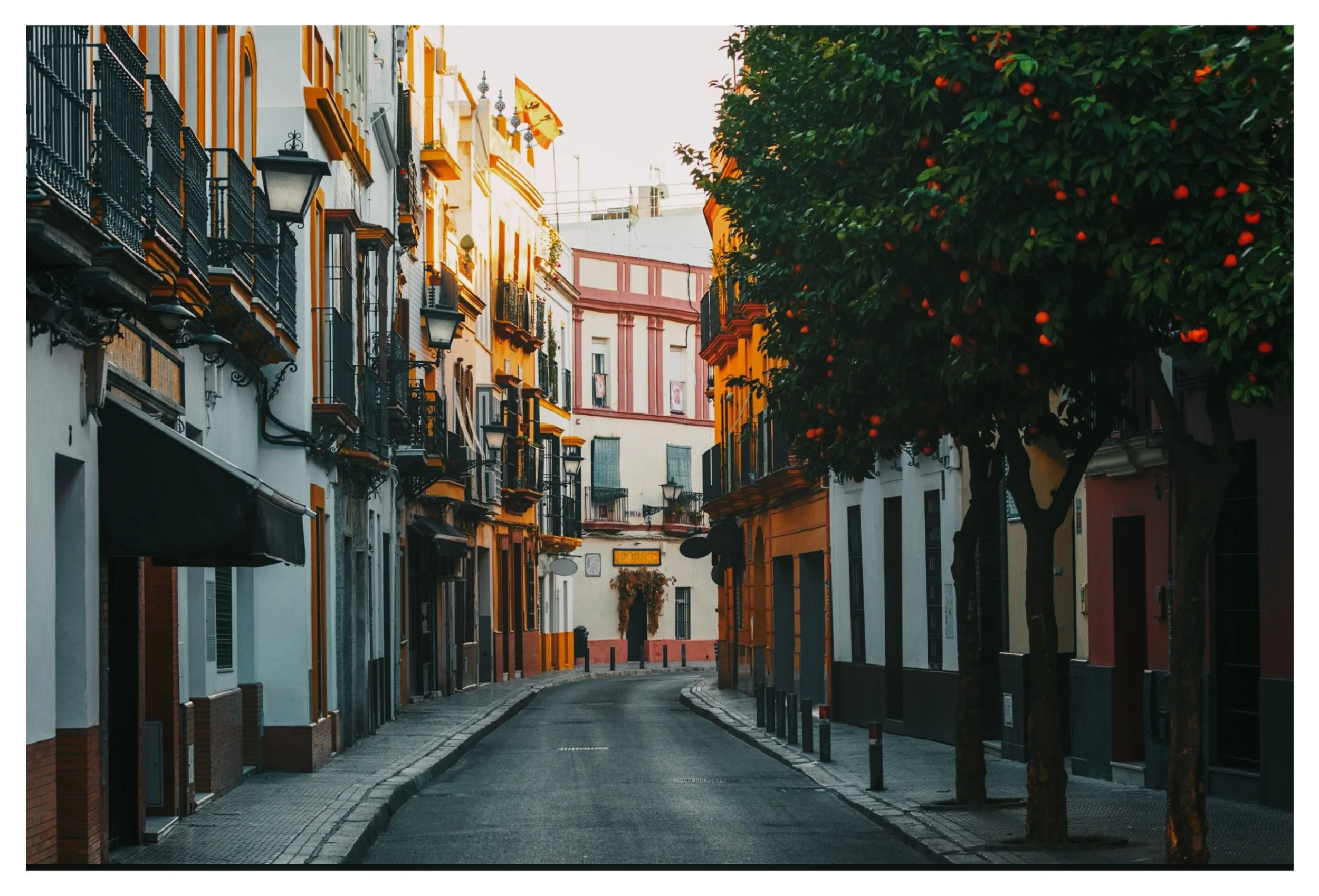
The alleys narrow into corridors of white walls and blue sky slivers. Orange trees punctuate the geometry like carefully placed commas. Light ricochets between buildings, turning corners into chiaroscuro laboratories.
Street photography here is less about spectacle and more about patience. You wait at intersections of shadow and sun. You pre-focus. You pretend you are not clearly holding a medium format camera from another century.
A woman passed with a basket of bread. A man leaned into a doorway to smoke. A child ran through a shaft of light like a Renaissance reference no one asked for but everyone appreciated.
The Hasselblad thrived here. The square format flattened distractions and elevated gestures. A doorway becomes a frame within a frame. A shadow becomes narrative.
The Texas Leica, however, demanded commitment. 6x9 is not casual. It insists that you mean it. That you breathe. That you calculate distance without panic.
And so I slowed down. Which is, perhaps, the entire point of Seville. The city does not rush. It simmers.
Seville Cathedral & Real Alcázar of Seville
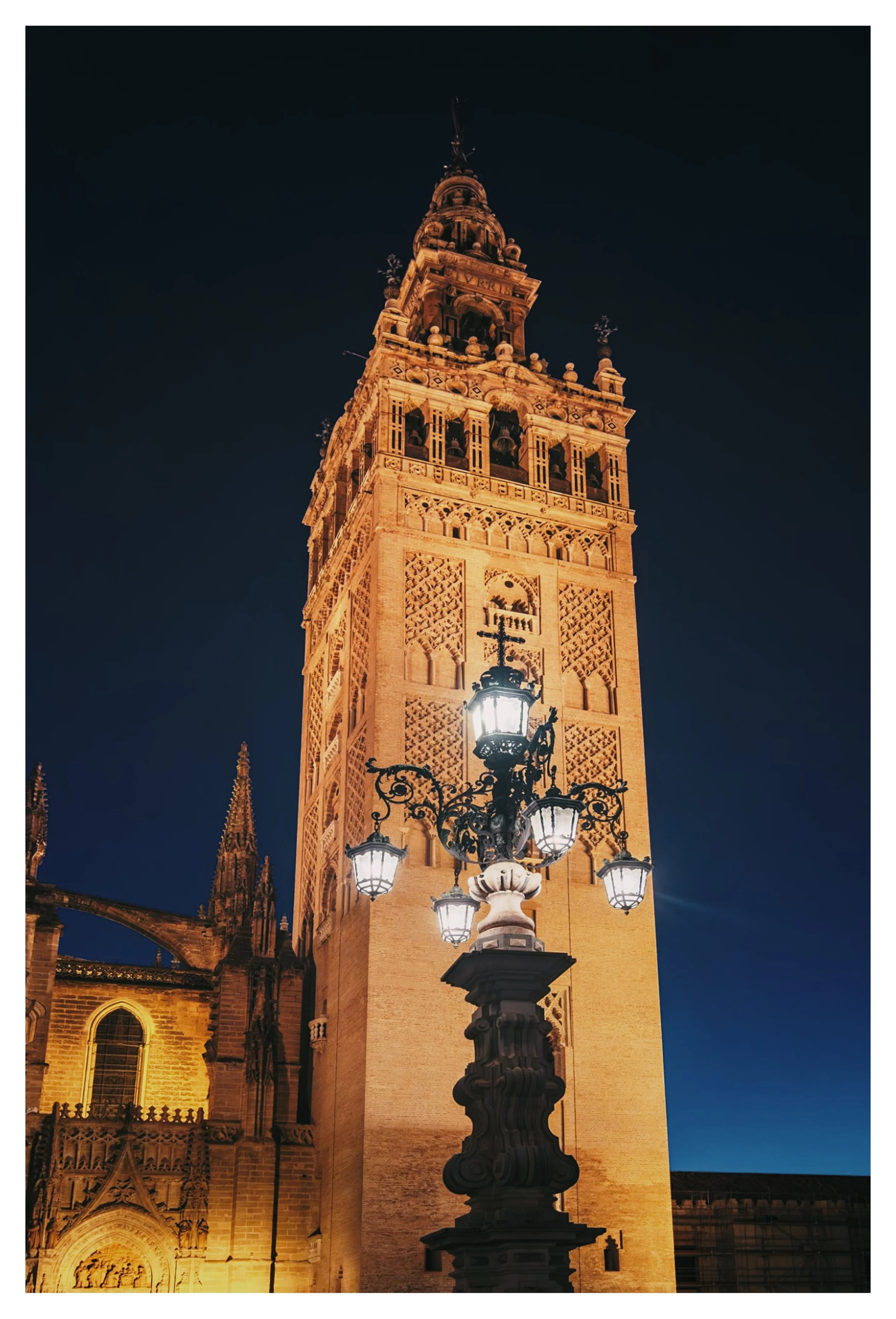
The cathedral rises like an architectural flex. Gothic ambition carved in stone. The Giralda tower scans the city with quiet authority.
I attempted restraint. Street photography, I reminded myself. Not architectural documentation. And yet, how does one ignore flying buttresses when they cast shadows like cathedral-sized sundials?
The Texas Leica devoured façade details. Stone textures translated into tonal gradients that promised rich darkroom evenings. The negative would hold it all. The subtle transitions. The deep recesses beneath sculpted saints.
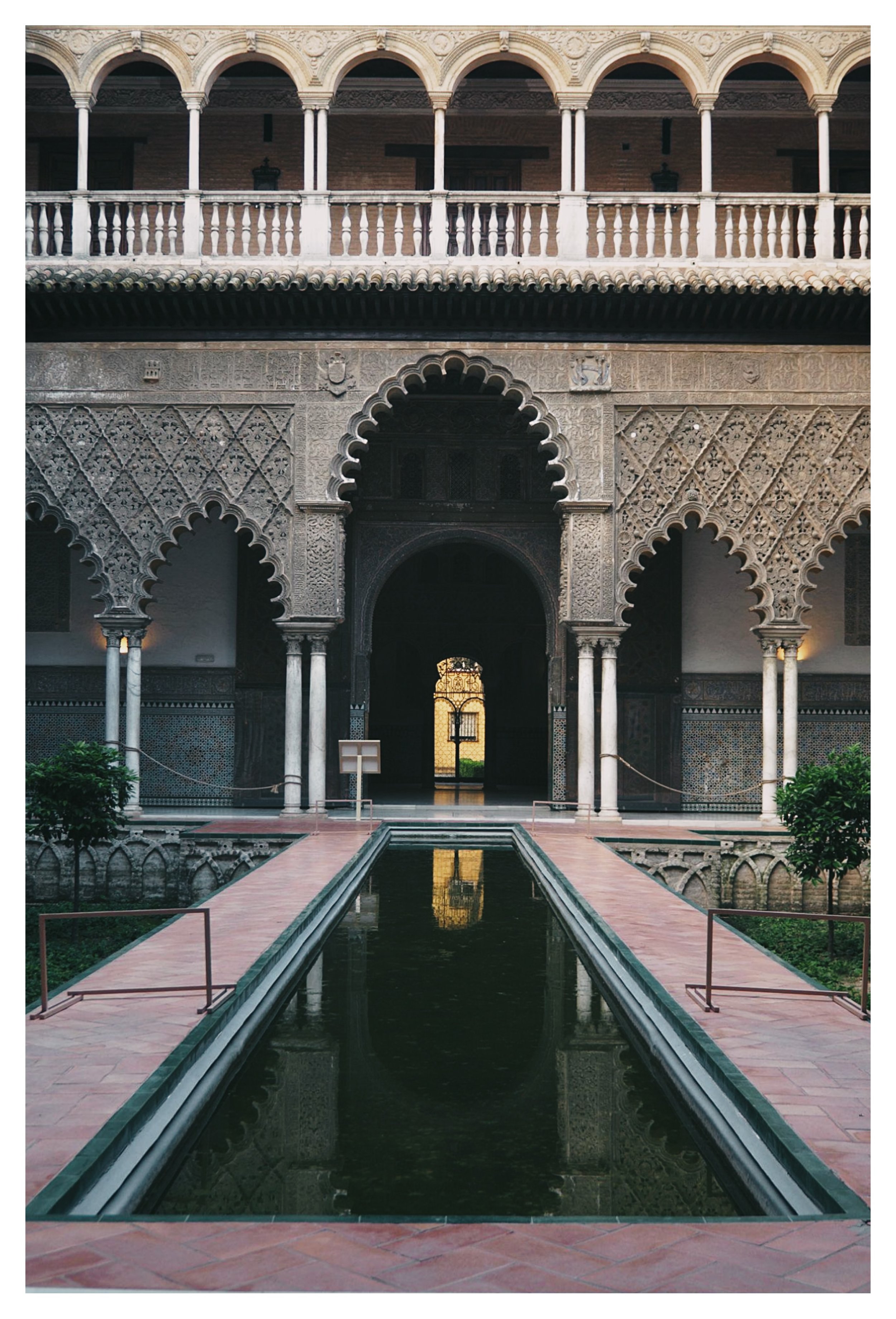
Then the Alcázar. Patterns within patterns. Arches layered with geometry so intricate they make modern design feel embarrassed.
In the courtyards, tiled walls met shallow pools of water. Reflections doubled reality. Compositions emerged effortlessly. It felt suspicious. Cities should not cooperate this much.
Here, I found myself studying human presence within ornament. A couple walking beneath Moorish arches. A guide gesturing beneath carved ceilings. Street photography in palatial settings feels almost illicit, as if you are smuggling everyday life into grand narrative.
The Hasselblad rendered symmetry into something almost meditative. The square format thrives on repetition. The world becomes balanced, if only within the frame.
Metropol Parasol
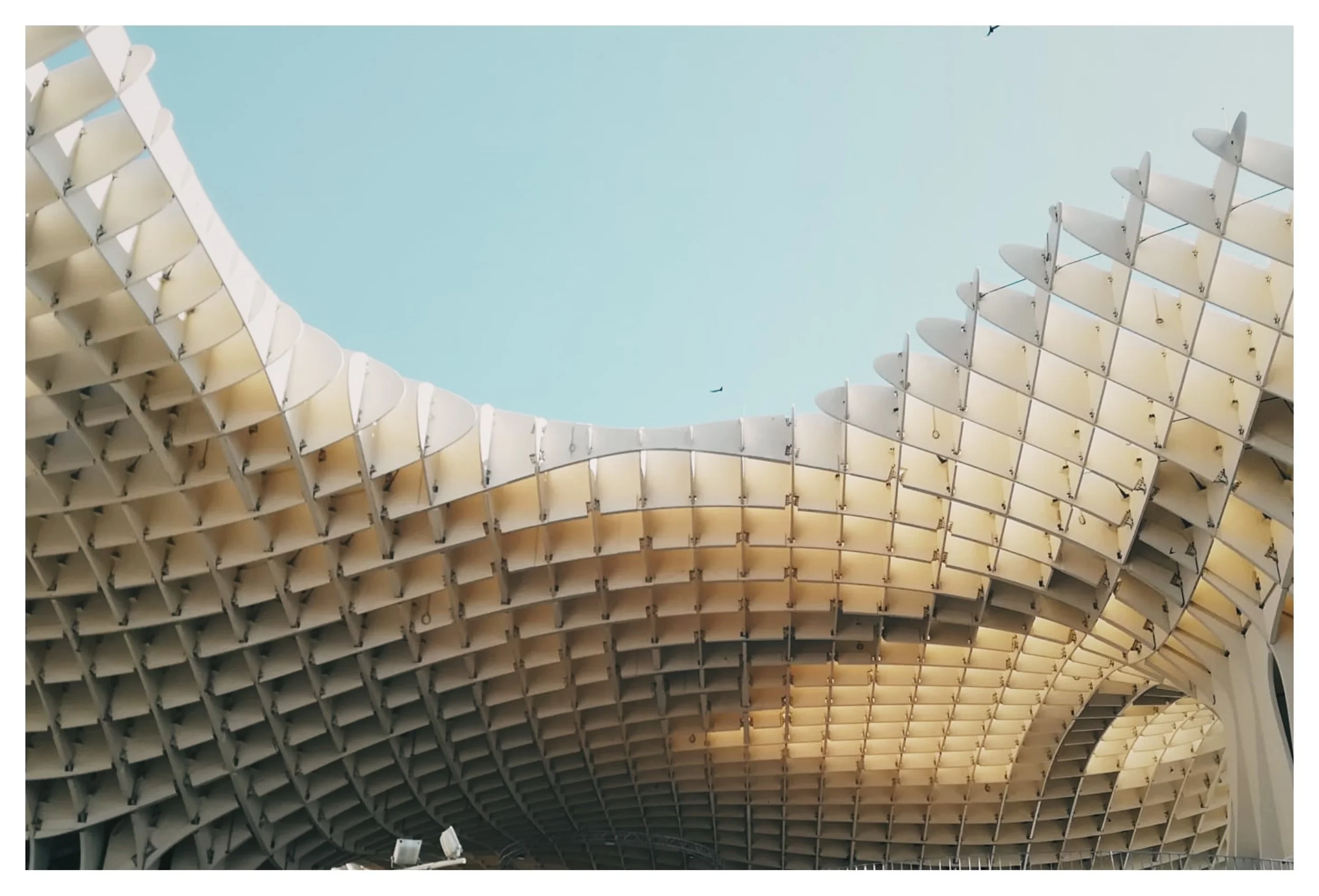
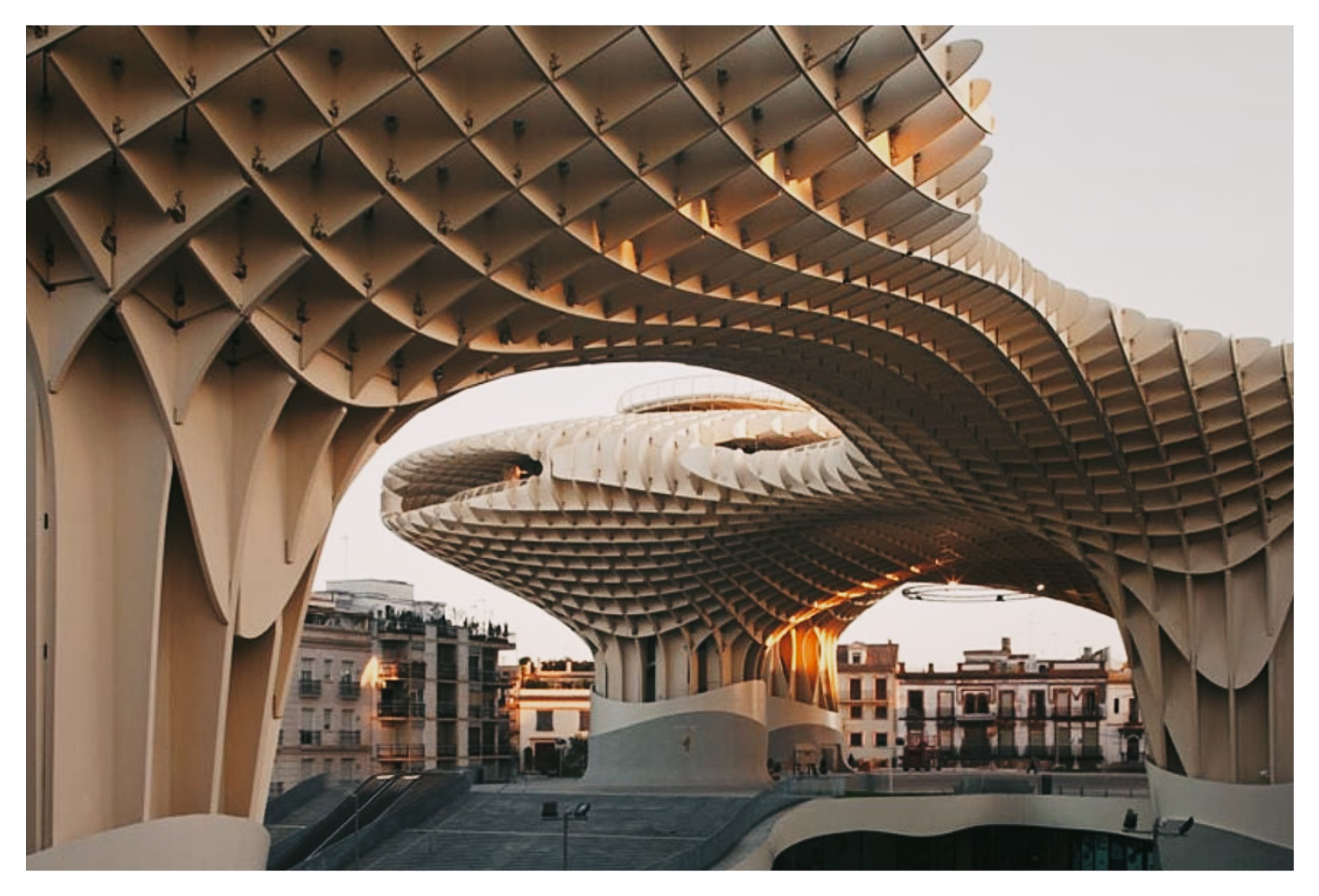
Then came the giant wooden organism locals call Las Setas. A structure that appears to have grown accidentally out of the plaza, as if Seville briefly flirted with science fiction.
Modern lines. Honeycomb geometry. Brutal contrast to the historic fabric around it.
The Texas Leica approved. Wide negative. Strong graphic repetition. Deep shadows under the structure created perfect stages for pedestrians to walk into light.
Street photography here felt dynamic. Youths skateboarding. Elderly couples navigating shade. Tourists staring upward in architectural disbelief.
The Hasselblad turned the structure into abstract pattern. Cropped tightly, it could be anywhere. Tokyo. Copenhagen. Some alternate universe where wood becomes skyline.
I enjoyed the contradiction. Seville is not frozen in time. It layers eras unapologetically. And my cameras, relics themselves, documented this coexistence with mechanical loyalty.
Triana
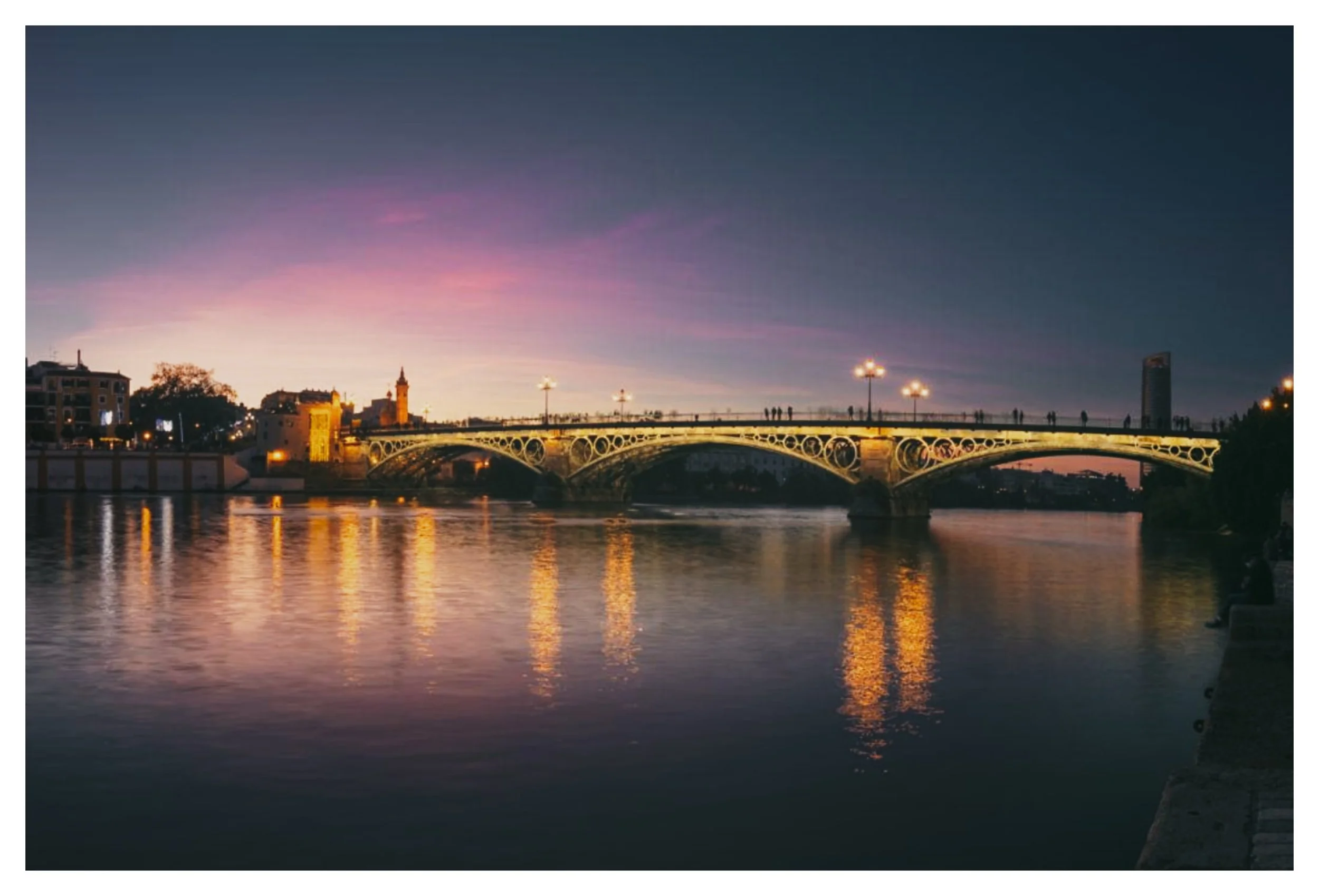
Crossing the river into Triana felt like adjusting aperture. The mood shifted. Less monumental, more intimate.
Ceramic workshops. Faded facades. Locals leaning against doorways in late afternoon warmth. The Guadalquivir reflecting tired sunlight like molten brass.
Street photography here required listening. Not just looking. Conversations spilled into streets. Chairs appeared outside homes. Life unfolded horizontally rather than vertically.
The Texas Leica captured depth beautifully along the riverbank. The 6x9 frame allowed foreground and background to converse. A fisherman in front. The city skyline behind. Film holding detail across both.
The Hasselblad focused on portraits. A shopkeeper in soft window light. A musician adjusting strings before performance. The square format isolates with dignity.
By sunset, I had stopped pretending this was a disciplined trip. It had become indulgent. Frame after frame. Roll after roll.
The Practical Realities of Heroic Film Photography
Let’s discuss weight.
Carrying a 6x9 rangefinder and a Hasselblad through Seville’s sun is character-building. Hydration becomes philosophical. Shade becomes sacred.
Film stock must be guarded like treasure. Changing rolls discreetly while tourists photograph each other with frictionless ease produces a mild existential crisis.
Yet film alters your relationship with place. You cannot spray and pray. You anticipate. You wait. You commit.
Seville rewards this approach. Its light evolves throughout the day. Morning gold. Midday contrast. Evening softness that makes even peeling paint look romantic.
Markets burst with color and texture. Musicians animate plazas at dusk. Shadows stretch long and theatrical along tiled walls.
Every frame feels earned. Not captured. Earned.
Reflections on Leaving
On my final evening, I sat near the river with both cameras resting beside me like loyal companions. My film rolls were safely tucked away, heavy with latent images.
Seville had offered everything photographers crave: geometry, texture, drama, intimacy. But more than that, it had forced slowness.
The Texas Leica reminded me to measure distance carefully. The Hasselblad demanded compositional clarity. The city demanded attention.
Street photography here is not about hunting moments aggressively. It is about standing still long enough for life to step into your frame.
And it will.
Under orange trees. Beneath Gothic towers. Inside wooden shadows. Along tiled corridors of history.
Seville does not resist being photographed. It collaborates.
You only need to carry the weight, respect the light, and accept that by the end, your shoulders will ache but your negatives will sing.