Why Doing Less Is the Secret to Seeing
There is a particular kind of panic unique to modern photography. It begins the moment a photographer arrives at a famous landmark. The pulse rises. The light looks promising. A tour group approaches from one direction while another photographer is already occupying the ideal position. Within seconds, a familiar instinct takes over: shoot first, think later.
The shutter fires repeatedly. Twenty, thirty, perhaps fifty frames are captured in rapid succession. A quick glance at the screen confirms that the histogram looks respectable, and with a comforting sense that at least one image must surely be usable, the photographer moves on to the next destination. Another view has been collected. Another location has been checked off the list.
Yet somewhere in that process, something important is often lost. It is entirely possible to photograph a place without ever truly seeing it.
For many years I was not entirely immune to this condition. Then large format photography entered my life and quietly dismantled the entire process.
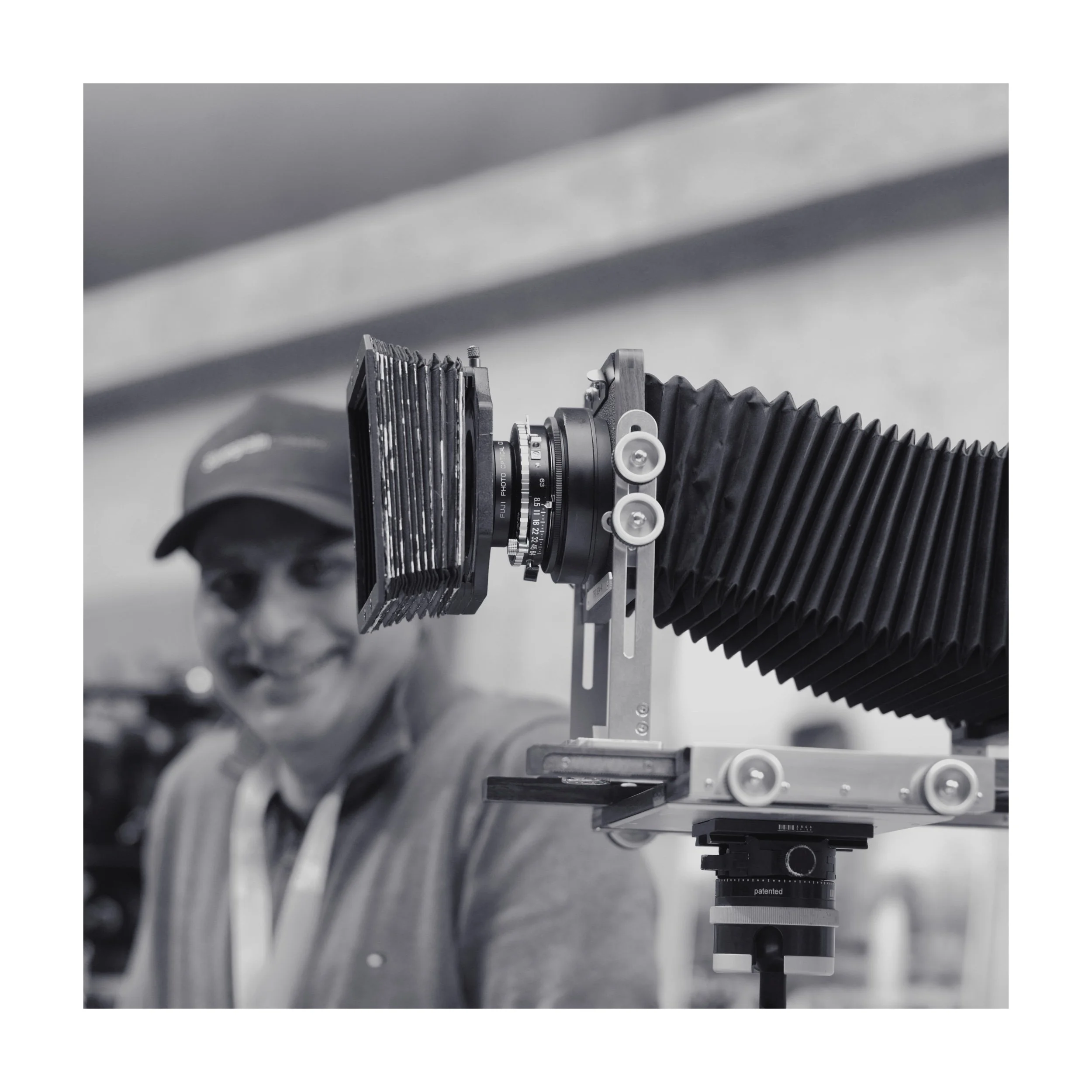
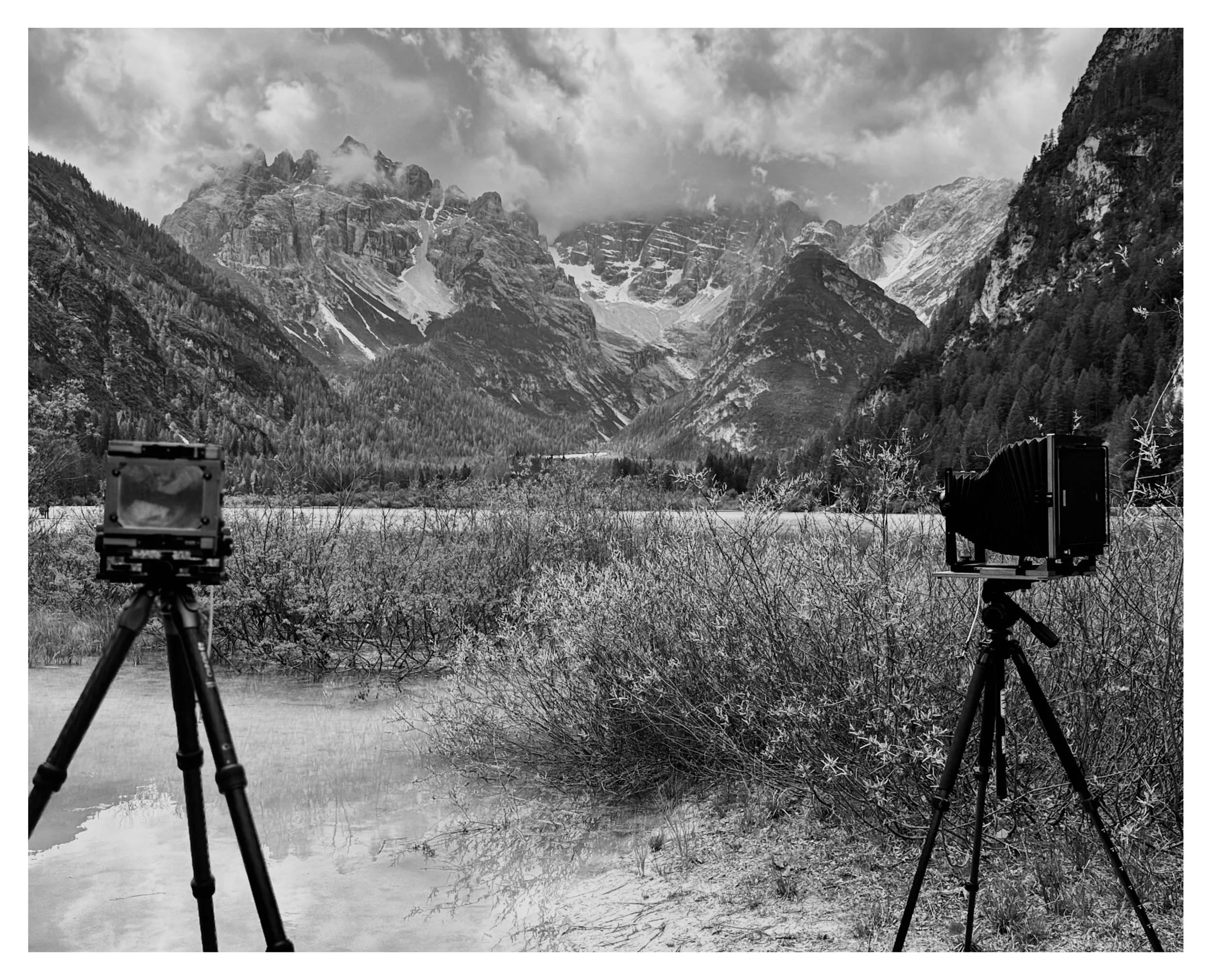
Large format cameras are extraordinary educational devices because they make rushing almost impossible. They are less cameras than elaborate wooden machines designed to encourage patience and occasionally question your commitment to photography. Using an 8×10 camera is not something one does casually. The camera must be unpacked, assembled, unfolded, adjusted, and prepared. Additional accessories inevitably emerge from various bags and pockets. Something is always forgotten and must be retrieved. Focusing takes place upside down beneath a dark cloth while your knees negotiate new terms with gravity.
By the time a single sheet of film is finally exposed, many digital photographers have already photographed the entire street, uploaded their images, edited a few favourites, and moved on to lunch.
Ironically, that is precisely where the lesson begins.
One of the most common misconceptions about slow photography is that it requires film, chemicals, wooden tripods, leather camera straps, and equipment that appears to have survived several centuries. In reality, none of those things are necessary. Large format photography simply forced me into a state of mind that I now apply regardless of the camera I am carrying.
The slowness is not in the camera. The slowness is in the photographer.
Whether I am working with an 8×10 field camera, a Hasselblad, a Leica, or a modern digital camera capable of astonishing technological feats, the approach remains remarkably similar. Slow photography is not defined by long exposures, analogue film, or large negatives. It is defined by attention. It is the conscious decision to spend more time looking than shooting, to take the process seriously, and to remain fully present in the act of observation.
Another irony lies at the heart of this philosophy. To become a slower photographer, one must first become a faster one.
Not physically, but mentally.
Many people assume that slow photography requires rejecting technology. In reality, it requires mastering it. The goal is not to fight with the camera but to understand it so thoroughly that it disappears from conscious thought. Once aperture settings, focal lengths, autofocus modes, exposure compensation, battery levels, and endless menu systems no longer demand attention, the mind becomes free to focus on what truly matters: the subject, the light, the atmosphere, and the moment itself.
The camera becomes invisible.
Paradoxically, the less I think about photography, the better my photographs often become.
One exercise has proven especially valuable in developing this mindset. I often walk exactly the same route several times, carrying a different focal length each day. The first walk might be with a 21mm lens, the second with a 35mm, and the third with a 50mm.
The city itself remains unchanged, yet each walk produces an entirely different experience.
The wide-angle lens tells the story of a place and its surroundings. The 35mm lens begins to reveal relationships between people and spaces. The 50mm lens focuses attention on details: a worn door handle polished by decades of use, steam rising from a coffee cup, reflections hidden in a shop window, or shadows sliding across an old stone wall.
The route is identical. The city is identical. The photographer, however, is not.
This simple experiment reveals something profound: we do not merely see with our eyes. We see through our constraints. While zoom lenses promise flexibility, fixed focal lengths often encourage attention. By removing options, they force us to engage more deeply with what is in front of us.
The same principle extends naturally to travel photography. Modern tourism often resembles a competitive checklist. Cathedrals, castles, viewpoints, famous squares, and monuments are visited, photographed, and collected in rapid succession. Many travellers return home with thousands of images and surprisingly few vivid memories.
Slow photography proposes an alternative. Instead of racing between landmarks, spend an afternoon in a single neighbourhood. Sit in one café. Watch one street corner. Visit a workshop. Speak with a local craftsperson. Listen. Observe. Wait.
The goal is no longer to collect landmarks but to create an atmospheric portrait of a place. The soul of a city rarely resides in its most photographed viewpoint. More often it is found around the corner, in a side street, a workshop, a market, or an ordinary conversation.
Large format photography also taught me another valuable lesson: most photographers carry too much equipment.
This is unfortunate because every additional lens seems to remove a small percentage of one's ability to make decisions. A minimalist kit changes the entire experience. One camera, one lens, and one purpose simplify the process dramatically. When technical choices disappear, observation takes over.
The question shifts from "Which lens should I use?" to "What am I actually looking at?"
The answer to the second question is almost always more interesting.
A smaller camera setup also changes the way people react. Large professional rigs can create distance between photographer and subject before a single photograph is taken. Smaller cameras allow photographers to blend into their surroundings and become part of the environment rather than an intrusion. The resulting photographs often feel more natural, more atmospheric, and more human.
Looking back, the most important lesson large format photography taught me has very little to do with large format photography itself. After years of using these cameras as a way to slow myself down, I now find myself applying exactly the same principles whether I am shooting film or digital. The camera no longer determines the pace. The attitude does.
Large format photography was simply my exceptionally expensive and surprisingly heavy teacher.
It taught me that photography is not about collecting images. It is about paying attention. It is not about quantity but presence. Not about capturing everything, but about truly seeing something.
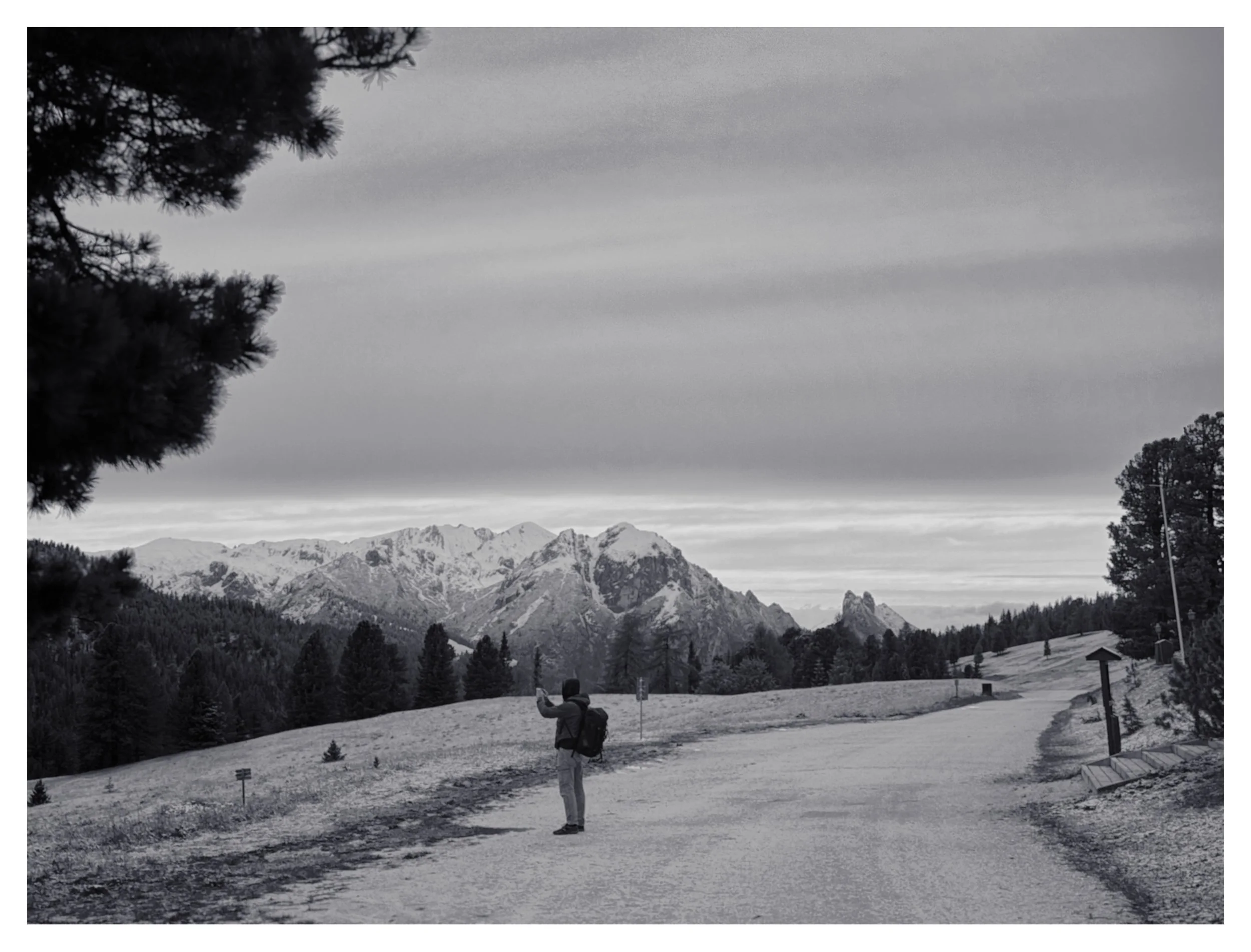
The next time you head out with a camera, try a simple experiment. Leave the zoom lenses behind. Turn off continuous burst mode. Take one camera, one lens, one route, and one afternoon.
You may discover that when you stop trying to photograph everything, you finally have enough time to notice what was there all along.
And unlike an 8×10 camera, that lesson weighs absolutely nothing.