Fog & a Gentleman in Tweed
My Stroll Through Haunted Edinburgh
The trip began with a level of dignity that set the tone for the entire weekend: I flew Lufthansa. No budget airline roulette this time. No cabin lighting that feels like a police interrogation. Instead, a composed, punctual departure from Frankfurt, where polished floors and the whisper of rolling suitcases lull you into a false sense of adulthood.
My gentleman attire — tweed jacket, wool scarf, leather boots freshly polished to a smug shine — felt right at home. Even the boarding pass looked aristocratic in my hand.
The flight itself was calm, efficient, civilised. One could almost forget that the final destination was a city famous for cemeteries, poltergeists, and weather that behaves like a misanthropic artist.
But as we descended into Edinburgh, the Scottish climate made sure I remembered exactly where I was going. Wind slapped the aircraft like an impatient relative. Mist rolled across the runway like a stage curtain.
Perfect.
Exactly what a weekend of atmospheric wandering and street photography demanded.
Luggage collected. Scarf tightened. Boots braced.
A gentleman has arrived.
Edinburgh’s Old Town — A Natural Habitat for Dramatic Wanderers
The moment I stepped into the Old Town, I realised something comforting: Edinburgh does not pretend to be anything other than itself. It leans enthusiastically into its gothic mood and theatrical charm. Medieval lanes twist around each other like plotlines. Stone façades rise sharply, catching the mist and casting long shadows. Pubs glow warm behind steamed windows.
And the cobblestones — ah yes, the cobblestones.
They looked at my gentleman boots and cackled quietly.
But for a street photographer, this city is pure oxygen. Every corner a composition, every passerby a potential character. The drizzle softened the highlights, the clouds diffused the sky into a perfect grey sheet, and the wind pushed coats and scarves into dramatic motion.
I raised my camera often.
My tweed sleeve completed the aesthetic so perfectly that random tourists may or may not have whispered: Ah, a local poet?
If only they knew the reality: just me, trying not to slip while adjusting ISO.
But the real destination — the one my curiosity had been itching toward since Frankfurt — lay deeper in the city.
Greyfriars Kirkyard.
The most haunted cemetery in the world, allegedly.
Exactly the kind of place a gentleman with a camera and poor judgment ought to visit.
Greyfriars Kirkyard — Where Even the Dead Look Slightly Startled
You don’t stroll casually into Greyfriars.
You enter it — the way one enters a theatre.
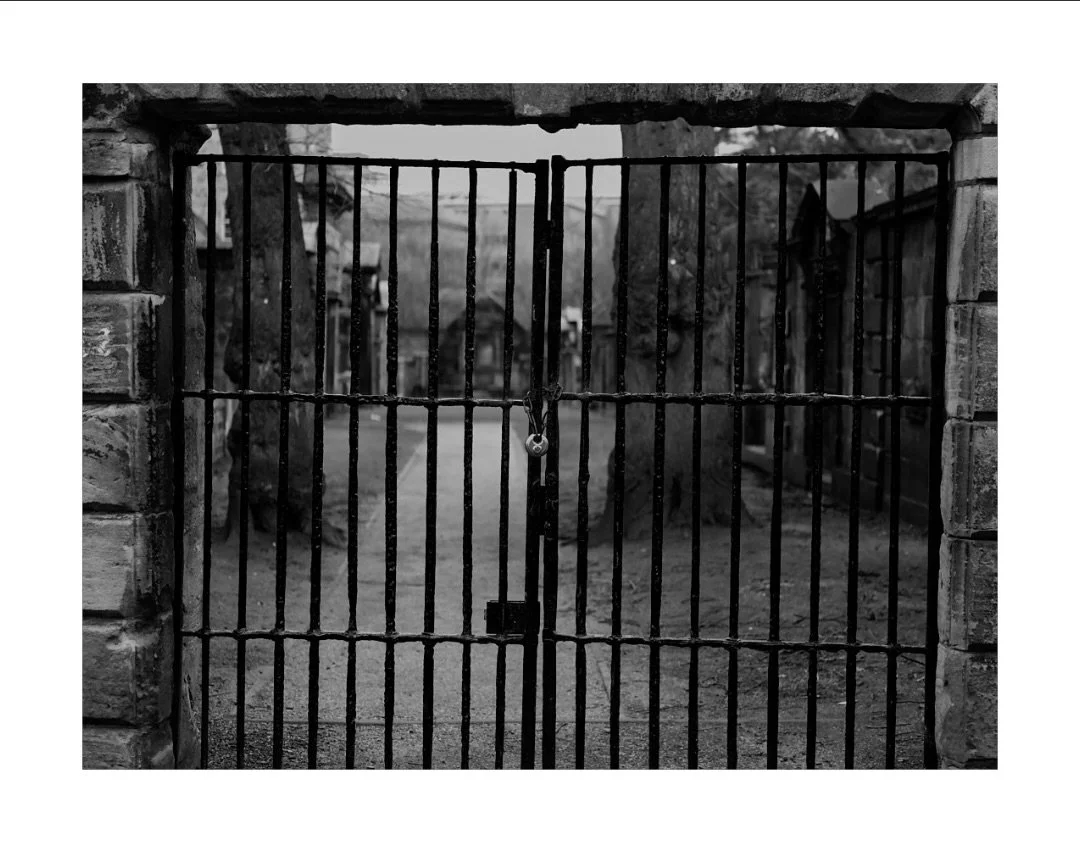
Through a stone gate.
Under a canopy of old, weather-beaten trees.
Then suddenly, you are inside a world that feels neither entirely past nor entirely present.
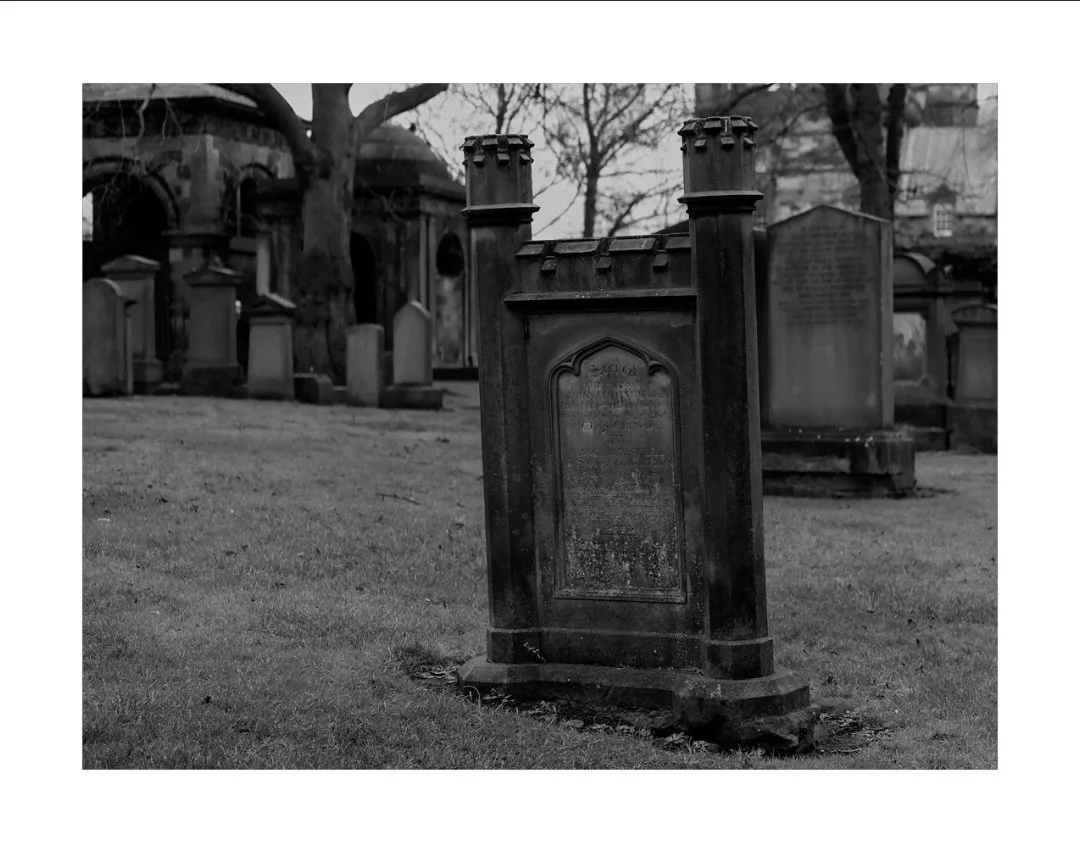
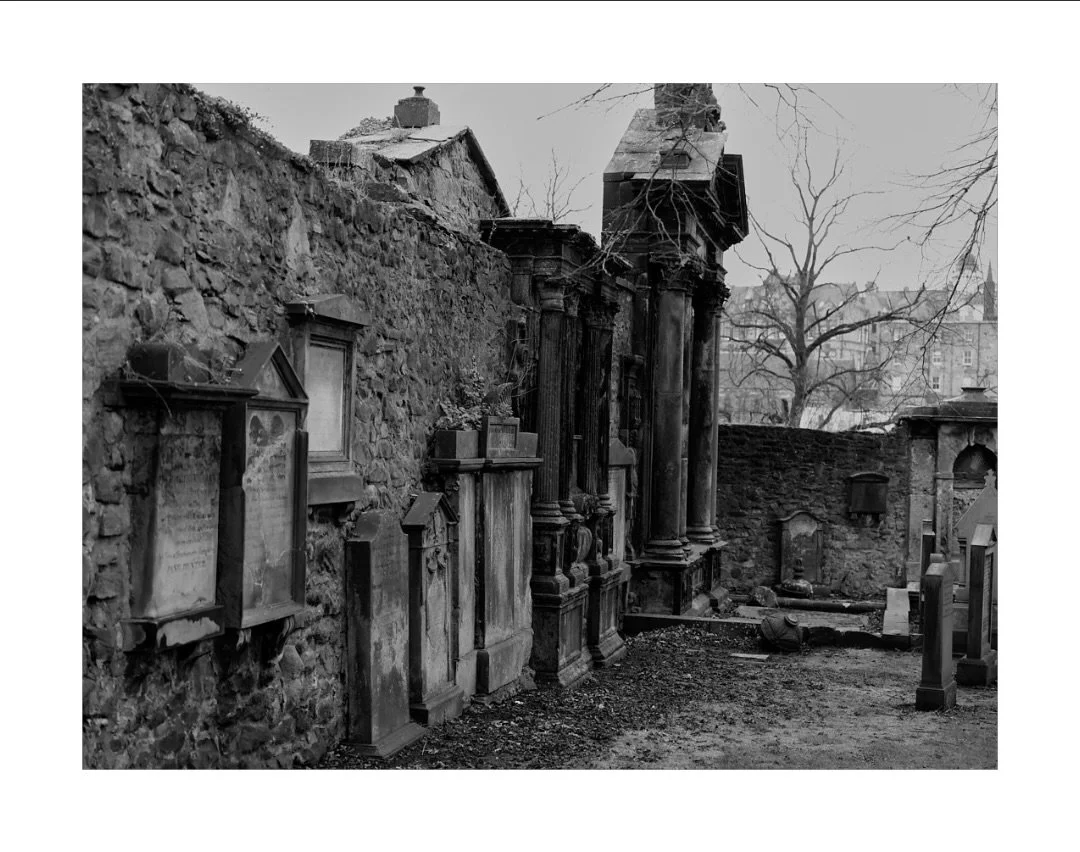
Tipped gravestones lean like tired scholars.
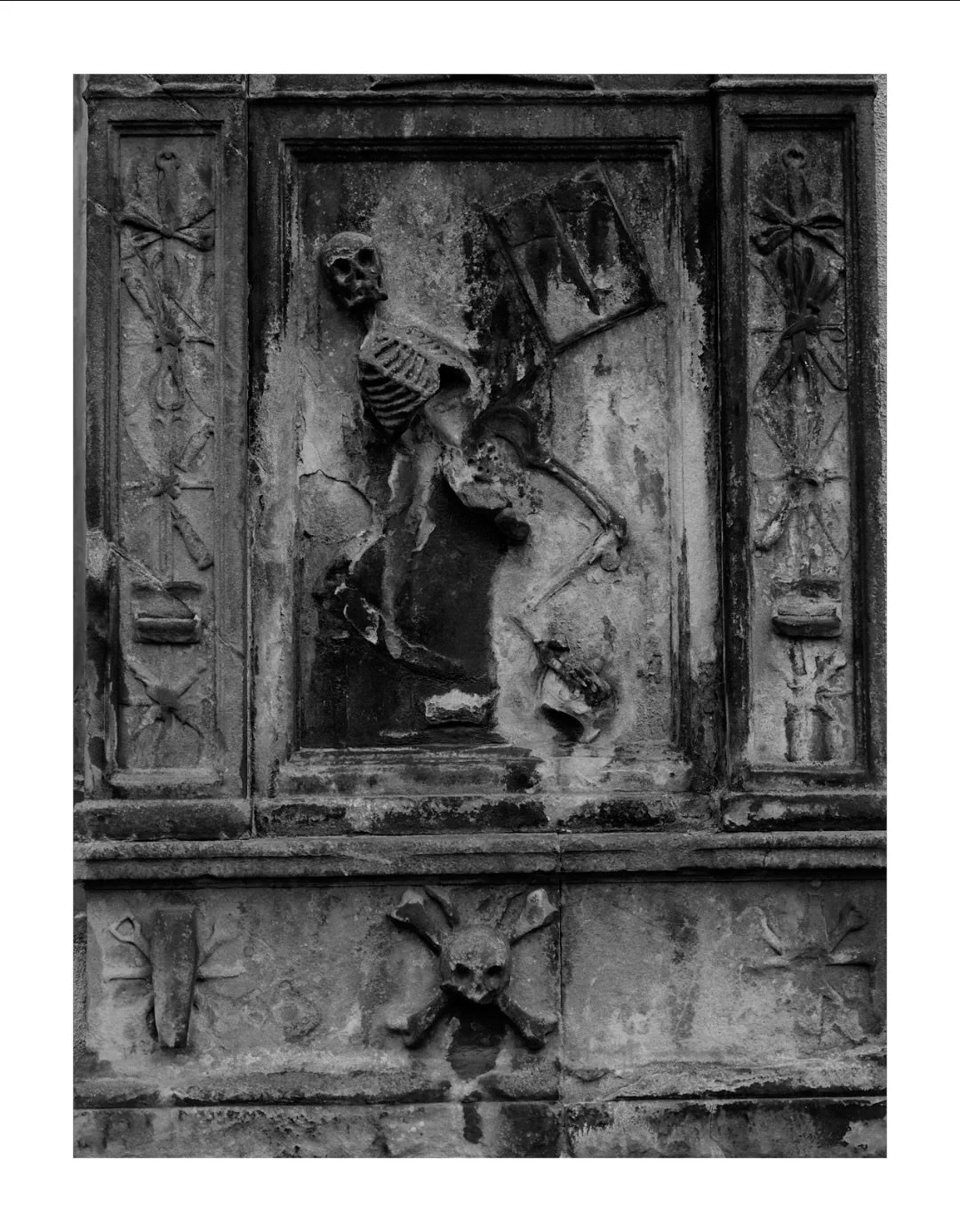
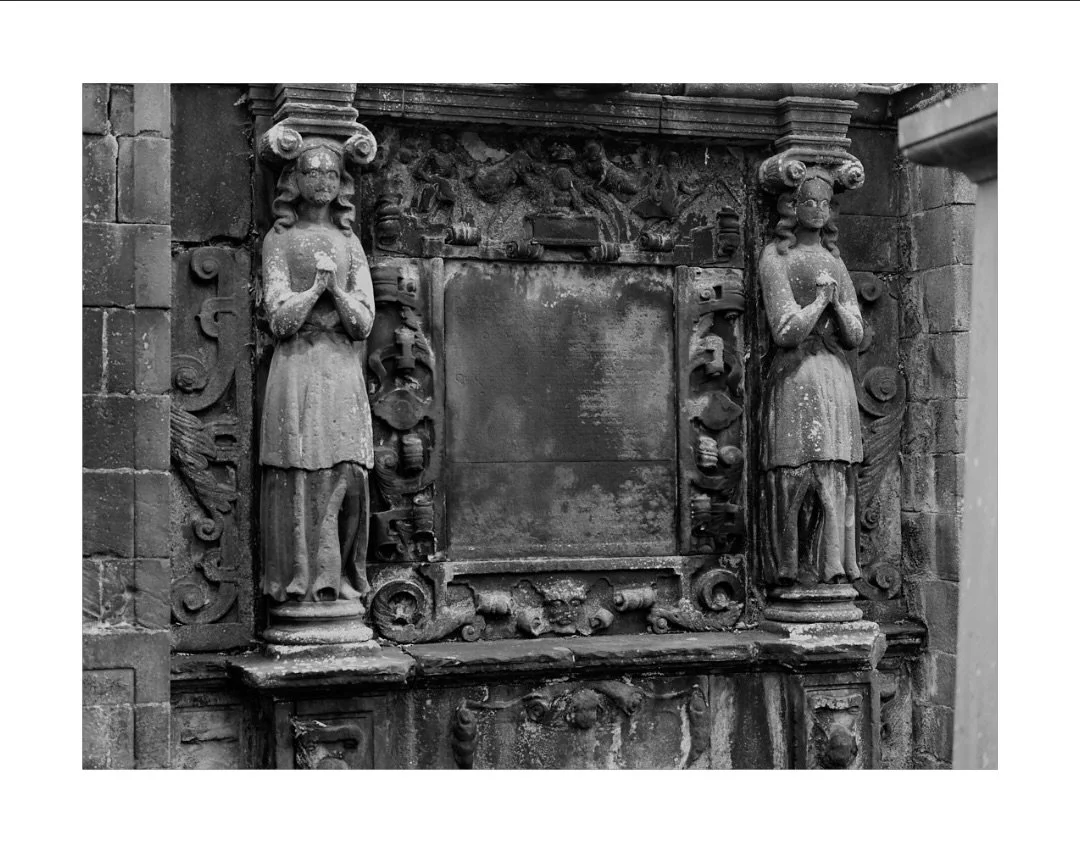
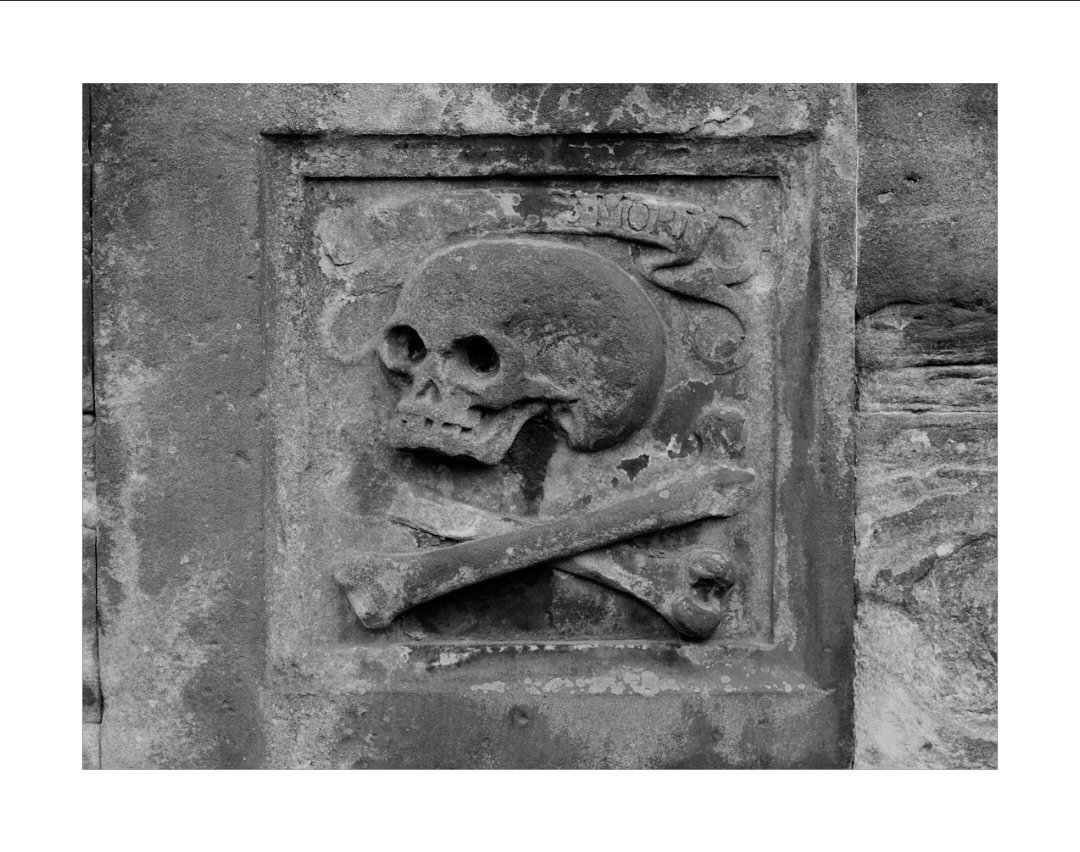
Stone skulls peer from eroded reliefs.
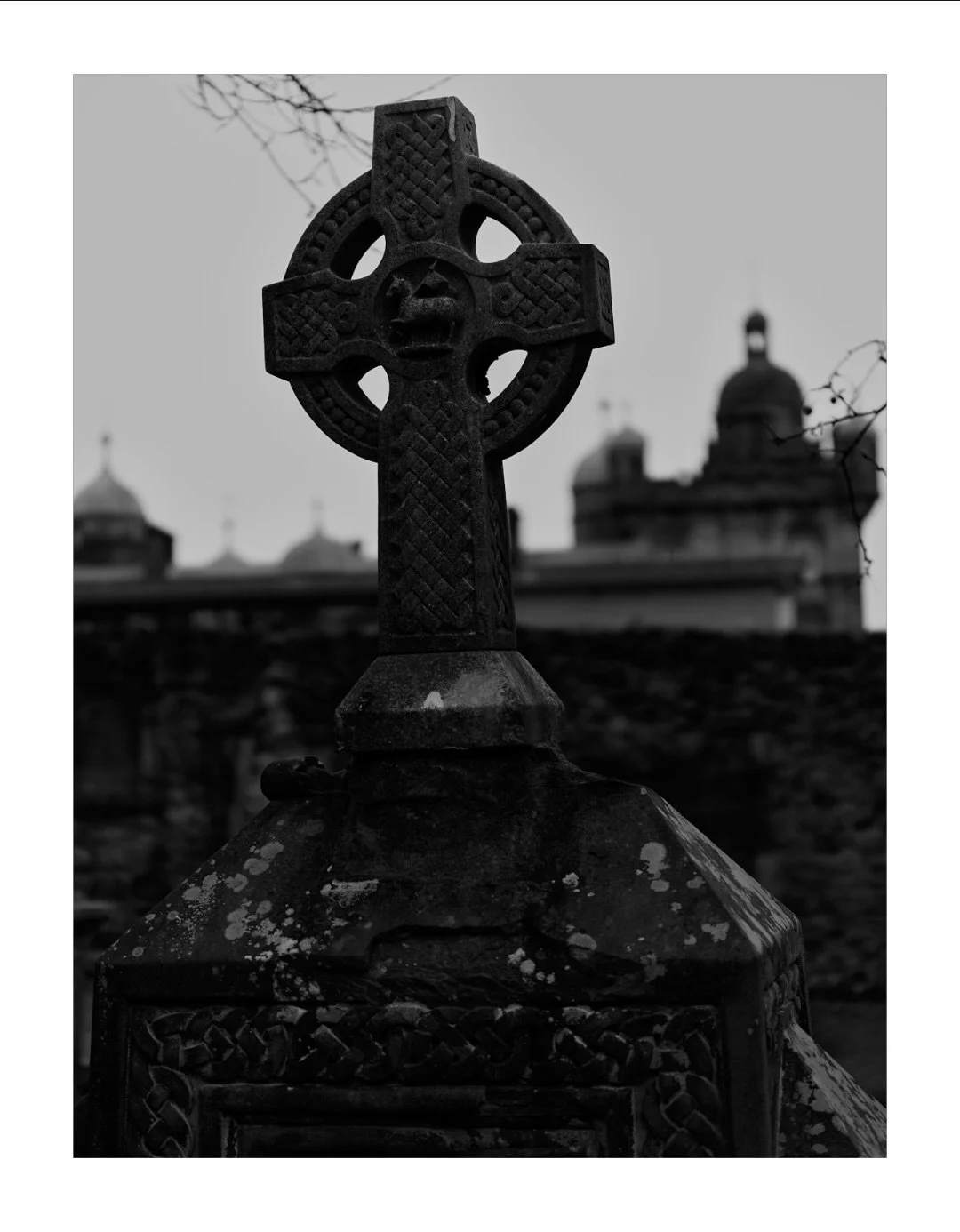
Crosses attempt to stand upright but appear to have second thoughts.
Everything is draped in moss, textured by centuries, softened by mist.
My boots clicked gently as I walked, the sound swallowed by damp air.
Even my gentlemanly confidence quieted itself.
Naturally, my camera rose.
Moody monochrome compositions presented themselves at every angle: the cracked marble, the rusty iron fences, the faint shadow of a raven gliding past like a disinterested usher.
This place was designed — unintentionally, perhaps — for photographers who enjoy a hint of dread.
Greyfriars Bobby — A Loyal Legend in Bronze
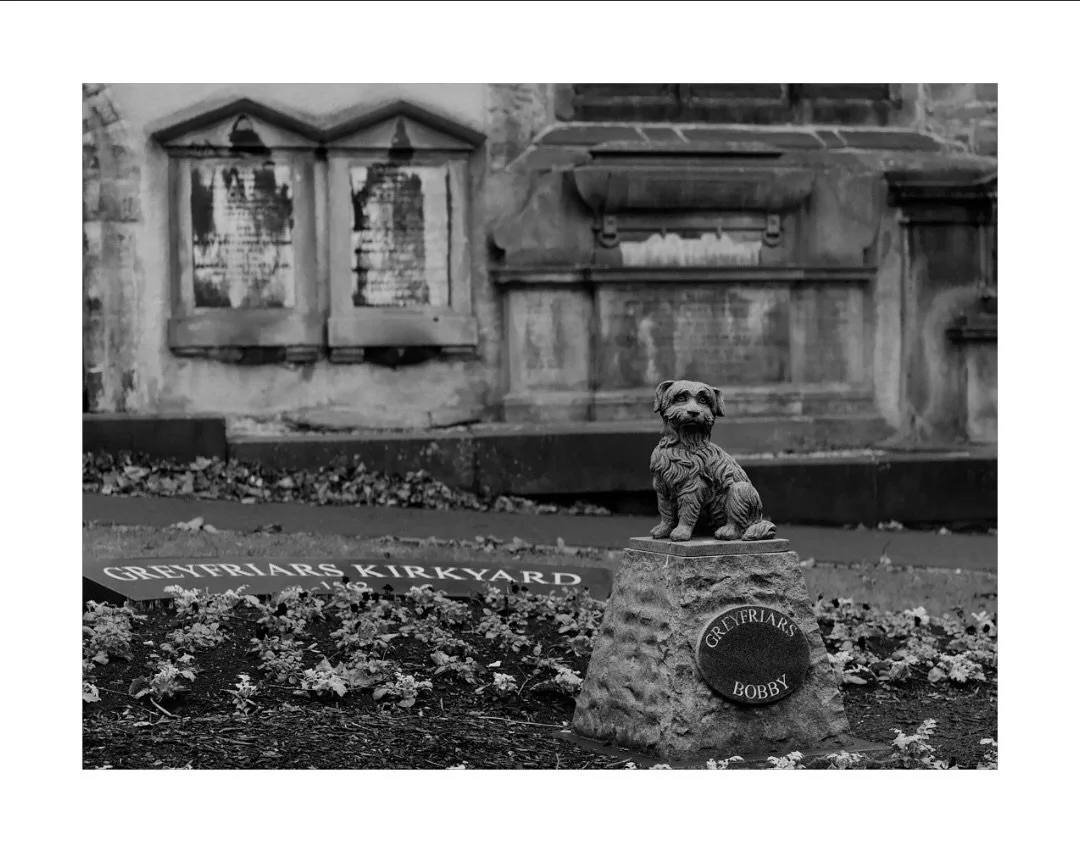
Before the cemetery fully descends into gloom, it greets you with its most sentimental landmark: Greyfriars Bobby, the bronze terrier perched proudly near the entrance.
The story is simple and disarming:
After his master died in 1858, Bobby is said to have guarded the grave for 14 years.
A devotion so strong that even my gentleman heart, fortified by sarcasm and caffeine, softened noticeably.
Everyone rubs the dog’s nose for luck. A polished shine proves it. I politely complied — a gentleman respects local tradition — though I’m not convinced the statue approved.
Across the street sits Greyfriars Bobby’s Bar, a warm pub offering Guinness and a refuge from existential chill. I stepped in; the air embraced me, the beer restored my courage, and the wood interior smelled faintly of stories.
A sip or two later, I felt ready for whatever the cemetery’s darker legends had to offer.
Lord Mackenzie — Edinburgh’s Most Irritated Poltergeist
No haunted location is complete without a temperamental spirit, and Greyfriars has a celebrity: George Mackenzie, a 17th-century lawyer with a reputation for cruelty so enduring that even in death, he refuses to retire.
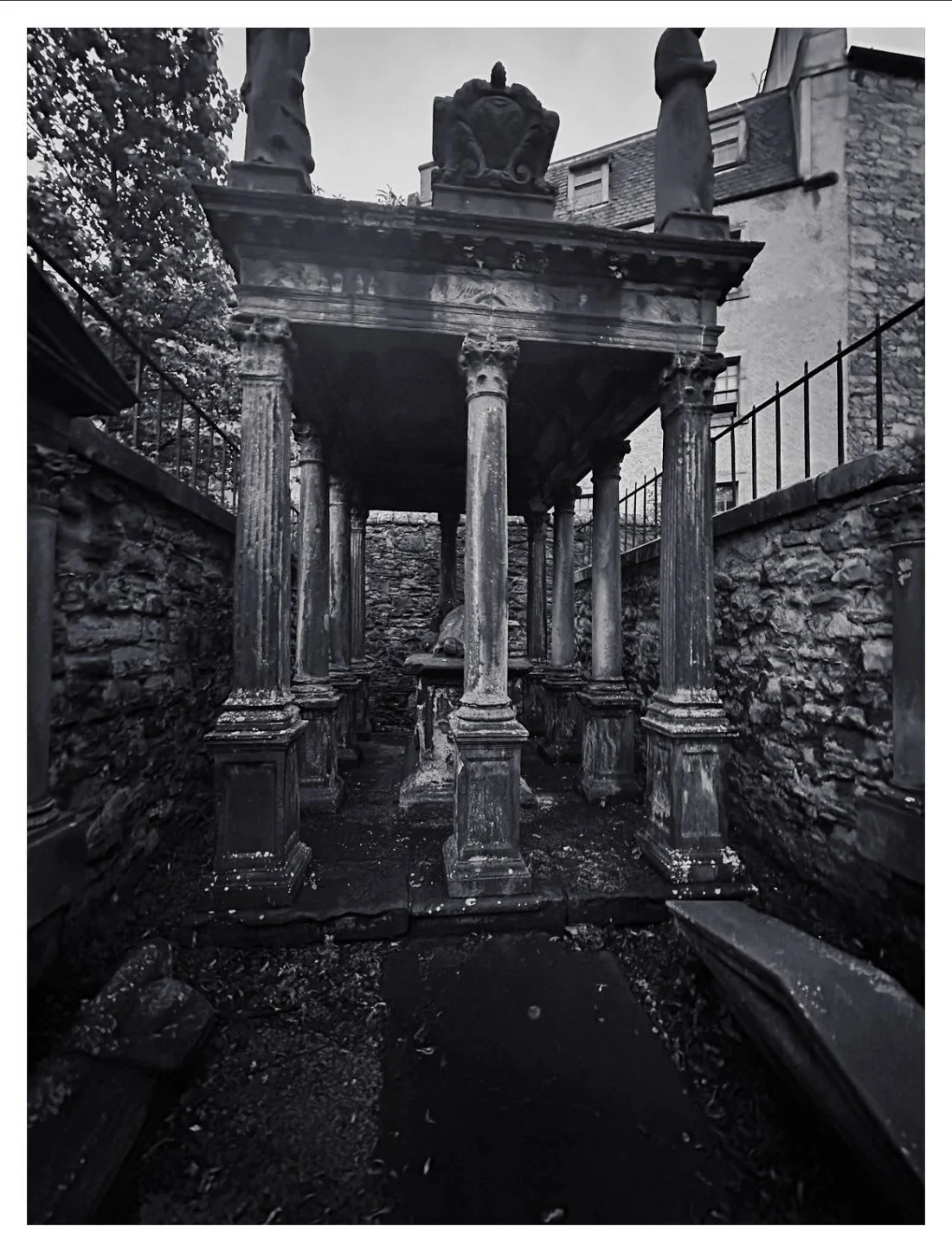
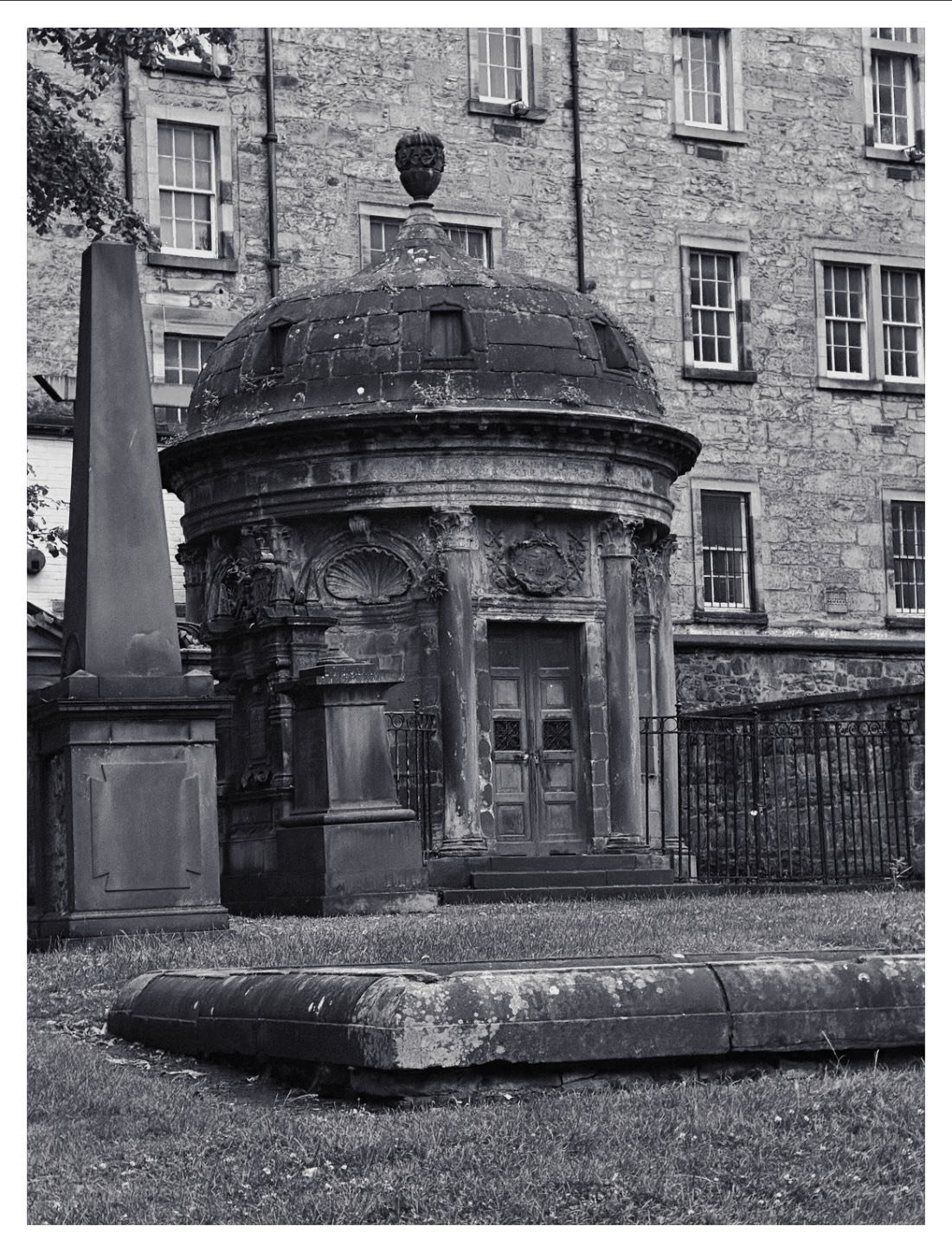
His resting place — the Black Mausoleum — stands in a sealed section of the cemetery. The city didn’t lock it for aesthetic reasons; it locked it because people kept emerging with unexplained scratches, bruises, sudden fainting fits, or reportedly “aggressive cold spots.”
Exactly the kind of résumé you want from a ghost.
To visit, you must join the City of the Dead Tour, which I did.
A gentleman, after all, does not trespass — at least not without a guide and proper lighting.
The guide greeted us with the cheerful fatalism of someone who has made peace with supernatural occupational hazards. We followed him through gates into the restricted area.
The air thickened.
Shadows deepened.
Even my scarf tightened itself as if reconsidering its loyalties.
And then we saw it:
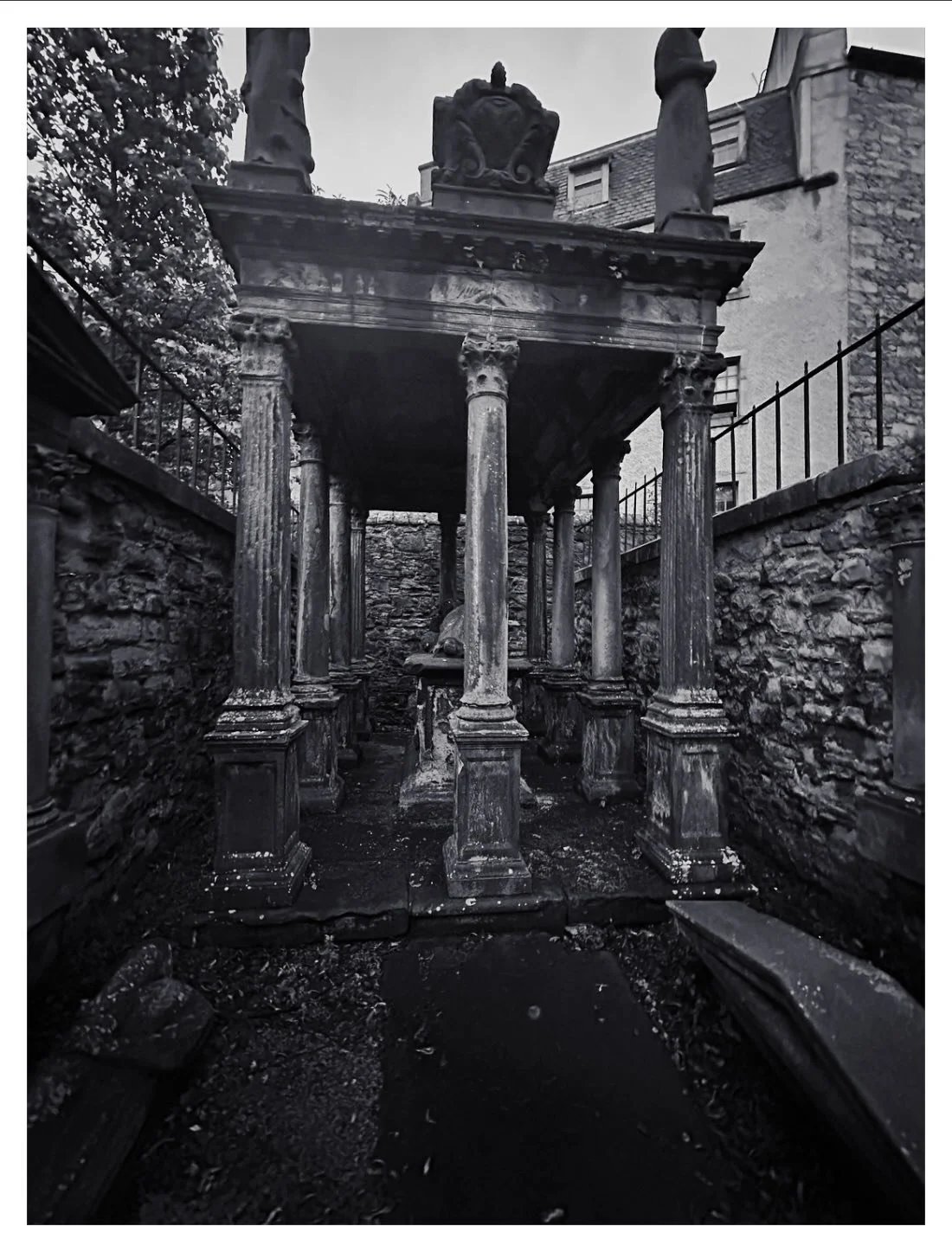
The Black Mausoleum.
A brooding, round structure of stone that seemed — impossibly — annoyed to see us.
I lifted my camera, fingertips cold, shutter soft.
The resulting photo looked like a building preparing legal action.
The guide then described the infamous dare:
You may knock, whisper “Bloody spirit, come out if you dare,” lift the iron handle and push the bolt.
Someone tried.
The door stayed shut.
But the silence afterward felt noticeably less empty.
I did not knock.
A gentleman knows when to bow out — especially when faced with a furious lawyer from the 1600s.
Photographing Shadows, Stones, and Silent Warnings
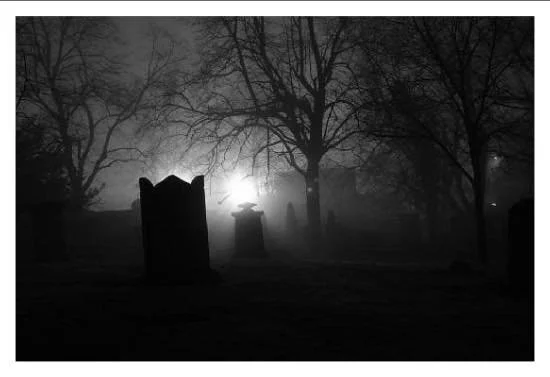
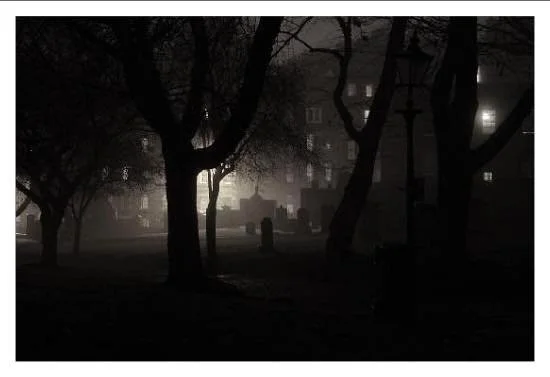
Once the tour ended, I lingered, drawn by atmosphere stronger than caution. Greyfriars, at dusk, becomes a monochrome dream. Fog curls low, creating depth no lens can fully capture. Monuments loom with distorted grace. Every sound seems to have intent.
I walked slowly, taking photos:
• A raven perched on a skull, feathered cloak glistening.
• A toppled cross half-swallowed by grass.
• An iron “mortsafe,” once used to stop body snatchers from stealing corpses.
• A narrow path that seemed to lead nowhere and everywhere simultaneously.
It felt like photographing the breath between centuries.
Eventually, cold seeped through my tweed, reminding me I was still mortal and susceptible to pneumonia. Time for warmth.
The Witchery — A Velvet Refuge for Weathered Gentlemen
Just minutes away stands The Witchery, a hotel so atmospheric and opulent that entering it feels like stepping into the private quarters of a flamboyant monarch.
Heavy velvet curtains.
Gilded furniture.
Four-poster beds carved with more drama than a Shakespeare troupe.
Candlelit halls whispering romance and mischief.
The price starts at around €510 per night.
After an evening among spirits — both Guinness and poltergeist — this felt like self-care.
Inside my room, the golden glow softened every shadow. A gentleman’s outfit suits such places. Tweed belongs in candlelight; boots belong on thick carpets; scarves drape more elegantly inside 16th-century walls.
Naturally, I photographed the details:
the antique wardrobe,
the silk wallpaper,
the reflection of chandelier light in mirror glass.
Every frame contrasted beautifully with the cemetery’s bleak aesthetic — two sides of Edinburgh’s personality in one night.
Night Walks & Windy Lanes — The Gentleman Roams Again
Once warmed and revived, I returned to the streets. Edinburgh at night is a living stage:
Lanterns flickering in mist,
pub doors swinging open with laughter spilling out,
alleys winding like secrets waiting to be told.
I wandered with no plan except to follow the light — a street-photographer instinct. My camera captured silhouettes under lamplight, reflections in rain-slick stones, and the heroism of locals trying to keep umbrellas upright in the merciless wind.
My gentleman attire held strong, though the scarf occasionally attempted flight.
There is a romanticism to Edinburgh at night. A quiet agreement between architecture and atmosphere. A city designed for those who enjoy walking simply for the pleasure of absorbing a mood.
One Last Visit — Because Curiosity Wears Tweed
Before returning to my hotel, I made one final stop at Greyfriars. Not out of bravery. Out of artistic stubbornness.
The cemetery was silent, fog rolling like slow breath over the stones. The Ravens were gone. The paths glistened. The air held that thrilling tension between peace and unease.
I captured a few final frames — long exposures of leaning monuments, the faint shimmer of distant streetlights, the half-invisible outline of a mausoleum dissolving into fog.
Was someone watching?
Probably a pigeon.
Or a ghost.
Hard to say.
Either way, I felt the unmistakable urge to bow slightly to the darkness — a quiet acknowledgment between a gentleman and the unknown.
Final Thoughts — Edinburgh Is a City for Lovers of Weather, Atmosphere & the Occasional Ghost
My refined weekend in Edinburgh delivered everything I hoped for and more:
• mist thick enough to taste
• history heavy enough to feel
• pubs warm enough to restore one’s soul
• a cemetery dramatic enough to inspire nightmares and photography alike
• a hotel luxurious enough to undo the emotional damage
Edinburgh rewards curiosity.
It indulges eccentricity.
And it embraces anyone — especially a gentleman in tweed with a camera — who enjoys strolling through stories carved into stone.
This city proves that life can be eerie, elegant, humorous, and haunting all at once.
And, crucially:
It photographs beautifully.