Square Truths and Quiet Streets
Storytelling Through Medium Format Street Photography
Featuring Hasselblad 500CM, Plaubel Makina 67, and Rolleiflex 6x6
The Language of Medium Format
Now let‘s delve into not just cameras or technique, but a philosophy of seeing. Medium format isn’t just a change in equipment—it is a change in mindset.
Let’s explore the world of street photography with three iconic cameras: the Hasselblad 500CM, the Plaubel Makina 67, and the Rolleiflex 6x6. Each offers not only a different frame size but a distinct rhythm.
In cities like Hong Kong, Tokyo, Hanoi, and Manila, these tools taught me how to step back, breathe, and frame stories—not just take pictures.
1. The Instruments – Hasselblad, Makina, Rolleiflex
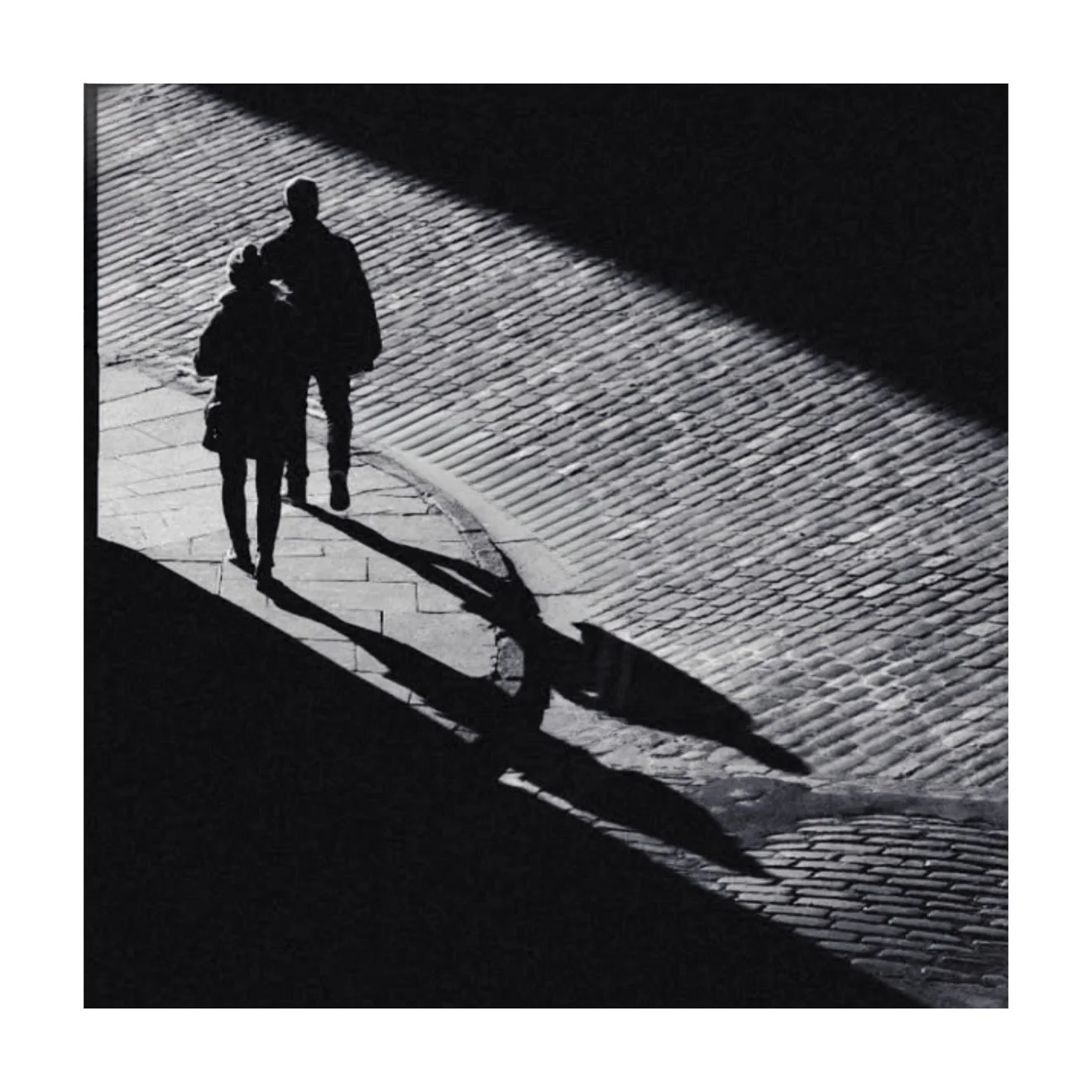
Hasselblad 500CM (6x6 SLR): Modular, quiet, and exacting. A street session in Central, Hong Kong, captured a street vendor standing still under harsh midday sun while shadows from surrounding skyscrapers danced around him. The square frame turned this into a tableau of contrast and geometry.
Plaubel Makina 67 (6x7 Rangefinder): Light, compact, and deadly sharp. In Shinjuku, Tokyo, a lone salaryman beneath glowing neon signage was rendered with cinematic clarity. The vertical frame emphasized isolation in a city of millions.
Rolleiflex TLR (6x6): Gentle, quiet, and classic. A child with a red kite in Hanoi stood against the old French Quarter. Shot from the waist, unnoticed, the moment held both movement and stillness.
Each camera becomes a storyteller’s brush, each frame a window into humanity.
2. Street Philosophy – Slow Seeing and Intentional Framing
The streets of Manila during golden hour tell different stories than a rainy morning in Osaka. Medium format forces you to wait.
In Quiapo, Manila, an elderly woman selling candles sat beneath a flickering neon “Botica.” With a Rolleiflex and HP5+, the grain wrapped around her like smoke.
In Kyoto, I spent twenty minutes waiting for a lone cyclist to pass an ancient wooden gate. One frame, one exposure with the Makina, and it was enough.
That’s the power of slow seeing—it honors the moment. You don’t react. You observe. You compose. You breathe with the city.
3. Black and White – The Emotional Architecture
Black and white film brings emotional clarity. Remove color, and the photograph must stand on gesture, light, and composition.
Black and white is not simply an aesthetic choice. It is a language of emotion, a way of evoking time, history, memory—and letting the image become something more than documentation.
4. Technical & Creative Use of Gear
Hasselblad: Use the 80mm Planar. It’s precise, compact, and renders tones that feel etched in silver.
Makina 67: With only one lens—the 80mm Nikkor—you get cinematic clarity and a dreamy falloff. It’s like shooting a still from a forgotten film.
Rolleiflex: Fixed 75mm or 80mm Zeiss lens. The waist-level viewfinder encourages discreet intimacy and spontaneous symmetry.
The mindset:
Fewer frames.
More presence.
Less chasing.
More observing.
5. Film & Mood – Choosing Your Visual Voice
Film is not just chemistry—it’s emotion baked into grain.
Kodak Tri-X 400: For grit and tension. Push it to 1600 for night markets in Tokyo or shadow-drenched alleys in Hong Kong.
Ilford HP5+: For soft light and human stories. Beautiful in overcast Manila, or on quiet mornings in Kyoto.
Rollei Retro 400S: Graphic and contrast-heavy. Excellent for architectural edges in Hong Kong’s mid-levels or signage-heavy backstreets.
Foma 100: Low grain, vintage character. Perfect for historical corners of Hanoi or colonial facades in Saigon.
Let the film stock match the feeling.
Don’t shoot for sharpness—shoot for story.
6. Summary – The Gift of Medium Format
Medium format is not about megapixels.
It’s about mindfulness.
Each frame becomes a vow: “This matters. I will remember this.”
Possible Challenge
Shoot one roll. Choose one city. One camera. One film.
Let each photograph become a line of poetry.
Let medium format slow you down, so you can finally catch up—with yourself, and with the world around you.
Thank you for your time reading!.