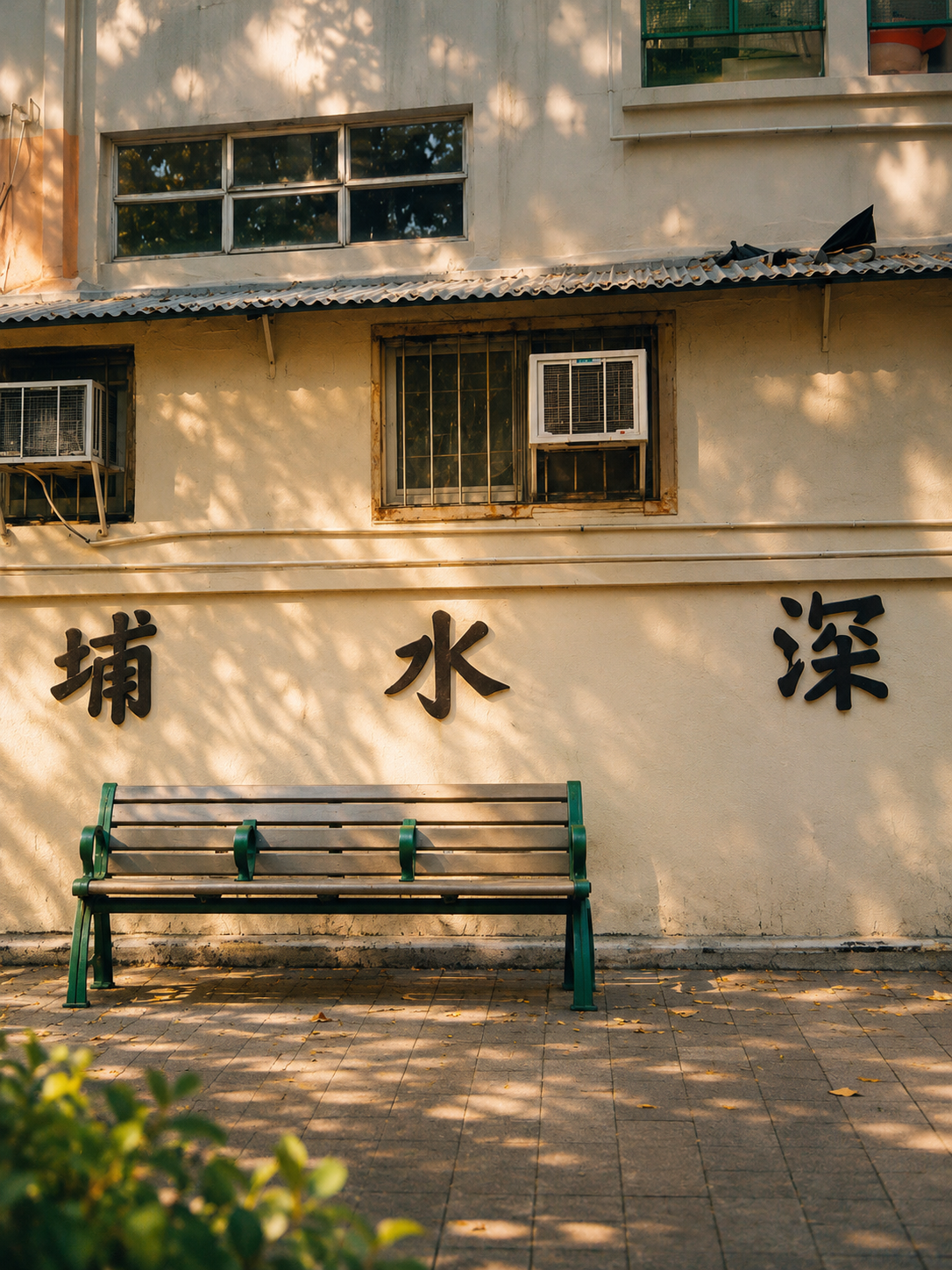
Sham Shui Po
Sham Shui Po: Where Chaos Has a System, and Nobody Seems Particularly Worried About It
Walking the back alleys of Hong Kong with a camera, a questionable sense of direction, and a growing appreciation for organised disorder.
There are places you visit because they’re beautiful. Others because they’re famous. And then there’s Sham Shui Po, a neighbourhood that doesn’t seem particularly interested in being either, at least not in the conventional sense.
Sham Shui Po doesn’t care whether you like it. It doesn’t tidy up for visitors, arrange its rubbish into photogenic compositions, or politely position its elderly residents in patches of afternoon sunlight. It simply gets on with life.
Which, naturally, makes it one of my favourite places in Hong Kong to photograph.
I set off with my camera, comfortable shoes, and that familiar photographer’s ambition to discover something that several thousand photographers before me had somehow overlooked. A rather optimistic undertaking in a city where even the cockroaches have probably been photographed with a Leica.
But Sham Shui Po has a way of rewarding those who walk slowly, pay attention, and occasionally forget where they intended to go.
Getting lost here isn’t particularly difficult. In fact, I suspect it’s the best way to explore the neighbourhood.
Ducks, Smugglers, and Second-Hand Trousers
Before Sham Shui Po became this wonderfully untidy collection of markets, workshops, electronics stalls, and elderly gentlemen occupying plastic chairs, it was a small Hakka settlement.
Apliu Street, where you can now buy everything from electrical cables to mysterious electronic devices whose original purpose has been lost to civilisation, was once associated with duck farming.
Yes, ducks.
I find that strangely reassuring. Somewhere beneath today’s mountains of USB cables, obsolete chargers, and suspiciously inexpensive headphones, the historical spirit of a duck is still wandering about.
As Hong Kong expanded, temples, piers, and markets gradually transformed the area into a busy commercial neighbourhood. Its location also attracted smugglers, fugitives, and people who presumably preferred not to discuss their occupations with the authorities.
In other words, Sham Shui Po had developed an entrepreneurial spirit long before anyone thought to call it a start-up ecosystem.
Later, the district became an important centre for second-hand clothing. During the Japanese occupation, some people leaving Hong Kong sold their belongings before boarding boats to seek refuge elsewhere. Clothes changed hands not because vintage fashion was fashionable, but because people needed money and had little choice.
Today, of course, second-hand clothing has become an industry of its own. Old garments are carefully selected, displayed under flattering lights, and sold at prices that would have astonished their original owners.
What was once necessity is now vintage. What was once ordinary is now collectible. And a worn-out shirt, provided it’s sufficiently old and comes with an interesting story, can suddenly become a rare archival fashion piece.
History has a peculiar sense of humour.
Sham Shui Po, meanwhile, continues selling clothes without showing much interest in the philosophical implications.
The Fine Art of Sitting Around
One of the first things I noticed while wandering through the neighbourhood was the extraordinary importance of sitting.
People sit everywhere.
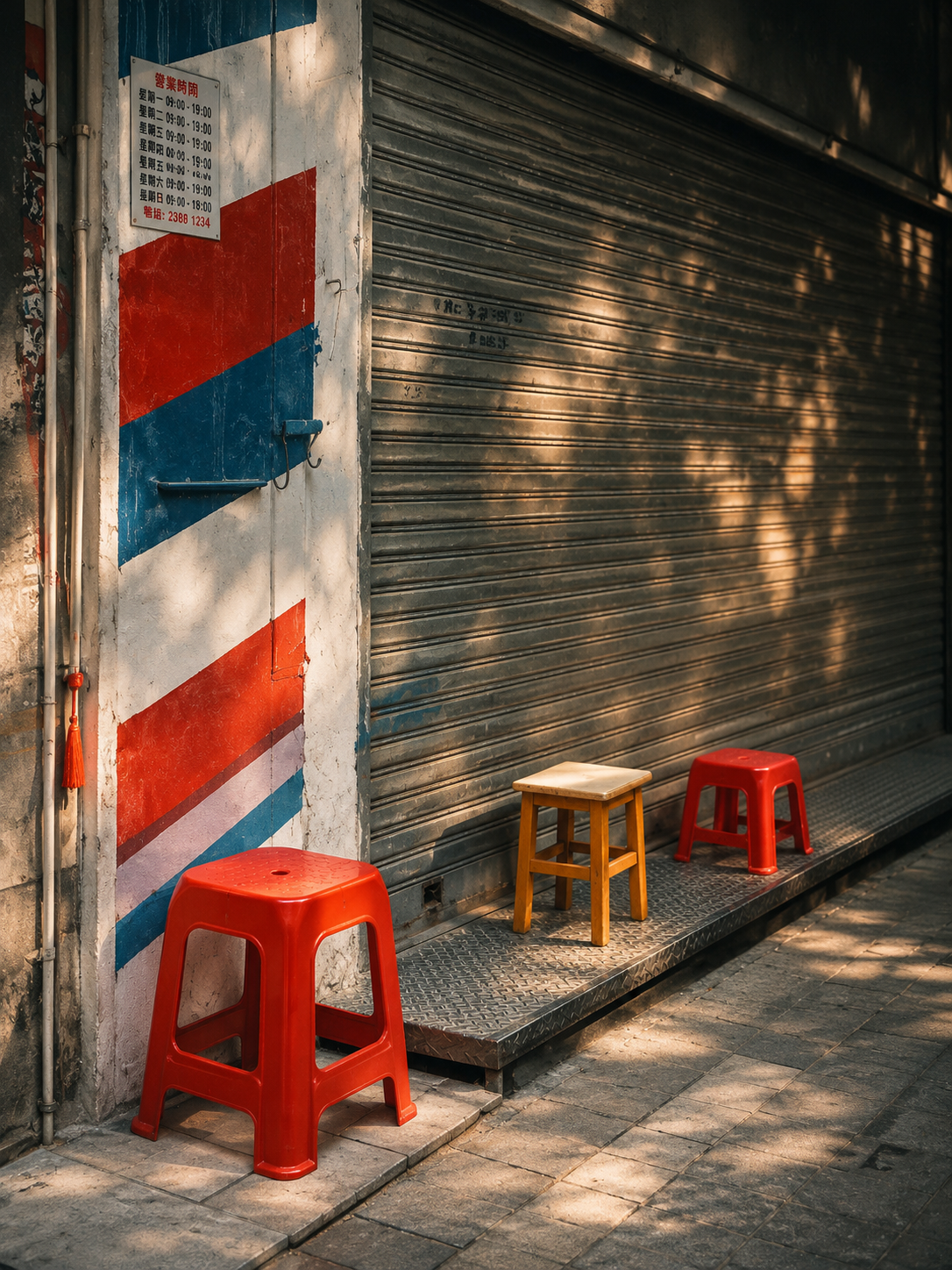
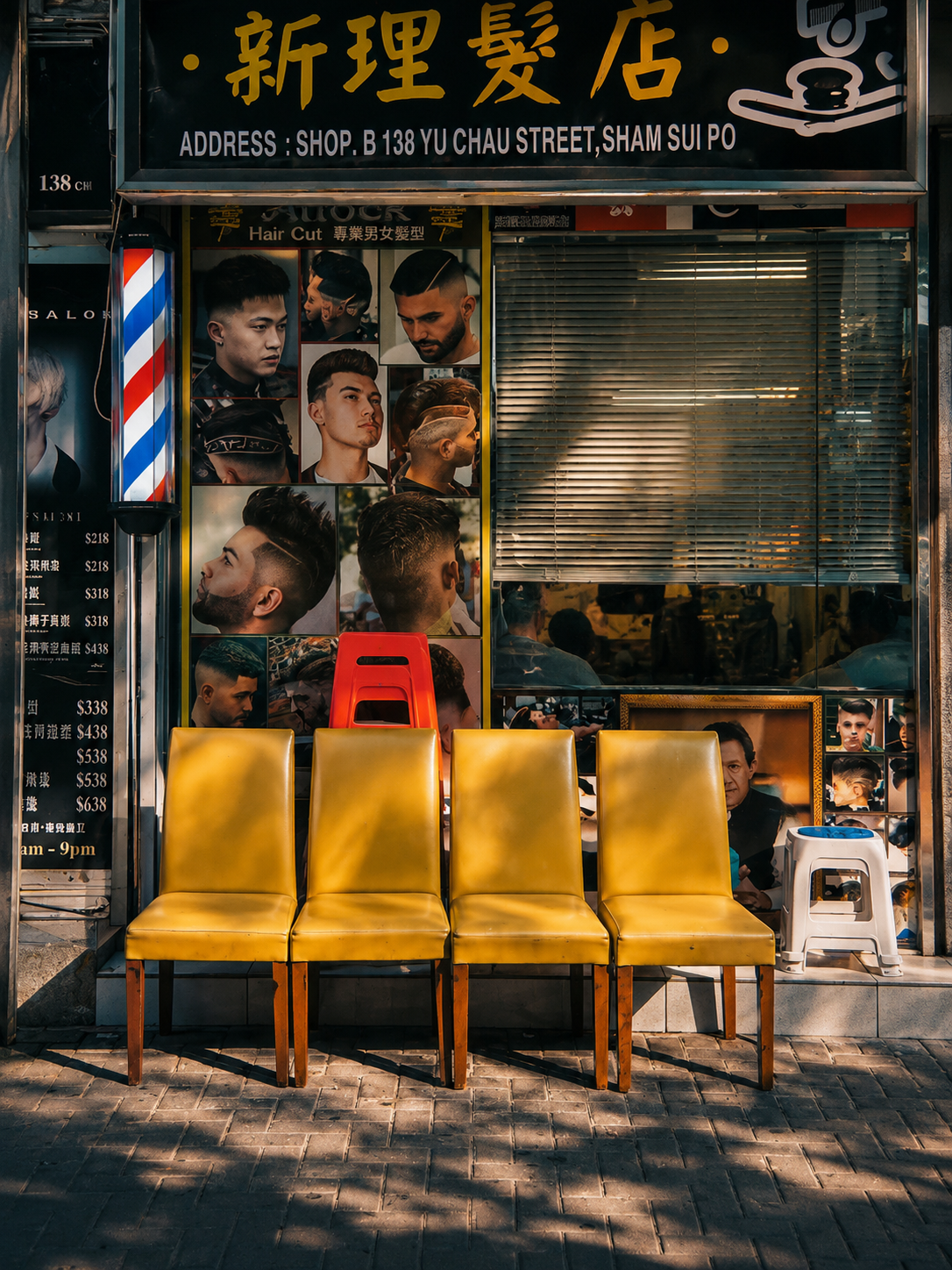
Outside shops, beside market stalls, beneath improvised awnings, and in narrow alleys. On folding chairs, plastic stools, wooden boxes, and objects that were almost certainly manufactured for entirely different purposes.
Hong Kong has some of the most expensive real estate in the world, yet here a plastic stool can establish temporary ownership of a perfectly respectable piece of pavement.
No contract. No estate agent. No mortgage.
Just a stool.
I stop to watch an elderly gentleman sitting outside a shop, observing the street with the concentration of a security officer guarding a national treasure. Two others join him. A conversation begins. Someone appears with tea. Another gentleman arrives, apparently summoned by an invisible communication system.
Within minutes, an informal social club has been established.
I find these scenes endlessly fascinating.
Around them, the city keeps moving. Delivery workers push overloaded trolleys through gaps that appear physically impossible. Shoppers negotiate prices with impressive determination. Motorcycles squeeze past pedestrians with an optimism bordering on religious faith.
And the gentlemen remain seated.
They have mastered something that much of Hong Kong seems to have forgotten: the ability to do absolutely nothing without feeling guilty about it.
Of course, there’s more to these scenes than charming old men and plastic furniture. In a neighbourhood where living space is limited, the street becomes an extension of the home. A place to meet, talk, watch, rest, and occasionally interfere in someone else’s business.
The plastic chair isn’t simply furniture.
It’s architecture, community planning, and social infrastructure, available for approximately thirty Hong Kong dollars.
Urban planners could learn something here, although they’d probably begin by commissioning a three-year feasibility study.
Design Without Designers
Walking around Apliu Street, I gradually realise that almost everyone here seems to be a designer.
Not necessarily the sort who dresses entirely in black, discusses Scandinavian minimalism, and charges extraordinary amounts of money to explain why a chair should have only three legs.
I mean practical designers. People who solve problems because they have to, usually with whatever happens to be lying around.
A market stall is a perfect example.
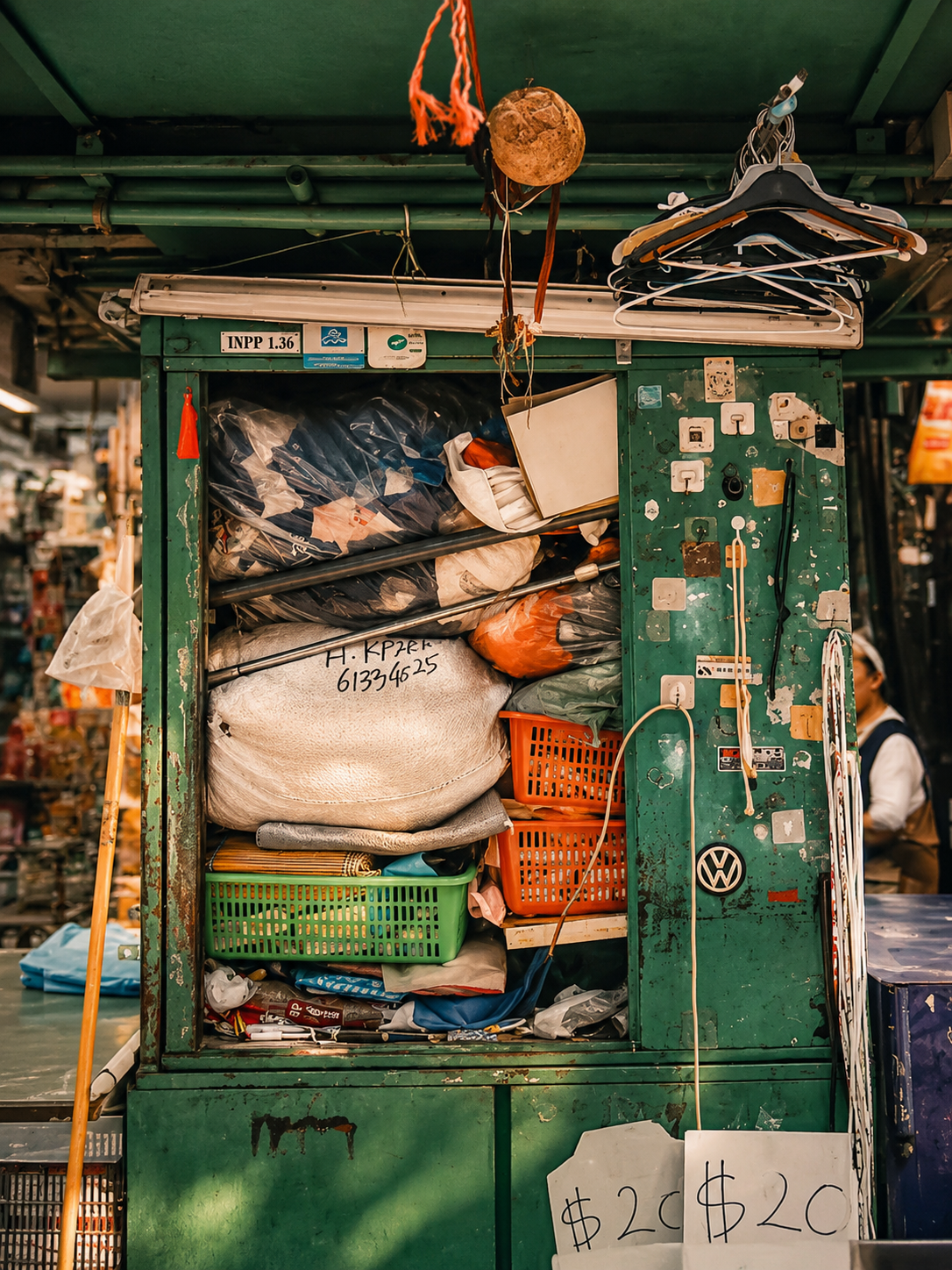
Space is limited, merchandise is abundant, and customers expect to see everything at once. The result is a remarkable collection of improvised engineering.
Wooden boxes become display counters. Metal pipes turn into hanging systems. Hooks, ropes, cable ties, and discarded furniture are assembled into structures that look alarmingly temporary but somehow survive for years.
One vendor transforms a trolley into a mobile shop. Another constructs a display from wire, cardboard, and what appears to be considerable optimism.
One of my favourite discoveries is a wonderfully simple way of displaying reading glasses. Short pieces of plastic drinking straws are used to hold the glasses upright, creating a neat, practical display.
That’s it. A few straws.
Simple, inexpensive, and remarkably effective.
Somewhere in a European design school, a student could probably turn this into a master’s thesis entitled Modular Optical Presentation Systems in Informal Urban Economies.
Here, the vendor simply wants to sell glasses.
Even bananas receive thoughtful design treatment. Hanging them saves space, makes them easier to see, and discourages customers from repeatedly squeezing them to determine whether they’re ripe.
An elegant solution to a universal problem: human beings seem incapable of resisting the urge to touch things they have no intention of buying.
I find myself photographing these arrangements almost as carefully as I photograph people.
Not because they’re beautiful in the conventional sense, but because they reveal intelligence, resourcefulness, and creativity without the slightest desire to impress.
In Sham Shui Po, good design doesn’t need an award.
It needs to work.
Then there are the walls.
In most cities, a wall is simply a wall. Something to separate buildings, support roofs, or provide local authorities with an opportunity to prohibit something.
In Sham Shui Po, walls have opinions.
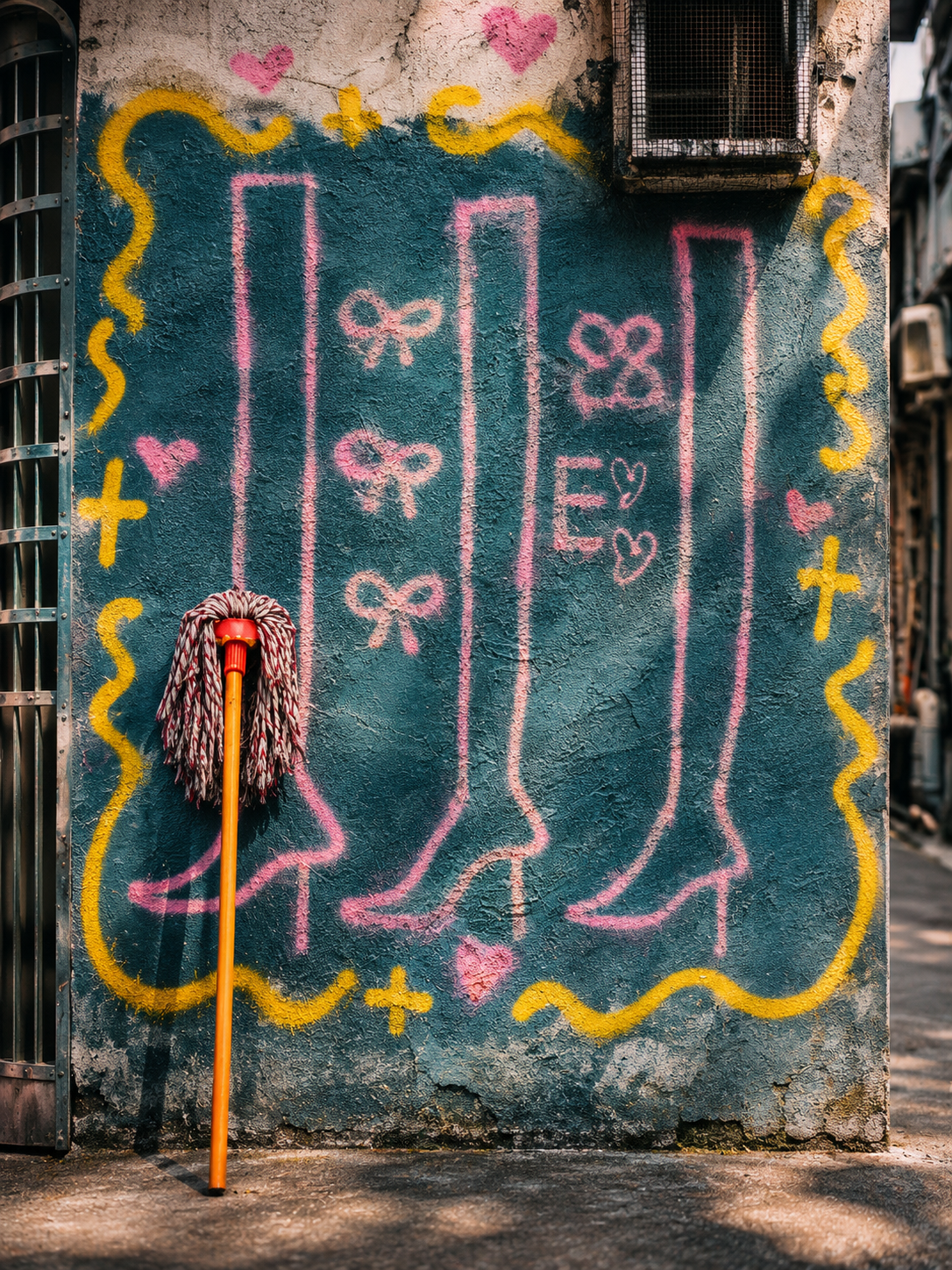
Walking through the back alleys, I come across handwritten messages, faded advertisements, graffiti, telephone numbers, philosophical observations, and occasional contributions whose meaning remains a complete mystery to me.
Some are carefully written. Others look as though they were produced during a moment of considerable emotional excitement.
Together, they form a kind of analogue social network.
Someone leaves a message. Someone else responds. A third person adds a comment. Another disagrees. Over time, the conversation spreads across the surface.
All without smartphones, passwords, algorithms, or advertisements for products you happened to mention once during a private conversation.
Imagine that.
A social network that doesn’t require a subscription.
What interests me most, though, is how these messages become part of their surroundings.
A painted line meets a rusty pipe. A handwritten notice disappears behind stacked boxes. A faded Chinese character merges with peeling paint and weathered concrete.
I often find myself standing in front of these walls for several minutes, studying details that most people pass without a second glance.
Layers of paint, paper, rust, rain, and human intervention become accidental artworks.
Some are funny. Some are surprisingly moving. Others are completely incomprehensible.
Rather like the internet, except that the walls have better texture.
And nobody asks me to accept cookies.
Sham Shui Po isn’t the first place that comes to mind when someone mentions urban greenery.
Most visitors would probably describe it as crowded, noisy, densely built, or, if they’re feeling particularly diplomatic, visually stimulating.
Yet the longer I walk, the more plants I notice.
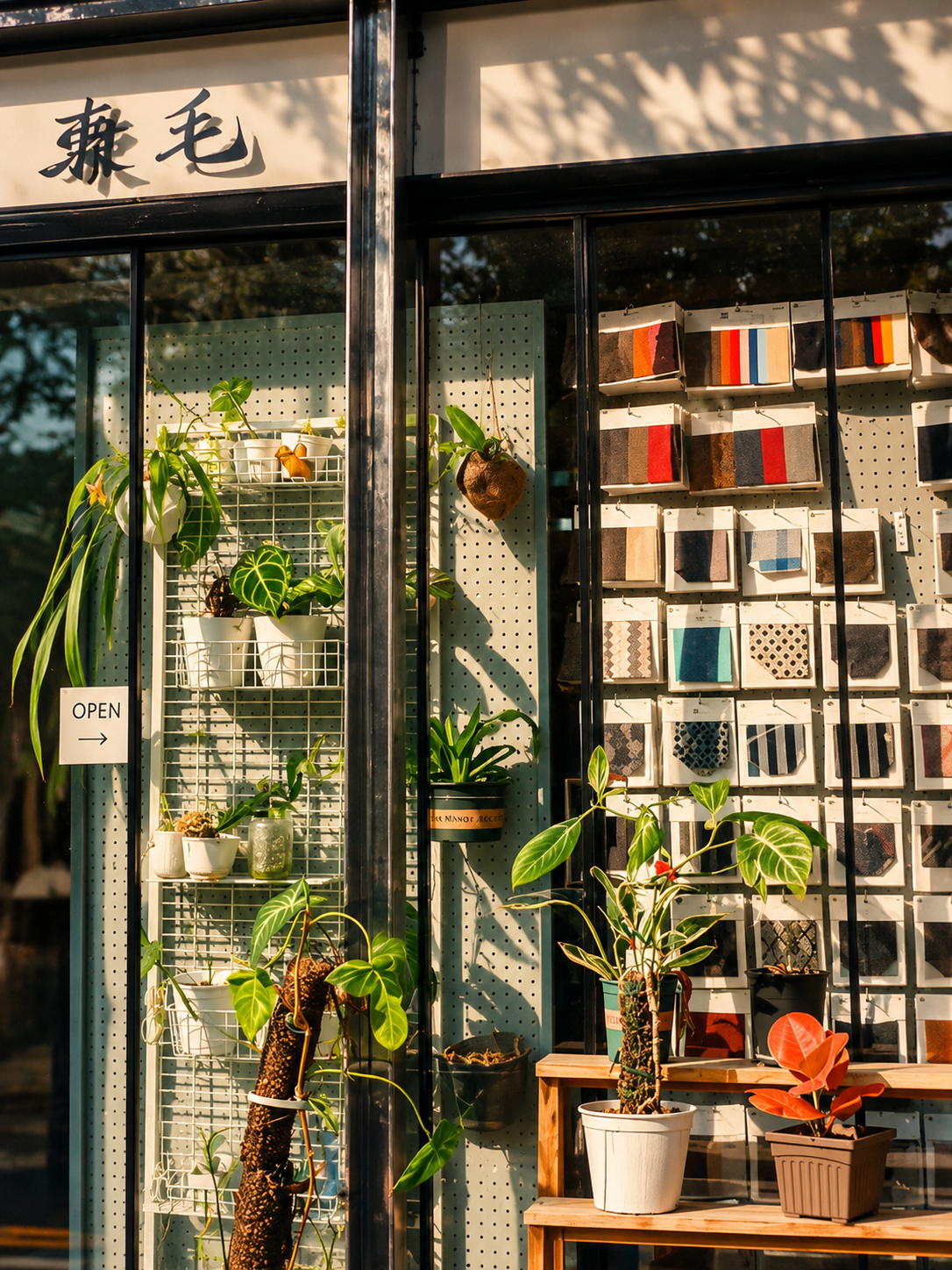
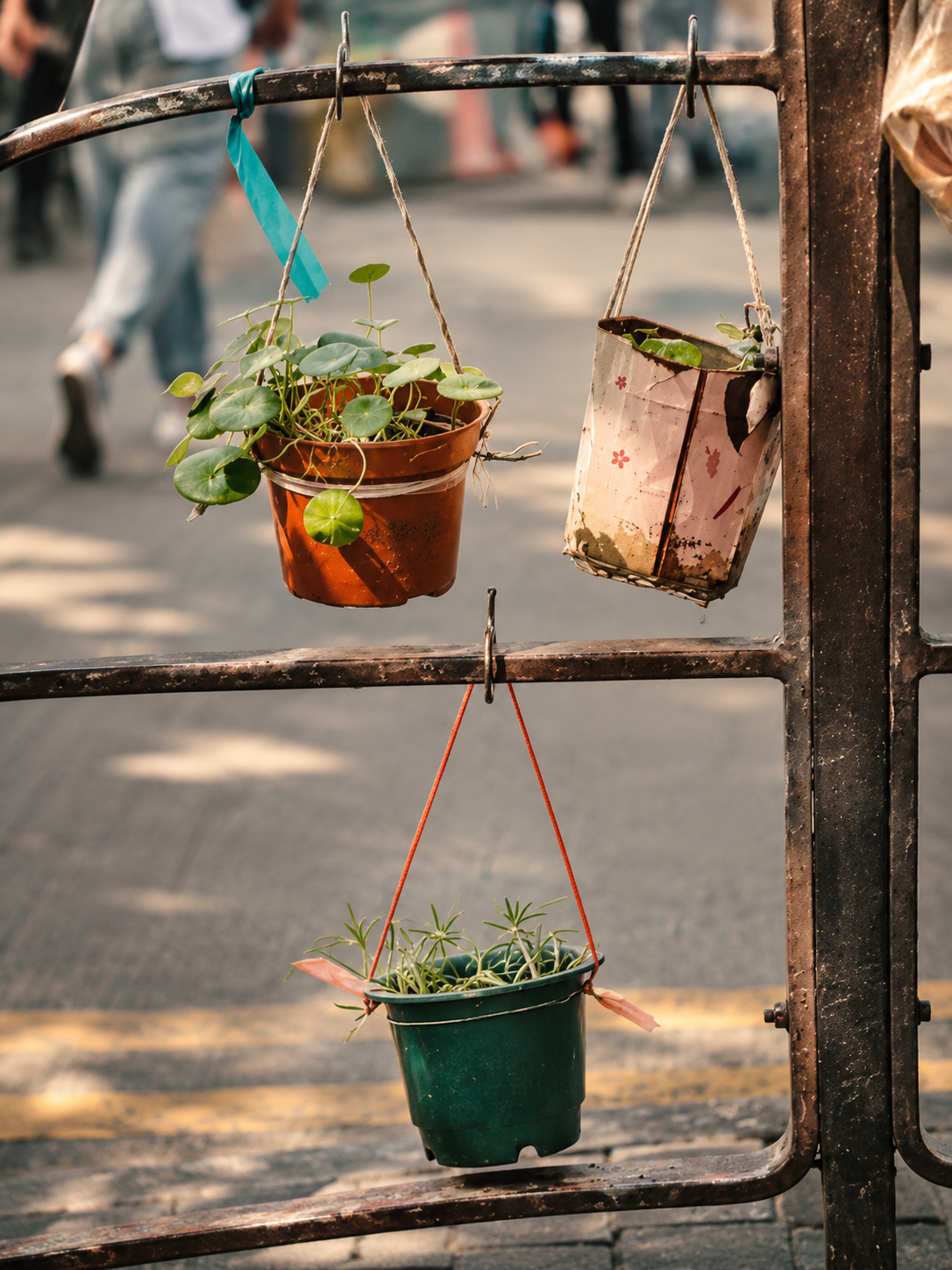
Outside workshops, beside garage entrances, in front of market stalls, and along narrow streets, residents have created small gardens wherever space allows.
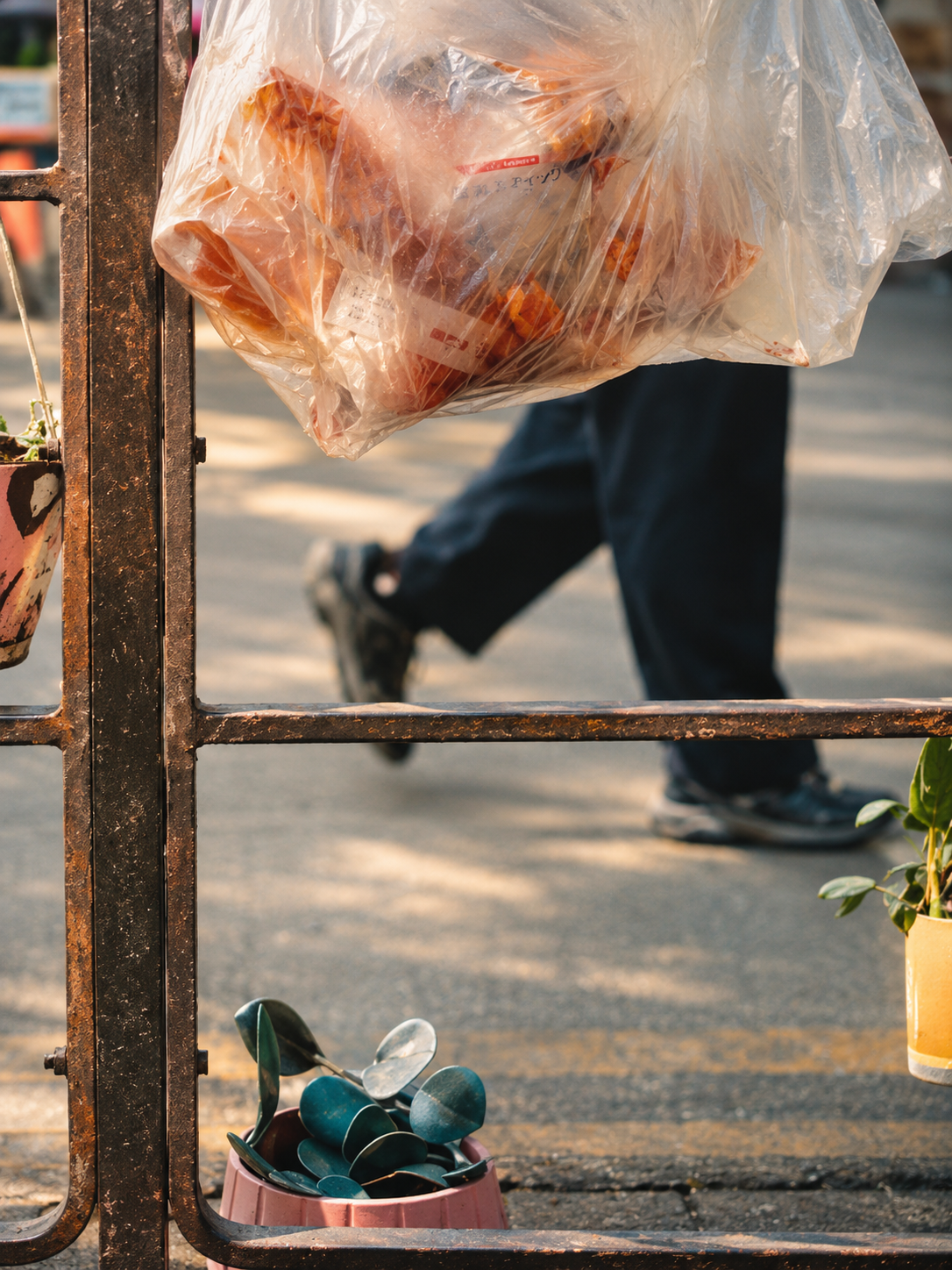
Potted plants stand beside rubbish bags. Flowers grow next to electrical equipment. Small trees occupy corners where sunlight seems to arrive only by appointment.
Along Wong Chuk Street, shopkeepers tend plants in spaces that barely appear large enough for a pair of shoes.
In one back alley, I come across a vertical garden made from discarded plastic bottles. Someone has cut openings into them, filled them with soil, and planted flowers and greenery.
It’s hardly a botanical masterpiece. The containers don’t match, the arrangement isn’t symmetrical, and the surrounding alley certainly won’t be appearing in a luxury gardening magazine.
But that’s precisely what makes it interesting.
Someone looked at an ordinary, rather uninviting space and decided it could be better.
No environmental consultant. No corporate sustainability report. No promotional campaign featuring a smiling executive standing beside a plant.
Just a little effort, a few discarded bottles, and the simple idea that greenery might make everyday life more pleasant.
I admire that.
And photograph it, naturally.
The contrast is wonderful. Rusty pipes, weathered concrete, improvised shelving, and suddenly a bright green leaf catching the afternoon light.
Sometimes the smallest things make the strongest photographs.
Although I confess that a little less clutter in front of the composition would occasionally be appreciated.
Apparently, the residents have other priorities than my photographic convenience.
Unreasonable, really.
The Photographer’s Problem: Everything Is Interesting
There’s one serious difficulty with photographing Sham Shui Po.
Knowing when to stop.
Every few metres, another scene catches my attention.
A shopkeeper arranging merchandise with almost mathematical precision. A man sleeping behind a mountain of cardboard boxes. A woman watering plants beside a busy street. An elderly resident watching the world from a doorway.
Nothing spectacular. Nothing staged.
Just life happening.
Then the light changes.
A narrow shaft of sunlight enters an alley, illuminating a faded wall while everything around it disappears into shadow.
For a few seconds, an entirely ordinary corner becomes something extraordinary.
I stop, raise the camera, and make another photograph.
This is what keeps me walking.
Not the search for spectacular subjects, but the possibility that something ordinary will reveal itself for a fraction of a second.
I’ve always believed that documentary photography isn’t about making a place appear more exotic, dramatic, picturesque, or miserable than it actually is.
It’s about paying attention.
And Sham Shui Po rewards attention.
Of course, the obvious contrasts are tempting. Poverty beside commerce. Old buildings beneath modern towers. Colourful markets against decaying walls.
They’re easy photographs to make, and sometimes they tell an important story.
But the more interesting images are often quieter.
The careful arrangement of objects. A brief exchange between neighbours. The improvised solutions to everyday problems. The small gestures that reveal how people adapt to the city around them.
I try to photograph these things without turning the neighbourhood into a theatrical backdrop.
The people living here aren’t supporting actors in my photographic adventure.
They’re simply going about their lives.
I’m the visitor carrying an expensive camera and occasionally blocking the pavement.
A distinction worth remembering, particularly when someone is trying to get past me with a trolley.
Order in Disorder
After several hours of wandering, something becomes increasingly clear.
Sham Shui Po isn’t nearly as chaotic as it first appears.
It simply follows rules that aren’t immediately obvious to outsiders.
The market stalls have their systems. Residents have their favourite places. Shopkeepers know exactly where everything belongs, even when everything appears to belong nowhere.
A collection of electrical cables that looks like an archaeological excavation to me is perfectly organised to the person selling them.
A narrow alley that appears hopelessly cluttered is actually a functioning workplace.
A few plastic stools become a social institution.
A wall becomes a conversation.
A discarded bottle becomes a flowerpot.
And a street once associated with ducks becomes a marketplace for electronics.
Perhaps Sham Shui Po doesn’t lack order at all.
Perhaps we’ve simply become too accustomed to believing that order must look clean, symmetrical, and preferably be designed by someone with an architectural degree.
This neighbourhood offers a different perspective.
Life doesn’t always need to be tidy to function. Beauty doesn’t always need to be planned. And community doesn’t necessarily require a community centre.
Sometimes all it takes is a few plastic stools and enough room for another person to join the conversation.
I’m not suggesting that Sham Shui Po is some kind of urban paradise. It isn’t. Crowded housing, limited space, ageing buildings, and the pressures of everyday life are real enough. It would be dishonest to turn those difficulties into picturesque scenery simply because they look interesting through a camera lens.
But it would be equally wrong to see only the difficulties.
What fascinates me is the resourcefulness of the people who live and work here. Their ability to adapt, improvise, and create something useful, sometimes even beautiful, out of very little.
There is a kind of dignity in that which deserves more attention than it usually receives.
One More Alley
Eventually, I decide I’ve taken enough photographs.
This is, naturally, a lie.
Photographers never take enough photographs. We simply run out of daylight, battery power, storage space, or the patience of anyone unfortunate enough to accompany us.
I turn towards the MTR station.
Then I notice another alley.
It’s a narrow passage between two ageing buildings, filled with pipes, shadows, hanging laundry, and a small patch of sunlight at the far end.
Nothing particularly remarkable.
Which is precisely why I walk into it.
Behind me, the market continues its business. Someone is arguing about a price. Someone else is pushing a trolley through the crowd. An elderly gentleman is probably still sitting on the same plastic stool, having accomplished more genuine social interaction in an afternoon than most people manage in a week online.
Sham Shui Po carries on.
It doesn’t need my photographs to explain itself, and it certainly doesn’t need me to tell it what it ought to be.
Perhaps that’s what I like most about the place.
I came looking for the character of a neighbourhood and gradually realised that it doesn’t reside in any particular building, market, or street.
It’s found in thousands of small, ordinary decisions people make every day to turn an overcrowded part of the city into somewhere they can live, work, meet, argue, rest, and occasionally grow a plant in an old plastic bottle.
Imperfectly. Inventively. Sometimes noisily.
And with an astonishing number of plastic chairs.
I take one last photograph.
Then another.
And another.
At this rate, I may never reach the MTR.
But then again, I didn’t come to Sham Shui Po to catch a train.
I came to look.
And there’s still plenty to see.
Part of my ongoing photographic exploration of everyday life, urban spaces, and the extraordinary things that happen when nobody is trying to be extraordinary.