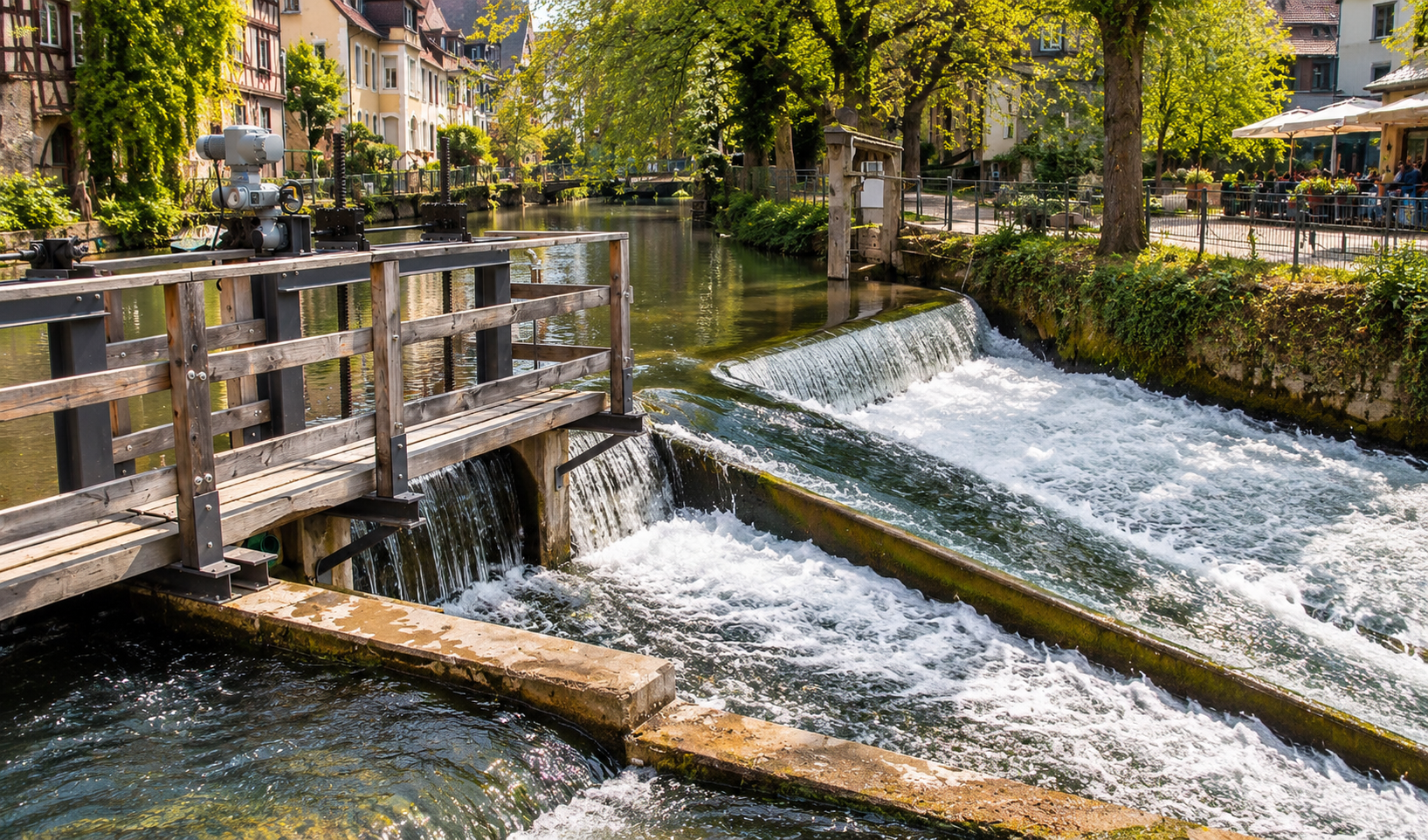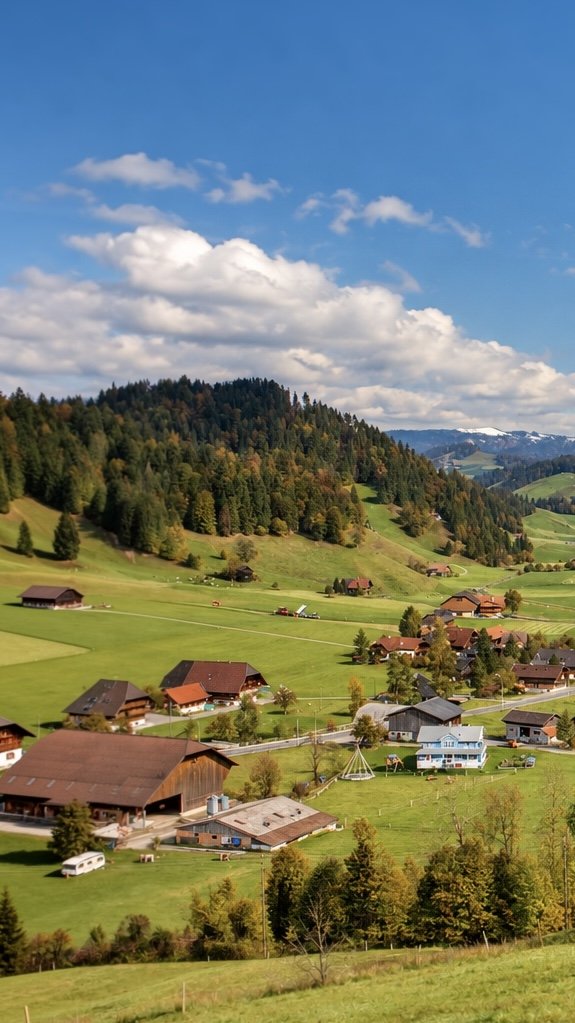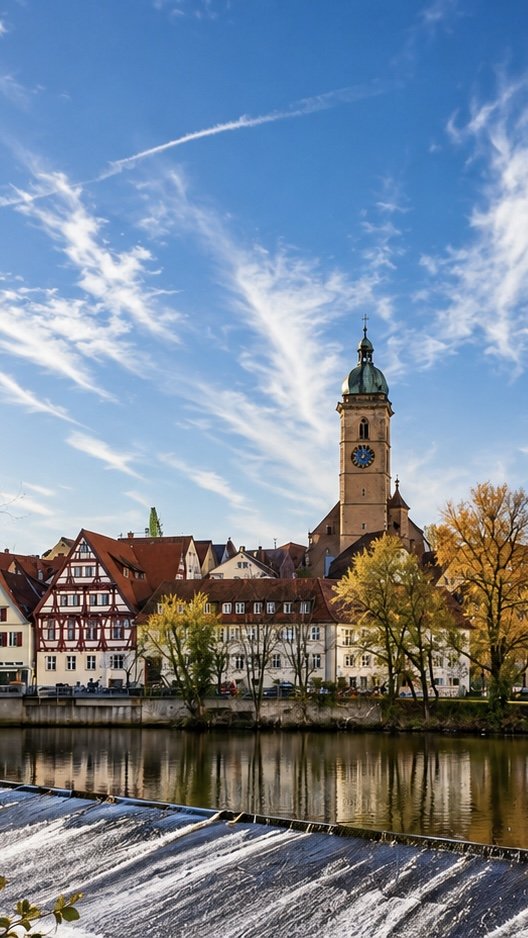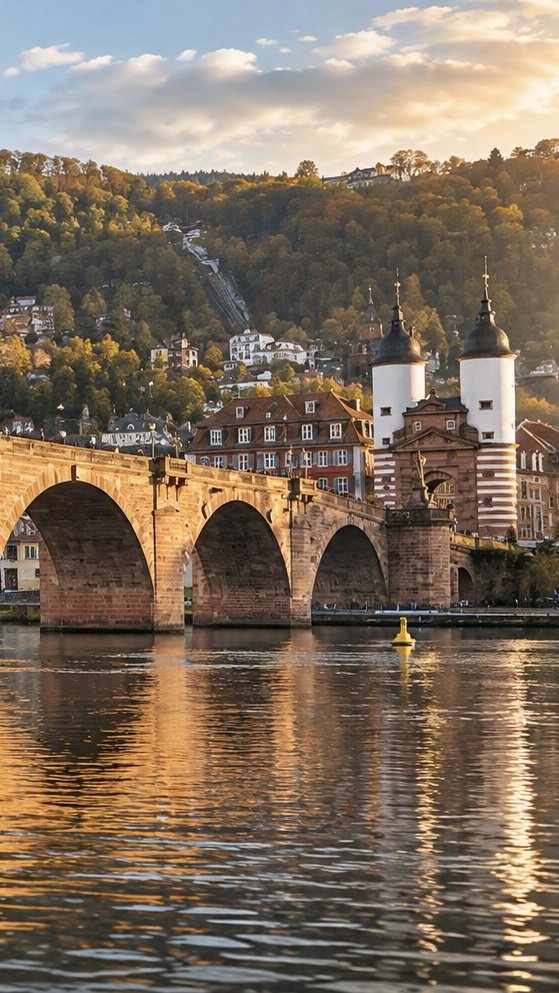
Between Vines, Climbs and Decisions
Between Vines, Climbs and Bad Decisions
At first, it was only a number, and like most numbers displayed on a screen, it possessed neither weight nor smell, neither headwind nor gradient.
**396.**
Three hundred and ninety-six kilometres on the Württemberg Wine Cycle Route, from Niederstetten to Rottenburg am Neckar, with a little more than two thousand metres of climbing and five days in which to do it. I pinched the map on my phone until the entire route fitted onto the screen. A thin line wound its way through Württemberg, following rivers, cutting through vineyards, touching towns and villages, and at that scale it looked easy enough. It is remarkable how harmless four hundred kilometres can appear when you reduce them to the length of an index finger. “I can do that,” I thought. Again.
Savanna was already waiting outside, beige, gleaming and broad-tyred, the two panniers still empty and the battery fully charged. My Ruffian has a squat, almost motorcycle-like appearance, as though at some point during its design someone had asked whether a bicycle really needed to look like a bicycle, and somebody else had sensibly decided that it did not. Savanna hummed. She does that often, but at that particular moment I might have interpreted the sound as a comment.
I didn't. That was the first bad decision.
⁂
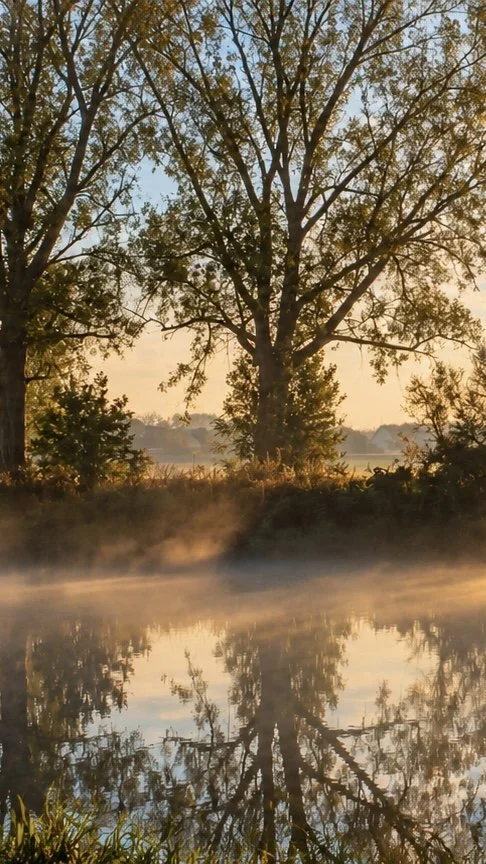
A thin mist lay over the Vorbach Valley that morning in Niederstetten, not dense enough to hide the countryside, merely thick enough to soften the fields and make them seem a little farther away. The air was cool and smelled of damp earth, grass and that first hint of autumn that is sensed less through temperature than through the sudden sharpness of familiar smells. Tiny drops of water clung to grass and leaves. When I attached the panniers, the screws slipped neatly into place, and for a brief moment I felt that deep satisfaction that comes when everything is exactly where it belongs. Human beings are fond of that feeling of preparedness, perhaps because reality is so dependable in demonstrating how little it means.
The battery showed one hundred per cent. The camera lay well protected in its bag. Water was packed, tools too, and even my legs seemed to have no fundamental objection to the five days ahead. I put on my Dead Man hat, wheeled Savanna onto the road and set off. The electric motor woke with a quiet hum, more vibration than actual sound, and within minutes Niederstetten was behind me.
The opening kilometres of a longer journey possess a peculiar lightness. The body works, but it has not yet begun calculating what lies ahead. It knows nothing of the afternoon climbs or the fatigue of the following morning, and certainly nothing of those places where, after several days, a bicycle saddle begins raising anatomical questions one may have considered before, although admittedly that was some time ago. So I rode through the Vorbach Valley, listening to the steady whisper of the tyres and watching the sun slowly draw the mist out of the meadows. The first vines appeared, and not long afterwards came Weikersheim.
The palace rose behind the houses with the air of something that had been placed there very deliberately. Its Renaissance façade caught the morning light, while behind it stretched the geometric order of the gardens: clipped box hedges, pale gravel, stone figures and shadows still long enough to give every shape depth. I looked across, slowed down briefly and carried on.
About fifty metres. Then I braked.
It was a conscious decision. Photographers know the process. You ride past a subject while the sensible part of your brain explains that there are still a great many kilometres ahead, and somewhere behind it sits another, considerably more powerful part that says only: **The light is now.**
I pushed Savanna back. “Just one photograph.” She offered no resistance, which over the course of the journey would once again become her most elegant form of sarcasm.
One photograph became three, three became seven. I moved several metres to the left because the façade worked better from there, then went back because the light had begun touching a stone figure. I waited for two people to leave the frame and then discovered another viewpoint from which the garden suddenly acquired an entirely different order. By the time I packed the camera away again, almost half an hour had passed.
Before the first morning was properly under way, it had therefore been established who would control the timetable of this journey. Not me. The light.
Beyond Weikersheim, the route followed the Tauber Valley. Markelsheim slipped past, then Bad Mergentheim with its old houses, cobbled streets and courtyards where the coolness of morning lingered longer. The smell of freshly ground coffee drifted from a café. A bench waited in the shade beneath a lime tree. A bakery had left its door open, and for a moment the street smelled of warm dough.
I was slowly beginning to understand that the Württemberg Wine Cycle Route was not designed to transport a person efficiently from one place to another. It was an elaborate sequence of temptations, all apparently devised with the common purpose of preventing a cyclist from cycling. I resisted them. Not all of them. One should not impose excessive moral standards upon oneself while travelling.
Beyond Bad Mergentheim, the land changed. The long, gentle lines of the Tauber Valley shortened, the road began to rise and fall, and pedalling acquired a different rhythm: pressure, release, pressure again. Beneath it ran the steady hum of Savanna's motor, not replacing my effort but adding something to it. Every climb could still be felt, but what had once been a threat had become a negotiation.
At Dörzbach, the Jagst suddenly lay before me. I knew this river. Four weeks earlier I had followed it for many kilometres, seen its bends, bridges and quieter stretches, and now it appeared again without warning, like meeting an old acquaintance in an unfamiliar town. “You again,” I said. The Jagst glittered lazily in the sun and declined to answer.
Rivers make pleasant travelling companions. They ask no questions, though they tell stories one has often heard before, and they take no offence when, after a few kilometres, you leave them again.
At Dörzbach I did exactly that and continued towards Krautheim and across into the Kocher Valley. The air grew warmer, the hillsides drew closer and vines climbed above the valley in long rows. Some were supported by old dry-stone walls whose stones had been stacked without mortar for generations, the work of hands long gone while the walls still held the earth in place.
The longer I looked at those vineyards, the clearer one of the fundamental truths of Württemberg viticulture became: vines appear to possess an instinctive aversion to level ground. Where a sensible person might have planted a field, a winegrower put a vineyard; wherever a cyclist might reasonably have hoped for a flat road, a climb began with suspicious reliability.
Savanna hummed contentedly against the slope. I increased the assistance by one level and kept pedalling. She had the electric motor, I had the legs, and as long as each of us did our part, the partnership worked beautifully.
By evening Ingelfingen lay ahead. The sun had already dropped lower, the shadows between the rows of vines had lengthened, and above the vineyards stood the enormous Ingelfingen barrel, a structure of such proportions that under ordinary circumstances it might have seemed faintly absurd. After an entire day among vines, however, a gigantic wine barrel no longer seemed excessive. It looked more like an entirely appropriate monument to humanity's determination to make grapes more interesting.
Savanna got electricity. I got something to eat and a glass or two of wine. Outside, the green of the vineyards slowly lost its colour, darkening until it was almost black, while a narrow band of violet light remained above the hills.
The first day was over.
My legs had begun reconsidering their initial approval of the enterprise.
⁂
They delivered their verdict the following morning.
Not in words, naturally, but through that dull heaviness that accompanies the first step out of bed and reminds you that the human body possesses an excellent memory. I sat on the edge of the bed, moved my feet, stood again and waited for the various components of my musculoskeletal system to negotiate a common position regarding the day ahead. Outside, Savanna waited, freshly charged and completely unmoved. Machines possess one priceless advantage as travelling companions: they do not conduct philosophical debates before breakfast.
We followed the Kocher. The river lay green and quiet in the valley while vineyards climbed the limestone slopes above it. Old stone ridges and dry walls crossed the hillsides, and as the sun rose, the pale limestone began throwing the heat back towards the road. In places the air shimmered above the asphalt. Savanna's motor worked audibly against the gradient, not loudly but with a steady, low hum, while my breathing became heavier and sweat ran from beneath my hat and down my temples. Niedernhall, Forchtenberg, Sindringen. Names on a map became streets, houses, stone walls and smells.
I knew Forchtenberg from my Kocher-Jagst journey. Then, the little town had been a destination, a name that had grown increasingly important during the final kilometres because food, rest and the end of a long day were waiting there. Now the same town lay before me and was merely somewhere along the way.
Perhaps that is one of the quieter discoveries of travelling: places do not change simply because we return to them. We change the distance from which we see them, and with it their meaning. Light fell at an angle across an old wall. I braked.
This time I said nothing to Savanna. I put her on the stand, took out the camera and photographed. We had moved beyond the stage in our relationship where “just a minute” retained any credibility.
Beyond Bretzfeld the landscape opened. The Löwenstein Hills lay blue on the horizon, vineyards stretched across the slopes in long green bands, and eventually the Breitenauer See appeared, its surface so still that in places water and sky seemed almost indistinguishable.
A little wine tavern stood beside the lake. In front of it were wooden benches. Behind them, the water. On the sign, wine. I stopped and considered the situation with the gravity of a man confronted with a serious moral dilemma. Then I looked at Savanna.
A bicycle does not have a face, yet I had the distinct impression she already knew how the decision would go. The Württemberg Wine Cycle Route did not fight fairly. Anyone who offers a cyclist a bench, a view and a glass of local wine after several hours on the road is not practising hospitality. They are engaged in psychological warfare. I sat down.
For cultural reasons. Naturally.
Later I reached Weinsberg, and above the town stood the ruins of Weibertreu Castle. High above the town, to be precise, because castles display much the same aversion to valley floors as vines. No medieval builder appears ever to have considered placing a fortress somewhere future cyclists might pass it conveniently. So I climbed.
The gradient devoured my rhythm. My legs burned, my breathing shortened and sweat gathered beneath the hat. Savanna continued working reliably, and for several minutes I developed a profound affection for electrical engineering. At the top, the pain was forgotten.
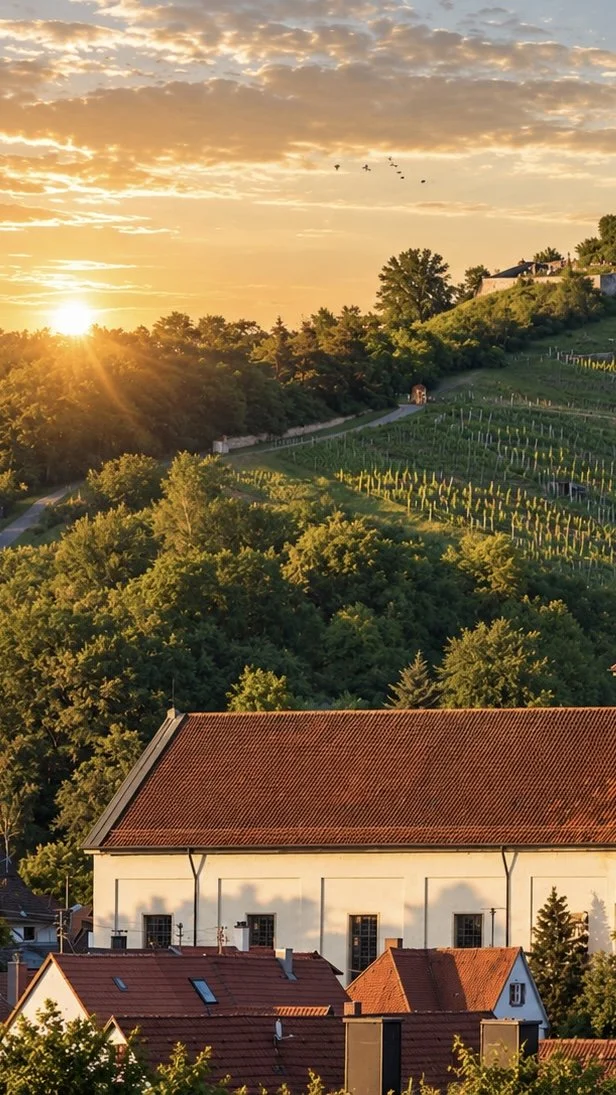
Below me the vineyards stretched in long lines, as though someone had drawn across the hillsides with a ruler. Dark forests stood beyond them, and the sinking sun laid a warm glow over the valley. For a few minutes the green of the vines turned to gold.
I took out the camera. There are moments when a timetable is useful, and others when ignoring it becomes almost a duty. This belonged to the second kind.
When I reached Heilbronn that evening, the Neckar lay broad and quiet before me. I parked Savanna and stood beside the water for a while. Two days earlier the journey had been a line on my phone; now it had acquired heat and dust, smells, light, aching muscles and a steadily growing collection of photographs.
⁂
The third stage bore the promising title **Poets' Stage**, and I had imagined something gentle: Hölderlin perhaps, Schiller, a shady tree, a little contemplative countryside and that cultivated melancholy best practised while sitting down. The Wine Cycle Route had a different interpretation of literature. It provided hills.
From Heilbronn the route led through red-wine country towards Brackenheim, birthplace of Theodor Heuss. Lemberger grew all around, a grape variety that appreciates warmth. By then the sun stood high enough for me not to share its enthusiasm. I searched for shade wherever a tree or the wall of a house offered it, and began regarding even a few cooler metres of road with a gratitude normally reserved for considerably more important events in life.
At Lauffen came Hölderlin, the Neckar and vineyards that climbed upwards with what felt like personal malice. There was an easier option: stay beside the river, remain on the flat, save the climbing. That would have been sensible. I followed the original route. There are decisions whose logic is best left unexamined while you are still suffering their consequences.
Through Talheim and Flein the road continued among the vineyards. Riesling grew here, wine supposedly appreciated even by the late Queen of England. For a brief moment I considered whether this imposed some civic, or at least European, duty to conduct a tasting, but rejected the idea. There were still enough kilometres ahead, and wine possesses the remarkable rhetorical ability, after the second glass, to argue very convincingly that a planned destination is merely a social construct.
At Beilstein, Hohenbeilstein Castle rose above the valley. Above, naturally. By then I had stopped being surprised.
Late in the afternoon the sun sank, and the landscape changed with it. The hard light softened, shadows stretched between the vines and the old stone walls suddenly took on a warm glow. Individual leaves lit up as though they carried the light within themselves. I braked and parked Savanna.
This time there was no argument between the timetable and the camera. I took the camera out, found my position and waited. Perhaps it took two minutes, perhaps ten. Time loses its precision when you stop measuring it.
It was in moments like these that I understood why I made these journeys. Not for a number, not for the 396 kilometres and not even for the modest triumph of eventually reaching the destination. It was for this light, which existed for only a few minutes and would then be irretrievably gone.
That evening I rolled into Marbach. Heuss, Hölderlin and Schiller had accompanied the day, together with Lemberger, Riesling and enough climbing to remind the body that literary history does not necessarily have to take place while sitting down.
Perhaps I would have paid more attention at school if they had made us cycle to the poets. On the other hand, we would probably never have returned to class on time.
⁂
On the fourth morning the Neckar moved slowly and green through the countryside, and somewhere during the previous three days I had stopped counting the kilometres that remained. The destination still existed, but it no longer ruled the journey.
The world had contracted to a comfortable size: the next bend, the next village, a coffee, Savanna's battery level, the light. Everything I needed for five days fitted into two panniers, and the longer I travelled, the stranger seemed the quantity of things that appear essential in ordinary life. A few clothes, tools, water, chargers, a camera. I needed little more. Perhaps that is one of the quieter virtues of travelling by bicycle: it does not force you into asceticism; it merely demonstrates with considerable clarity what you can live without for five days and never once miss. Savanna carried most of it and asked no questions.
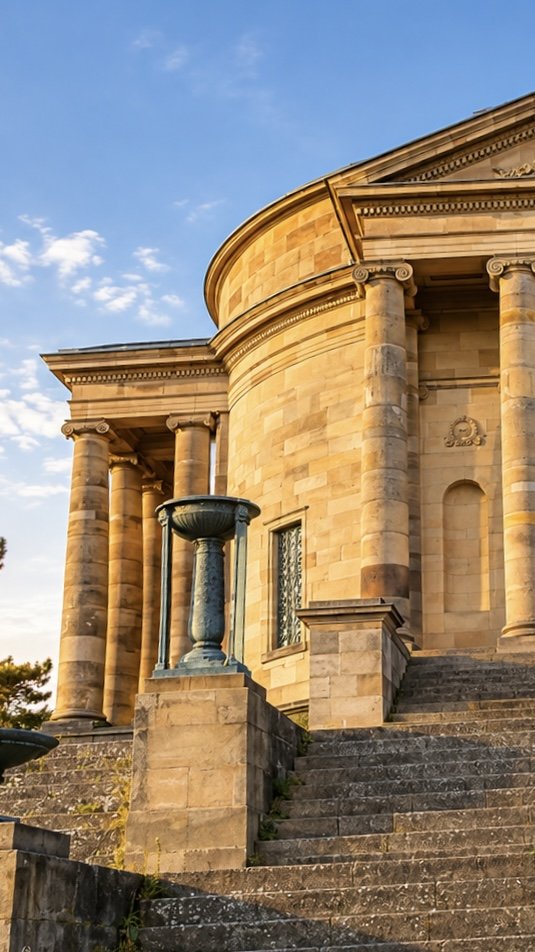
Later I stood at the foot of the Württemberg and looked up towards the Sepulchral Chapel. King Wilhelm I had built it for his wife Katharina after her early death, a classical structure of pale stone visible from far across the Neckar Valley. *Love never ends*, the inscription above the entrance declares. It is a beautiful sentence, simple enough to be true and large enough to carry an entire building. From below, however, love mostly looked steep. The road climbed through the vines, and I stopped for a moment to look at Savanna's display. Three bars. Enough.
The Ruffian stood heavy and entirely unconcerned beside me, as though the height above were less a challenge than a technical formality. “All right.” I increased the assistance and started climbing.
The first part could still be managed with dignity. Later, dignity became work. The tyres gripped the surface, the motor hummed more deeply, and with every turn of the pedals I could feel exactly how much weight bicycle, luggage and rider were moving uphill together. Electric motors are a wonderful invention, but they possess one inconvenient quality: they never allow you to forget entirely that gravity still exists. They simply make better offers. At the top, the view opened.
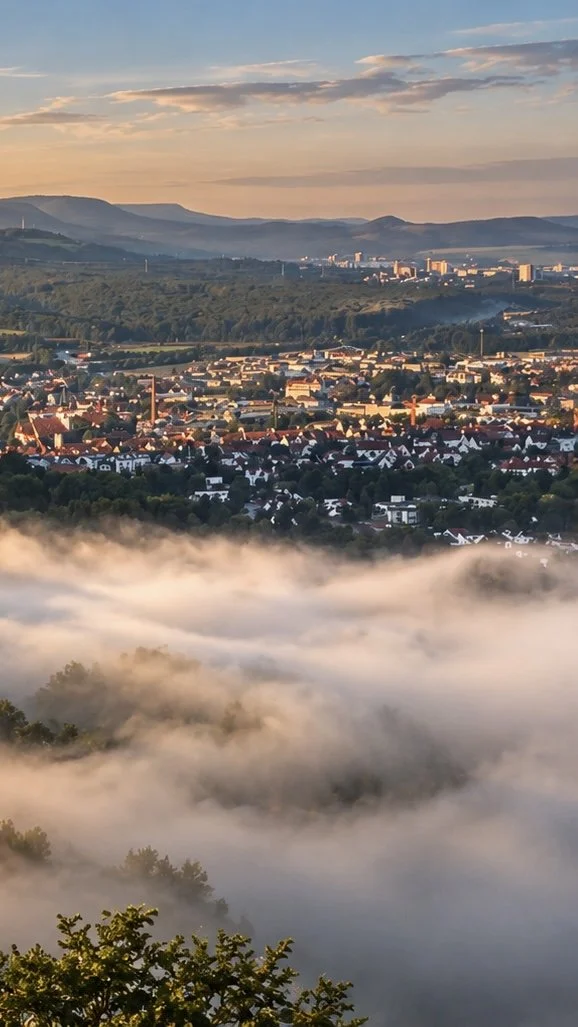
Stuttgart filled the basin below, dense and contradictory, a great city of roads, rooftops and traffic with the Neckar threading its way between them. Vines covered the slopes, as though the vineyards had decided that despite everything they would not surrender all the land to the city. Industry, houses, trams, old vineyard terraces and the pale stone of the chapel belonged to the same view without ever needing to reconcile themselves completely. Perhaps that was what I liked about it. Landscapes do not have to be harmonious to be truthful.
I parked Savanna beside a wall. The stone had warmed in the sun. A light wind came across the hillside and dried the sweat on my face. For a while I simply stood there before taking the camera from the bag.
Side light moved across the chapel, tracing columns and edges and cutting deep shadows into the stone. I took several photographs, changed position, waited for a group of visitors to leave the frame and photographed again. No glance at the time. No thought of kilometres. Eventually I packed the camera away and rode downhill.
Downhill always works.
In Uhlbach, the old wine press held two thousand years of wine-growing history. Here it became clear that viticulture was rather less romantic than neat rows of vines might suggest from a distance. Behind every bottle stood a year's sequence of work: pruning in winter, tying and thinning in spring, canopy work through summer, harvest in autumn, then pressing, fermentation and maturation. Generations had built walls, created terraces, worked the soil and cultivated vines in places where even a modern tractor would have very little fun. The vineyard was a cultural landscape, certainly. But above all, it was work.
That wine was served at the end of the exhibition therefore seemed entirely appropriate. First you showed visitors two thousand years of human labour and then handed them the result in a glass. Refusing would have seemed almost disrespectful. I respected history. Not excessively. I still had to ride.
That afternoon I left Stuttgart behind. The Neckar accompanied me again, and the farther I went, the more the city loosened its grip. Roads became quieter, old houses returned and vineyards drew closer to the river. By the time Esslingen appeared, the light had softened by then, turning the pale walls warmer and deepening the shadows beneath the eaves.
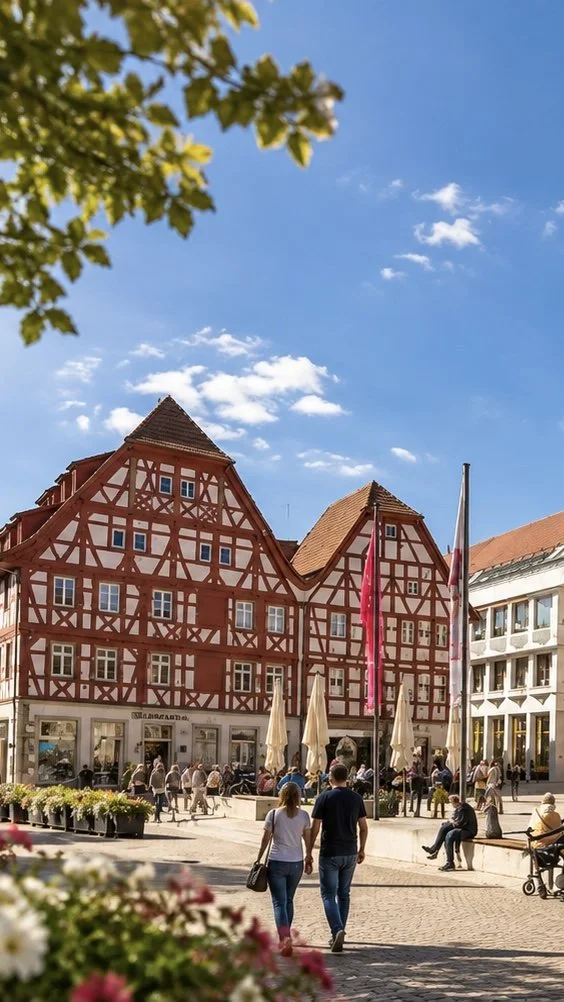
The town received me with half-timbered houses, narrow lanes and that peculiar layering of centuries found in old places that have been allowed enough time to grow on top of themselves. Buildings seemed to lean slightly towards the streets; dark wooden beams drew patterns across pale façades, and through open doors came the smells of food, wine and stone that had spent the day storing the sun. Above all of it stood the castle. Naturally, above. I stopped and looked up.
After four days I had largely stopped complaining about the location of historic buildings. One has to accept that the people who built castles had priorities different from those of touring cyclists. Defence, commanding views, control of the surrounding countryside. The future convenience of people travelling on electrically assisted bicycles seems to have played only a minor role in medieval strategic planning. My legs remained unconvinced. “Tomorrow,” I told the castle. It had been standing there for centuries. It could wait another day.
Savanna said nothing. I was beginning to appreciate her sense of humour.
⁂
The fifth morning looked little different from the previous four, yet every familiar action had changed because I knew I was performing it for the last time on this journey. The bags went on as they always had, the battery was checked, the camera packed, but routine had acquired the faint melancholy of farewell. The end of a journey begins long before the destination. It begins the moment you start noticing things as *the last time*.
The last morning battery check. The last time setting off without knowing exactly what would be waiting beyond the next bend. The last morning on which everything necessary for the day was carried on the bicycle beneath me. I wheeled Savanna onto the road and set off.
The Neckar lay quiet in the morning light, and the first kilometres out of Esslingen passed almost effortlessly. My legs had finally accepted their fate. There was no longer any morning rebellion, only a deep weariness that disappeared once I began riding and returned whenever I stopped. Plochingen provided the first serious interruption.
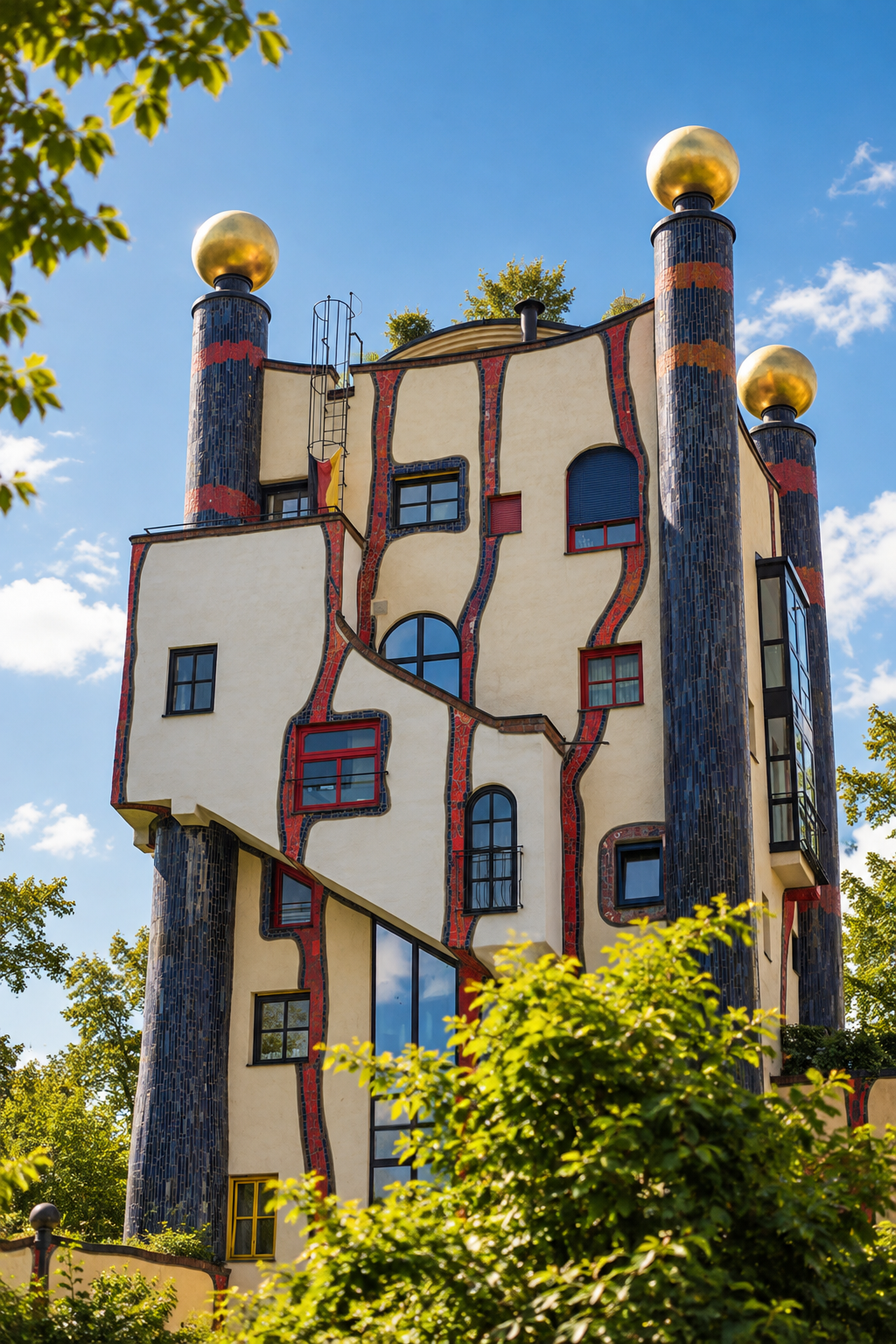
Among the familiar shapes of older buildings stood the Hundertwasser complex, with its irregular lines, colours and forms, as though somebody had finally concluded that humanity had given right angles quite enough opportunities. After days of half-timbered houses, castles and vineyard walls, it seemed almost provocative. I rode past it. This time, perhaps twenty metres. Then I braked.
Savanna had presumably stopped taking distances between photographic stops seriously. I took out the camera. The architecture demanded a different way of seeing from the old towns I had photographed before. There was no comfortable symmetry waiting to be arranged neatly inside the frame. Lines deliberately escaped their expected direction, colours pushed against one another and forms seemed determined to resist order. By the time I continued, the morning was already well advanced.
The road remained friendly as far as Nürtingen, which was precisely why I should have become suspicious. Flat stretches on a wine cycling route are rarely gifts. More often they are simply pauses during which the landscape gathers momentum. Beyond Nürtingen the route left the Neckar. The road began to climb. I laughed. Not loudly. It was the short laugh of someone who has seen the punchline coming and had nevertheless hoped, against all available evidence, that it might not arrive.
Naturally. Up again.
The vineyards returned, and with them the familiar rhythm of pedalling, motor assistance and occasional glances at the battery display. After five days I had learned not to think of Savanna's range in percentages but in landscape. A full battery meant freedom. Three bars meant confidence. Two meant attention. One bar produced an immediate and scholarly interest in topography. Eventually Metzingen appeared.
The town presented a very different form of human passion from the vineyards. Designer shops, display windows, shopping bags and people carrying objects they had apparently decided only minutes earlier they could no longer live without. I rolled through with two panniers that were already full and discovered what may be the most effective cure for spontaneous consumption ever devised. You need ask yourself only one question:
*Do I want to carry this over the next hill?* The answer is remarkably often no.
Economists might want to investigate the effects of long-distance cycling on retail spending.
Beyond Metzingen I followed the Erms, and later the Neckar returned. The landscape became familiar again, the river resumed its role as a line of orientation, and in the early afternoon Tübingen appeared. I could have continued. Rottenburg was no longer far away. The sensible part of my mind knew this and recommended that I simply keep riding. The other part saw the old town. I parked Savanna.
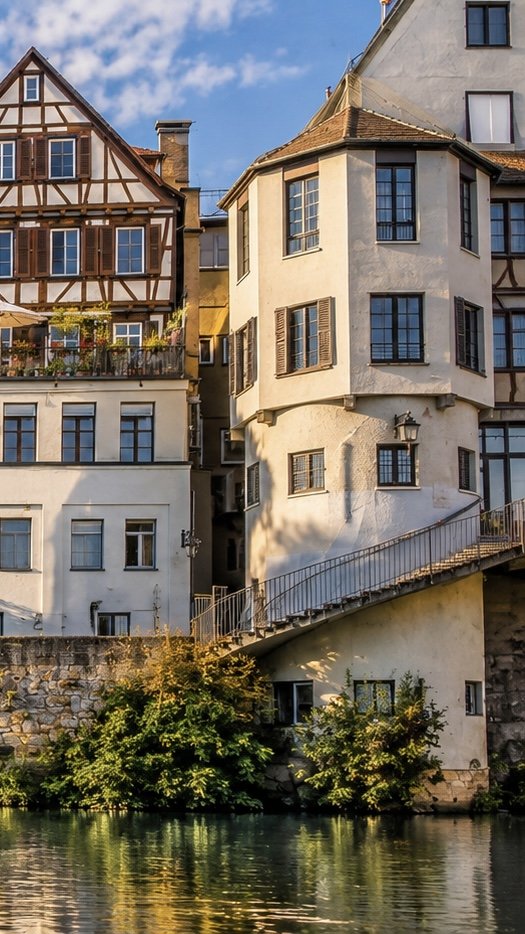
Tübingen was full of movement. People sat beside the Neckar, punts slid across the water, voices drifted from cafés and open windows. The houses of the old town crowded together, their façades painted in different colours, with shops and wine taverns below and doors opening into courtyards hidden from the street. I took the camera and walked.
Perhaps it was precisely the knowledge that the end was near that made me slower. During the first days, every photographic stop had competed against the kilometres still ahead. Now there was nothing left to win.
I photographed a façade, then a narrow street, later the water. I waited for a punt to move into the right place. Walked back because the light had changed. Bought a coffee and drank it standing up. The final day had lost its urgency. When I eventually started riding again, afternoon already lay over the Neckar Valley. Beyond Tübingen, everything became quieter. Unterjesingen, old vineyards, dry-stone walls and narrow paths between vines. The sun had dropped lower and warmed the stone. The smell of the vegetation had changed as well; less damp than in the morning, drier now, carrying earth and the faint sweetness of ripening plants. Then I saw the Wurmlingen Chapel.
It stood on its conical hill above the valley, pale against the sky, with vineyards covering the southern slope below it. The composition could hardly have been simpler: a hill, a small building, vines and sky. Yet after five days, it seemed to contain the entire journey.
I pulled the brakes and put one foot on the ground. Savanna's motor fell silent, and the sudden absence of sound was almost physical. No hum, no whisper of tyres, only a little wind moving through the vines and, far below, some indistinct sound rising from the valley.
For five days, castles, chapels and viewpoints had occupied the same strategic position: places where human beings had admired them for centuries and cyclists had cursed them since the invention of the bicycle.
At the top.
There was something admirable about the consistency. Perhaps this was the second great truth of the journey: beauty does not always demand effort, but it has a suspicious preference for places that are not easily reached. I photographed the chapel, the vines and the late light, then lowered the camera and remained there for another moment.
Almost four hundred kilometres had brought me to this place, yet distance suddenly meant very little. Niederstetten seemed both far away and only a few days behind me. Weikersheim, the Jagst, the Kocher, Heilbronn, Marbach, Stuttgart and Esslingen were no longer points on a route. They had become images and smells, fatigue and taste, heat and light. I packed the camera away.
Then I rode the final kilometres to Rottenburg.
⁂
There was no triumphal arch at the end of the Württemberg Wine Cycle Route, no line painted across the road and nobody waiting to hang a medal around my neck. Rottenburg simply appeared ahead, first as outer streets, then as buildings gathering more closely together, and finally as the cathedral and the ordinary life of a town that had no particular reason to care that a man on a beige Ruffian had just reached the end of his personal journey. I liked that. I slowed down, not because I was exhausted, although there was certainly evidence available to support that theory, but because there was suddenly no reason to hurry.
People crossed the street. Someone pushed a bicycle. A door closed somewhere. For them it was an ordinary afternoon. For me it was kilometre 396. I stopped and looked at the display.
**396.**
The same three digits that had appeared on my phone five days earlier. Back then they had meant nothing more than distance, a mathematical quantity that could be divided by five and rearranged into daily stages. Now the number could no longer be divided so neatly. More than anything, it consisted of all the unnamed things in between.
The sound of tyres on different kinds of asphalt. The weight of the camera in my hand. The first mouthful of water after a long climb. The smell of sun-warmed stone. The hum of the motor when the road became steeper. That brief moment before a descent when you realise that gravity, after spending most of the day behaving like a personal enemy, has finally decided to work for you.
None of those things appears on a map. Perhaps that is why we leave home in the first place. Savanna had never complained. Admittedly, Savanna is a bicycle. One should not overinterpret the virtues of one's travelling companions.
I looked back along the street from which I had come. “That’s it,” I said quietly. The words sounded smaller than I had expected. Perhaps because a journey does not end at the exact moment you reach its destination. The body arrives. The luggage arrives. The bicycle arrives. The rest takes longer.
I stood there for another moment, and then the late light shifted across the buildings of Rottenburg. It touched a façade at an angle, caught in a window and turned the stone warm for a few seconds. I saw it. Savanna was already safely on her stand. I looked at the camera bag.
There are habits one acquires over five days that cannot reasonably be expected to disappear in five seconds. So I opened the bag and took out the camera.
Just for a minute.