Camera Surrealism
Bringing In-Camera Surrealism
There is an Analog Fair approaching, and while I usually tinker with street and travel photography in fairly predictable ways, I want to take on a new project that will lead me from darkrooms late at night to forests and industrial edges at dawn. What I am working toward is a surrealist analog photography series created entirely in-camera — a deliberate counter-movement to the frictionless ease of digital manipulation.
In a time when AI systems can fabricate surreal scenes with a handful of keystrokes, this project follows a different path. The idea rests on a simple principle: the camera records what the world offers. No retouching outside traditional darkroom work, no digital interference.
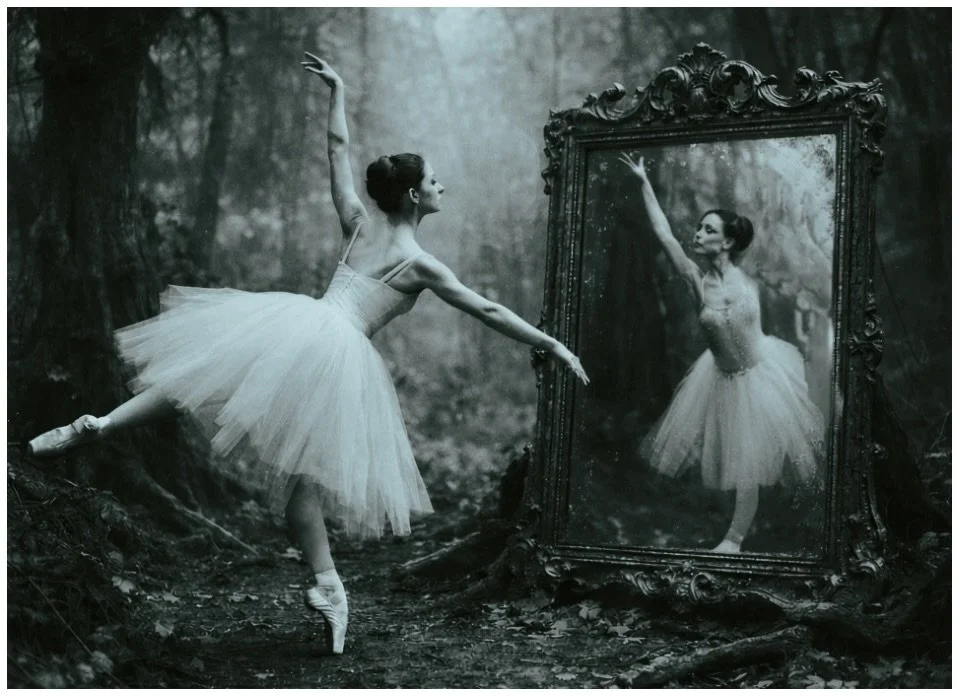
The aim is to create images that feel dreamlike yet remain grounded in physical reality. A figure balanced on a narrow sea wall, a model obscured by oversized props, or a silhouette suspended within flooded forest structures — all of it will exist exactly as it is captured. The illusion is truthful because it is real.
Contemporary visual culture is saturated with perfect impossibilities. When everything can be generated effortlessly, the extraordinary loses its edge. In-camera surrealism restores friction and reintroduces the viewer to a sense of awe.
This approach rewards anyone willing to look closely. It respects the integrity of the frame and the craft behind it.
Creating this series means returning to a meticulous, almost architectural style of shooting. Every scene requires orchestration: location, geometry, wardrobe, posture, and timing.
The series is built on medium- and large-format cameras from Hasselblad, Mamiya, and Linhof. These formats encourage precision and intentional composition.
The project relies mostly on daylight, sometimes supported by artificial lighting or controlled studio strobes. Some scenes require long periods of waiting for exactly the right conditions.
There will be no cropping, retouching, or corrections beyond what is possible in the darkroom. Every detail should be aligned before exposure.
While the project involves fashion, the garments serve the narrative rather than dominate it. Fabric interacts with terrain, shapes echo architecture, and textures merge with natural elements.
Locations include flooded forests, industrial sea walls, quarry edges, winter meadows, and fog-drenched river paths.
The polished results will almost certainly hide the physical challenges: hauling props through mud, balancing models in demanding locations, and waiting for the rare moments when everything aligns.
Presenting in-camera surrealism at the fair will hopefully connect with the underlying idea of the project.
As preparations begin, the process stays rooted in slow craft. This project reinforces my commitment to working with analog methods — they ground the surreal elements in something tangible and help restore a sense of wonder for myself as well.