Ride Out in Freiburg
There are cities that try very hard to look like the future. Glass, steel, confident angles, and the emotional warmth of a well-organized spreadsheet.
And then there is Freiburg, which apparently decided that the future should feel like a Sunday afternoon that accidentally became permanent. Naturally, this includes organizing a Vintage Bike Ride Out that feels less like an event and more like a gentle social experiment: what happens if nobody is stressed, and everyone has access to coffee?
You arrive at the main station expecting the usual ritual. Confusion, mild aggression, someone loudly eating something with unclear origins. Instead, trams glide past like they’ve signed a non-aggression pact with reality. Cyclists move in calm, coordinated swarms. Pedestrians flow. Nobody seems late. It’s unsettling. A city in motion without panic feels like a software bug that nobody bothered to fix.
A few minutes later, you’re in the old town. Cobblestones, Bächle, quiet water channels waiting patiently for unsuspecting shoes. Freiburg doesn’t rush you. It gently suggests slowing down, which is already suspicious behavior for a city. And then it doubles down by inviting you to a bike ride where the official schedule includes more breaks than movement.
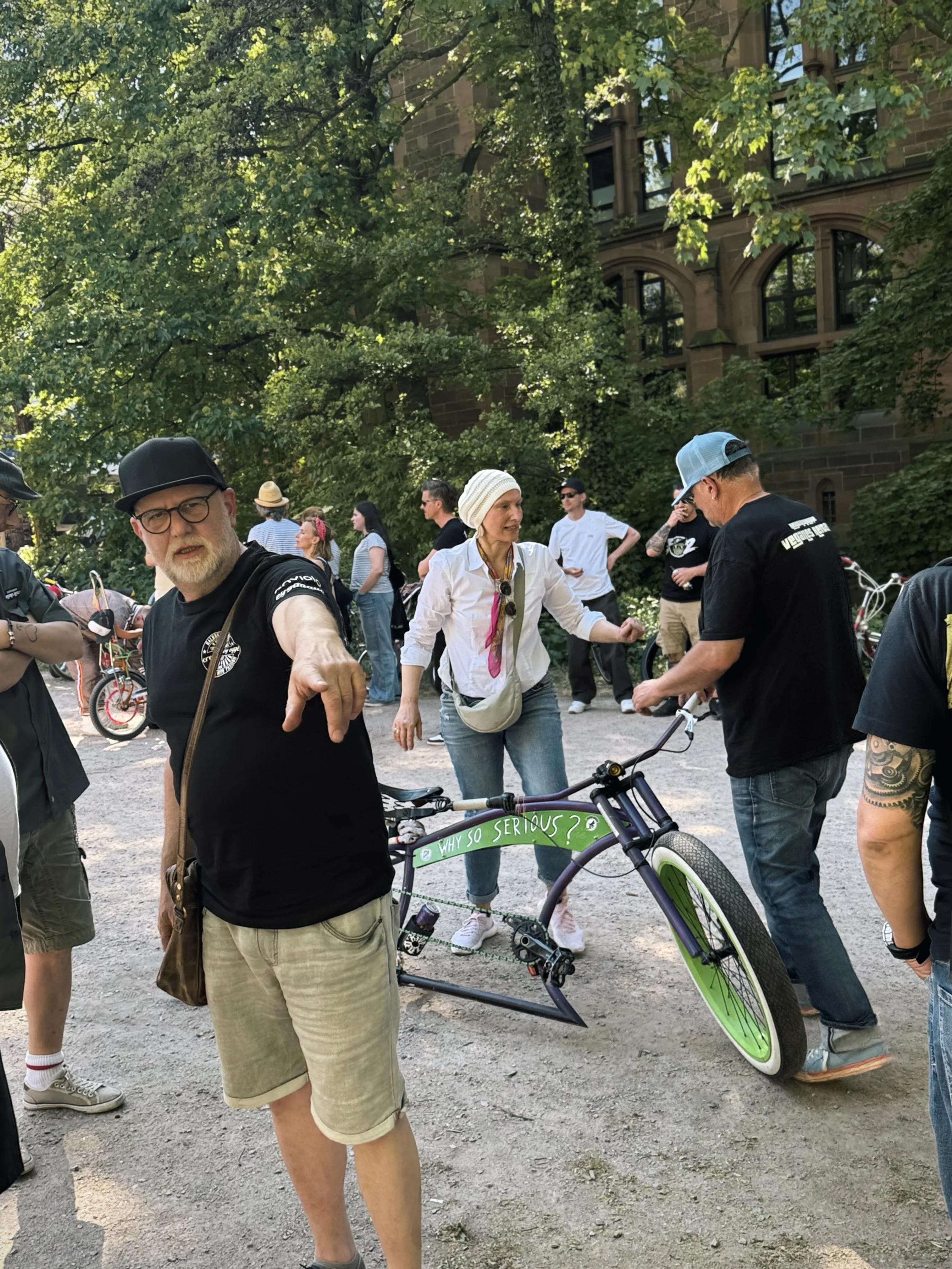
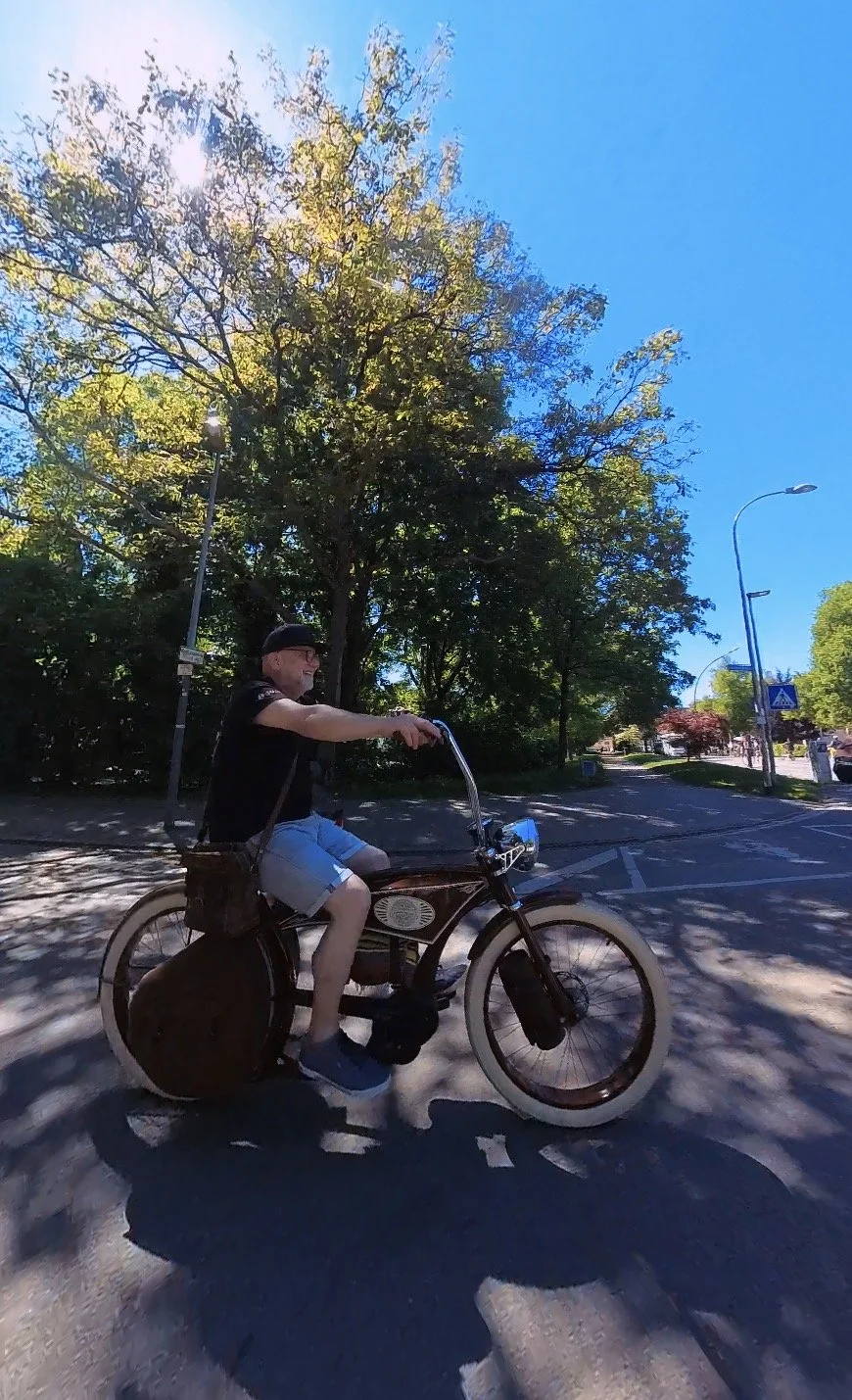
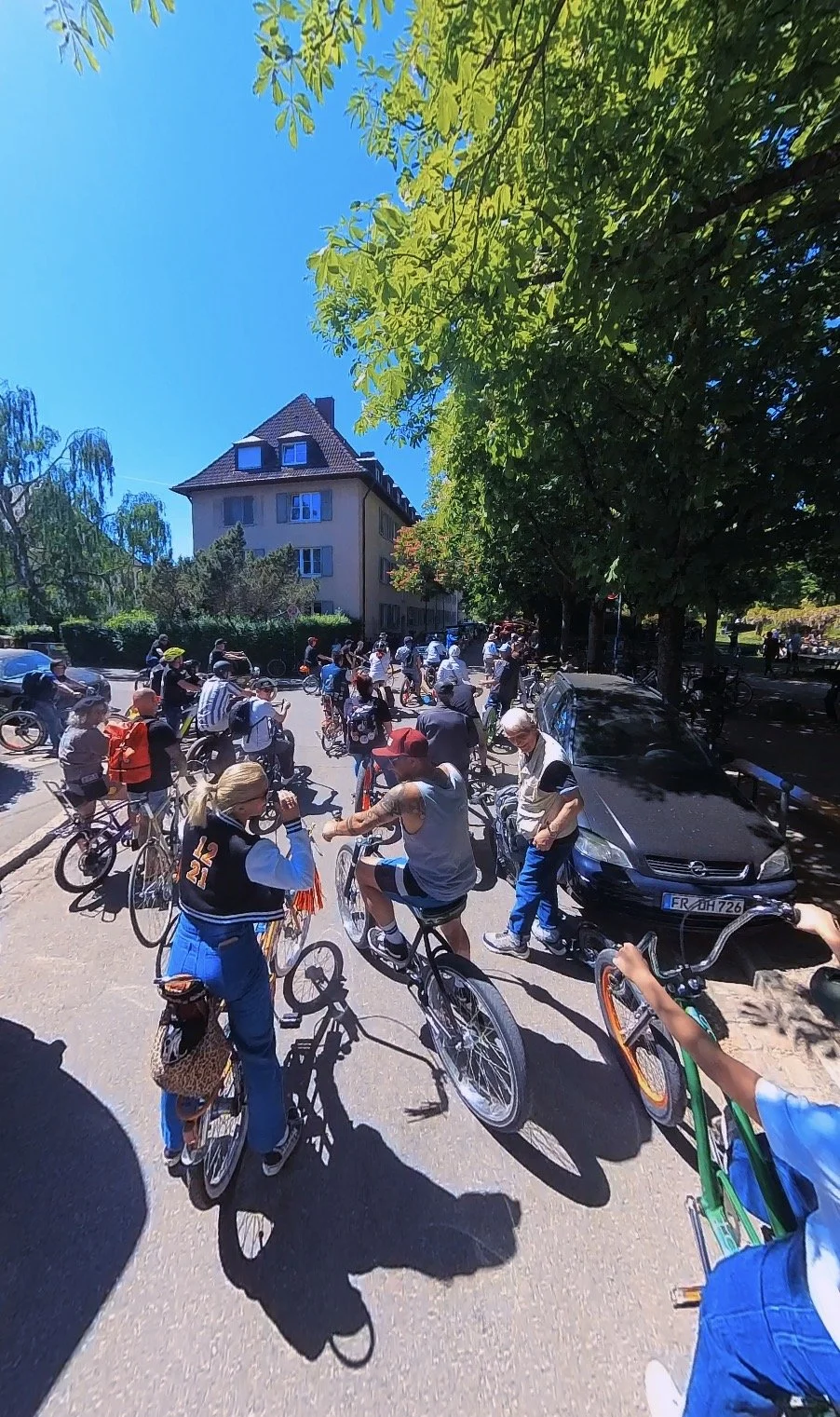
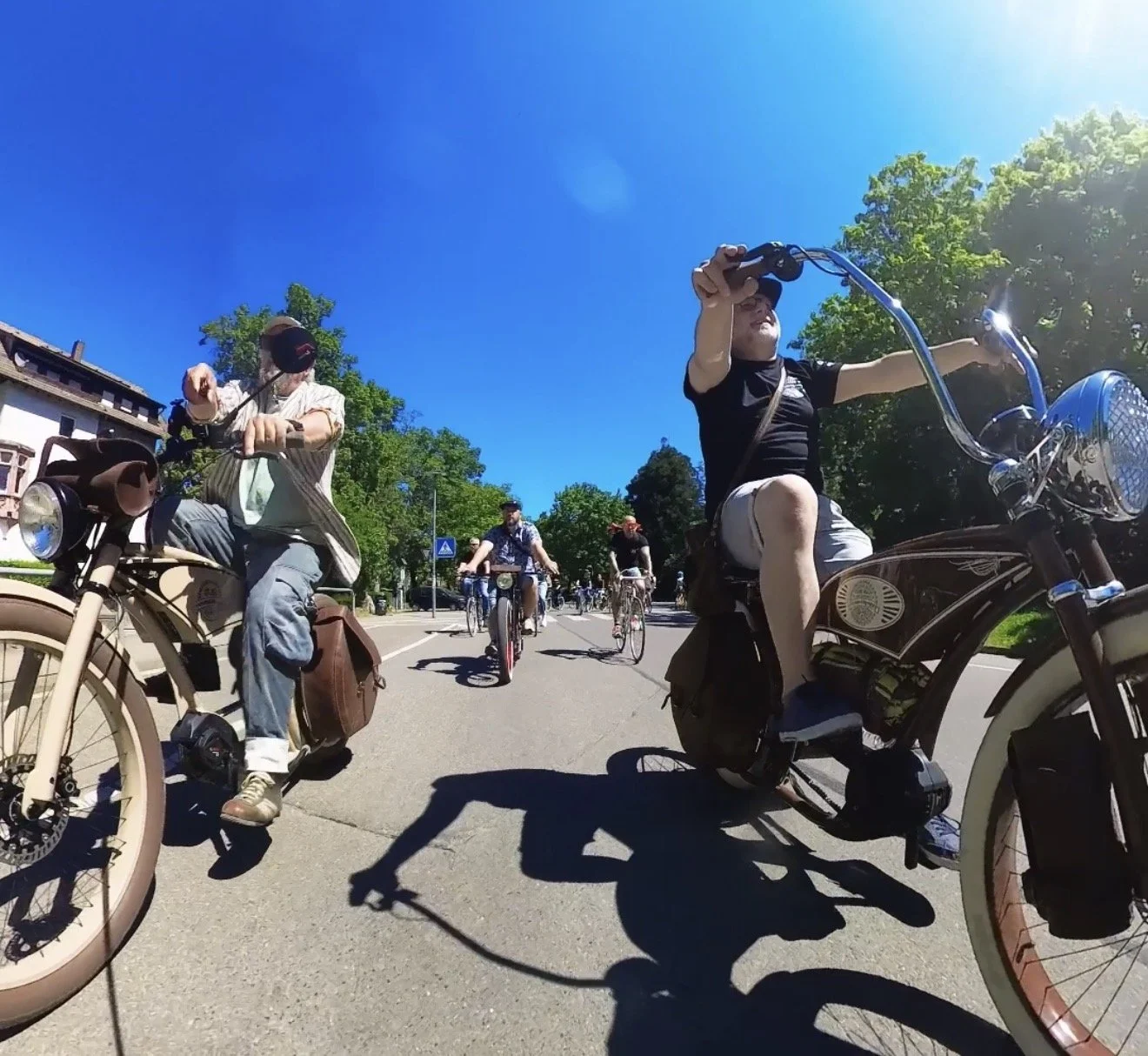
Friday, May 1st. While other places debate the future of labor, Freiburg meets at Café Marcel at 11:00. Not to rush. Not to compete. To gather. At 12:00, the ride begins, which is optimistic wording for what is essentially a moving café tour with bicycles attached.
The route is about 19.5 kilometers. On paper, that sounds like exercise. In reality, it’s a carefully curated sequence of pauses.
First stop: Fun Strand. Arrival around 12:30. Drinks, snacks, a Dixi toilet. Twenty minutes of rest to process the emotional intensity of having cycled for half an hour. Nobody questions it. This is Freiburg. Efficiency is optional, comfort is policy.
Second stop: Barbette at the old Wiehrebahnhof. Drinks again. Ten minutes. Just enough to confirm that hydration is being taken very seriously.
Third stop: Küchenschelle. Now we’re committed. Food enters the equation. A 45-minute break, because clearly the ride has evolved into a philosophical statement about balance in life.
Finally, arrival at Karl-Rahner-Platz around 15:30. Music, food, drinks, and the “nicest bike contest,” which is a charming way of saying: we will judge your aesthetic choices, but kindly.
What’s remarkable is how perfectly this fits the city’s character.
This is the same place that spent two decades renovating the Augustiner Museum without losing its composure. The same place where the cathedral has been under construction, restoration, and quiet care since around 1200, as if time itself were just another material to be managed. Freiburg doesn’t rush results. It refines them, patiently, sometimes over centuries.
Meanwhile, it builds the future with equal calm. Districts like Vauban already proved that sustainable living can work. Dietenbach is next, planned, debated, adjusted. Climate neutrality by 2035 is the goal. Ambitious, yes. But delivered in a tone that suggests: we’ll get there, no need to shout.
Even the small frictions feel… polite. A tax on disposable packaging turns lunch into a moral discussion. Higher parking fees quietly challenge habits. A scan car observes illegal parking like a digital hall monitor that has seen everything and judges silently.
And yet, none of this creates urgency. Instead, the city keeps offering exits from seriousness. Park your bike by the Dreisam. Sit by the water. In Stühlinger, cafés spill onto sidewalks where conversations stretch longer than necessary. At Günterstal, a short walk takes you straight into the forest, because apparently urban life here comes with an optional off switch.
The bike ride fits seamlessly into this rhythm. It’s not an event that interrupts daily life. It is daily life, just slightly more organized and with better snacks.
Climb the cathedral tower and look out over it all. The roofs, the quiet order, the gentle movement. Somewhere down there, a group of people is probably still riding slowly between cafés, convinced they are participating in a cycling event.
Freiburg doesn’t try to impress with speed or spectacle. It just works. Calmly. Persistently. Almost suspiciously well.
And the ride?
It proves one thing very clearly:
in Freiburg, even progress takes a coffee break.