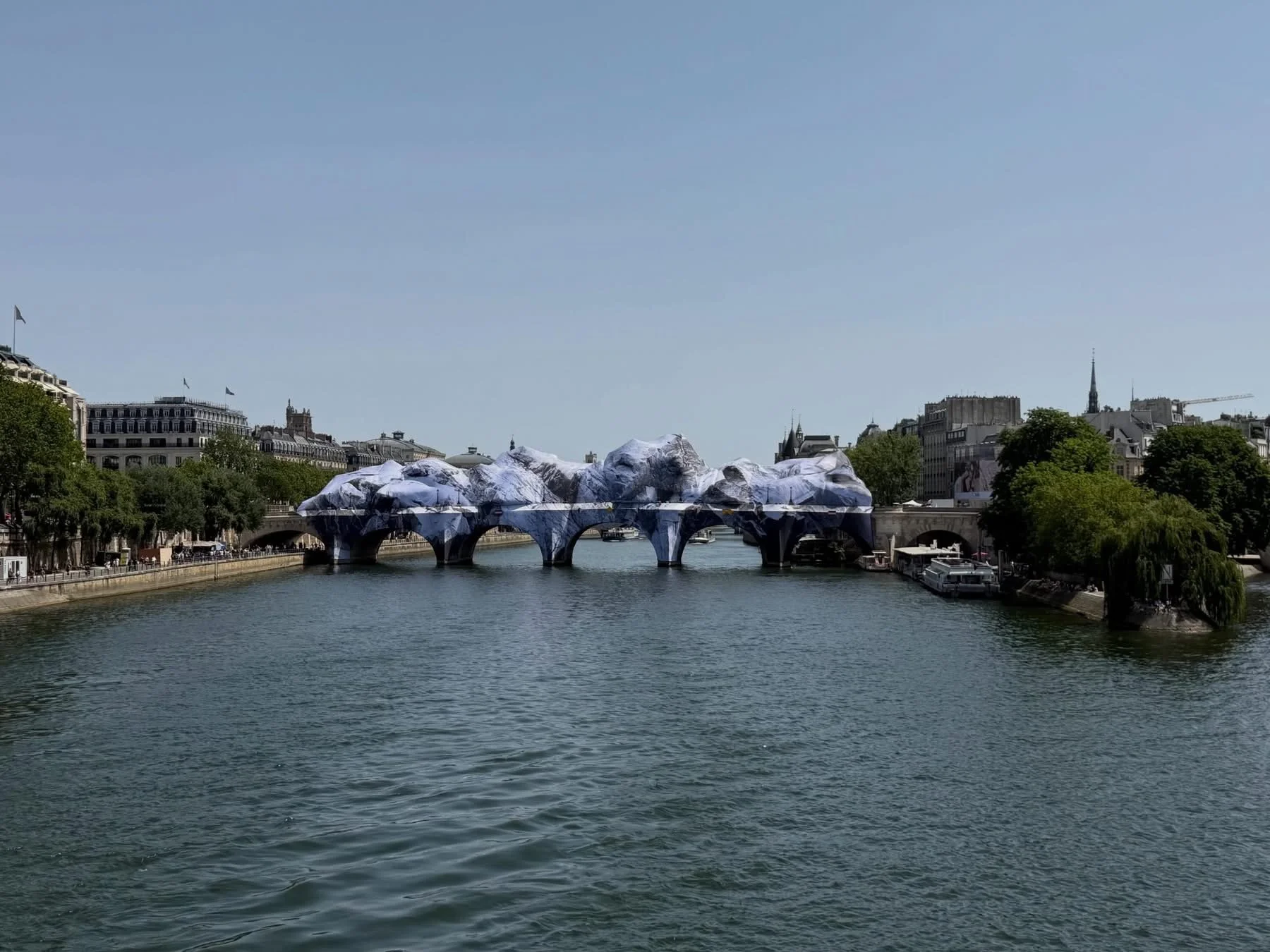
A Mountain - in Paris?
There are easier ways to get to Paris. You can buy a ticket for the Intercity-Express, lean your head against the glass, and let the landscape blur past into a grey-green smear. You can throw a suitcase into the back of a car and map out a route that favors speed over sanity. Or, if you are blessed with a healthy dose of common sense, you can simply stay at home. I chose none of these things.
I chose none of these things.
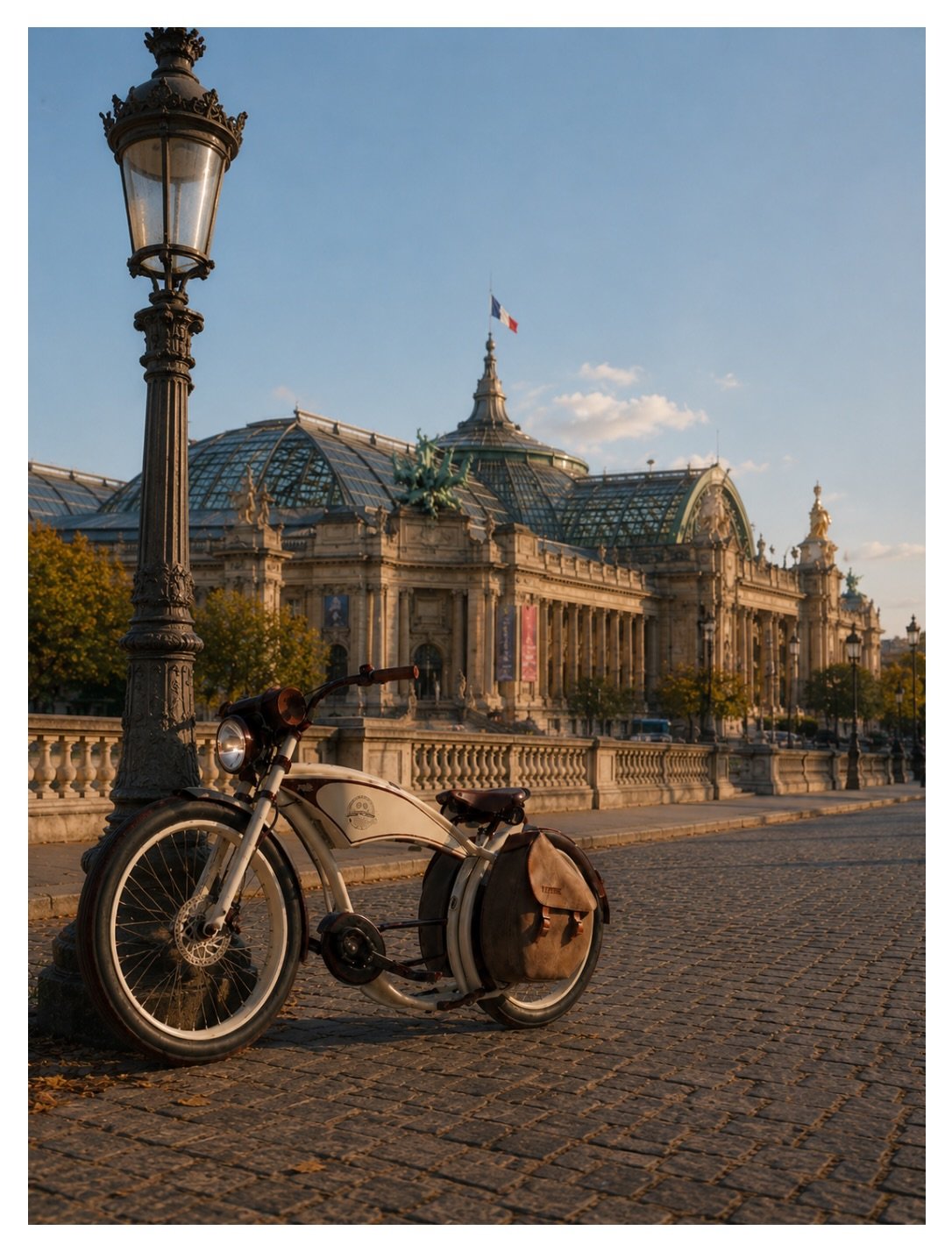
Instead, on a remarkably warm morning in June, I rolled a Ruffian bicycle named Savanna out into the quiet of the Hunsrück, pointed her front wheel toward the west, and began to pedal. My destination was a mountain in Paris. The minor logistical detail that Paris is famously flat, and that the mountain in question was constructed entirely of late-nineteenth-century iron, didn’t seem like enough of an obstacle to warrant staying in bed. The photograph had already taken hold of my mind, and I was going after it.
The truth was, a photograph had already taken hold of my mind. And photographs, much like certain stubborn ideas or bad influences you meet at bars, have a habit of completely ignoring practical objections. That was why I kept going.
The first day possessed the deceptive charm of a civilized holiday. Germany drifted past in comforting, familiar gradients of slate-grey and deep forest green. Every few hours, a small village would materialize by the roadside, appearing entirely confident that someone—if not me, then some other wandering soul—would eventually stop to admire its timber-framed charm.
I was traveling heavily, carrying two very different tools for the job. Over my shoulder hung a Leica M, quick and unobtrusive, meant for capturing those ephemeral splinters of time that vanish if you blink. Strapped to the back of the Savanna, however, was a Chamonix 8×10 large-format camera. It occupied roughly the same volume as a piece of mid-century living room furniture and weighed enough to turn every minor incline into a prolonged philosophical debate between my thighs and my willpower. It was a camera designed for the moments a person is willing to suffer for.
Still, the asphalt was smooth, the weather was gentle, and my romantic enthusiasm remained largely intact—until the first real hill arrived.
Belgium didn’t announce itself with a trumpet fanfare or a customs guard. It arrived with the hushed modesty of a roadside sign and the sudden, slightly intoxicating realization that I'd crossed an international border entirely under the steam of my own two legs.
By the time I rolled into Namur, the world had slowed down. The town received me with winding rivers, timeworn stone facades, and that distinct, enviable European gift for looking breathtakingly beautiful without trying at all. Savanna was performing beautifully, humming along the pavement with mechanical grace. I, on the other hand, spent the evening drafting a peace treaty with various aching muscles. These negotiations were tense and ultimately inconclusive.
On day three, the geography began to shift as I pushed from Namur toward Maubeuge. The horizon opened into long stretches of road, and the signs outside the bakeries switched to French. Around that point, I began to suspect the entire nation of France views cycling as a feat of athletics, but as a practical method for moving between pastries.
It was a theory that gained considerable empirical support over the next forty-eight hours. The thermometer crept steadily upward, and the kilometers accumulated in a mist of sweat and dust. But the Leica stayed busy. I caught street corners bathed by the heavy daylight, canal paths running through the countryside, and old men clustered outside cafes, deep, deep in discussions that surely changed the world—or perhaps concerned nothing at all. They were the kinds of moments that exist for a second and then dissolve.
The fourth day was the crucible: a hundred and forty-one kilometers from Maubeuge to Compiègne. I rode beneath a massive northern sky that couldn’t decide whether to bless me with sunshine or break me with a thunderstorm. A brief, violent downpour shook the windows overnight, and by morning, the world had washed clean.
The beat of the road finally fixed deep into my marrow. The modern world shrunk down to a wonderfully simple loop: wake up, drink coffee, ride, photograph, repeat. Somewhere along these endless stretches of asphalt, the separate acts of cycling, looking, and making pictures ceased to be distinct chores. They merged into a single state of being. The bike provided the momentum, the heavy camera forced me to slow down and actually look, and the road casually supplied the story.
When I finally crossed into Compiègne in the late afternoon, I couldn’t help but beam at the nonsense of it. Napoleon had marched through here. Kings had held court. Great armies had clashed. And now, the historic city had to find room for a sunburnt photographer steering a fat-tired cruiser bike with a massive wooden camera strapped to the rack. History, it turns out, is incredibly adaptable.
The fifth evening brought the kind of serendipity you can’t plan. Another cyclist caught sight of Savanna and pulled over. This wasn’t entirely unusual—Savanna routinely attracts attention with an efficiency that is deeply humbling to my own ego. People rarely stop to talk to me; they stop to talk to the bicycle. I have learned to accept my place in this hierarchy.
We talked shop, chuckled over the absurdities of the road, and exchanged the kind of tall tales only travelers believe. An invitation to share a drink followed. The road has a beautiful way of colliding people who would otherwise spend their lives spinning in completely different orbits.
The final morning broke with an aggressive heat. By mid-morning, the temperature had spiked to thirty-eight degrees Celsius—the kind of thick, oppressive air that makes every uphill grade feel like a personal insult from the universe. For the first forty kilometers, though, the heat didn’t matter. My new friend from the evening before joined me on the road, and the conversation turned the distance into an afterthought. Villages and fields slipped past in a pleasant blur.
Eventually, the lanes widened. The sleepy villages thickened into bustling suburbs, and the suburbs abruptly hardened into the concrete grid of Paris. The countryside didn’t fade away; it simply stopped.
Just before entering the belly of the beast, I pulled into the Aire de Vémars Est truck stop. Surrounded amid the roar of diesel engines, the smell of exhaust, and the hiss of air brakes, I managed to corner a Polish truck driver. Over some remarkably strong espresso, we struck a deal: he would haul Savanna and me back toward Trier two days later. It was an agreement sealed with the reckless optimism unique to truck stop negotiations. Whether he would actually show up was a problem for Future Matthias. Present Matthias had a mountain to catch.
Then Paris hit me all at once.
It served as a sensory assault of screaming horns, swarming scooters, shouting crowds, and those grand Haussmann facades marching proudly toward the horizon. The city was loud, sweltering, chaotic, and utterly magnificent.
I didn’t check into a hotel. I didn’t stop for a cold drink. I rode straight for the Pont Neuf. Six days after leaving home, battered by the heat and carrying a ridiculous amount of heightened anticipation, I rolled onto the oldest bridge in the city.
The harsh afternoon glare was finally beginning to yield, melting into a soft, golden evening light. The crowds moved past, laughing and taking selfies, entirely blind to the magic trick unfolding beside them.
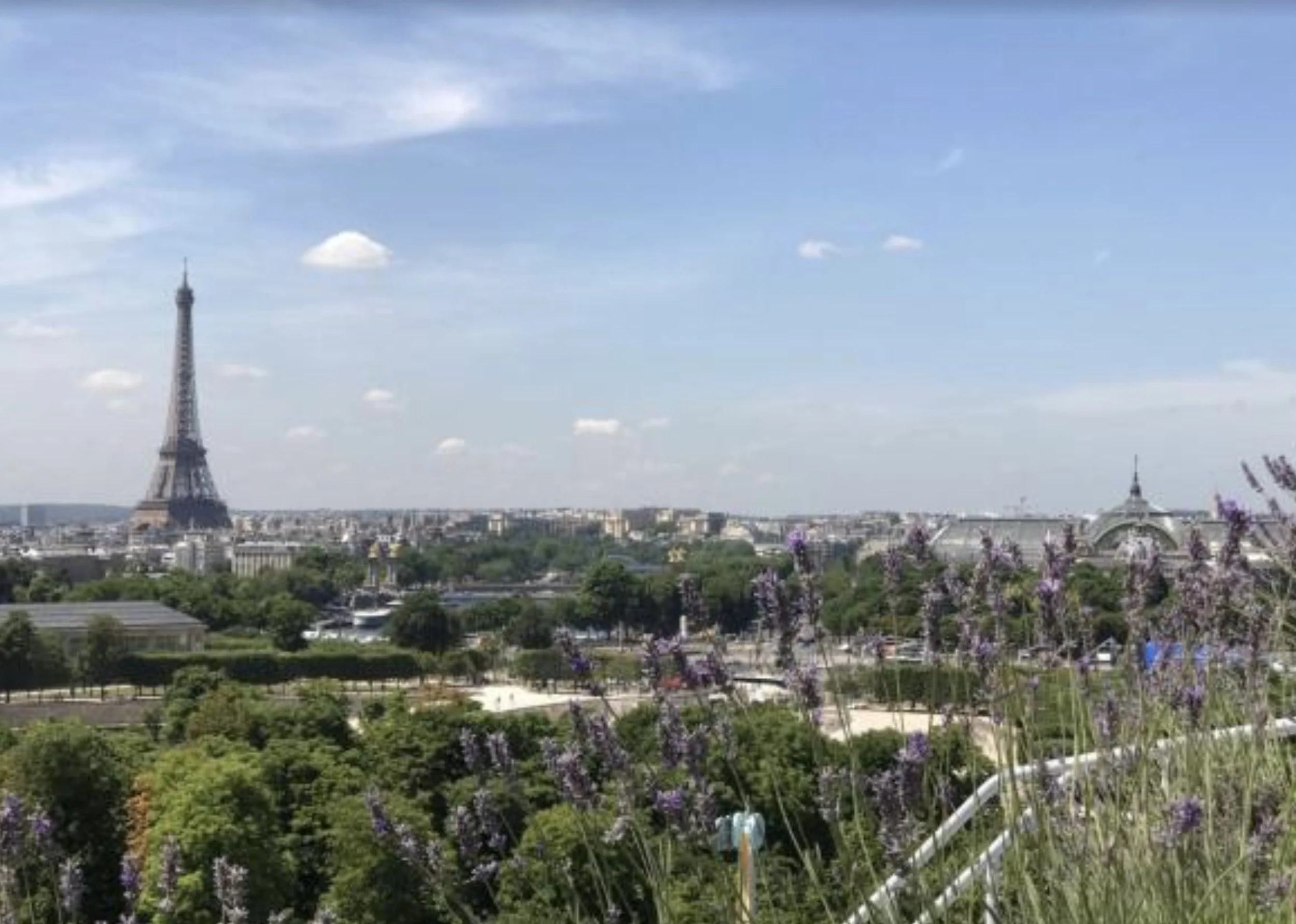
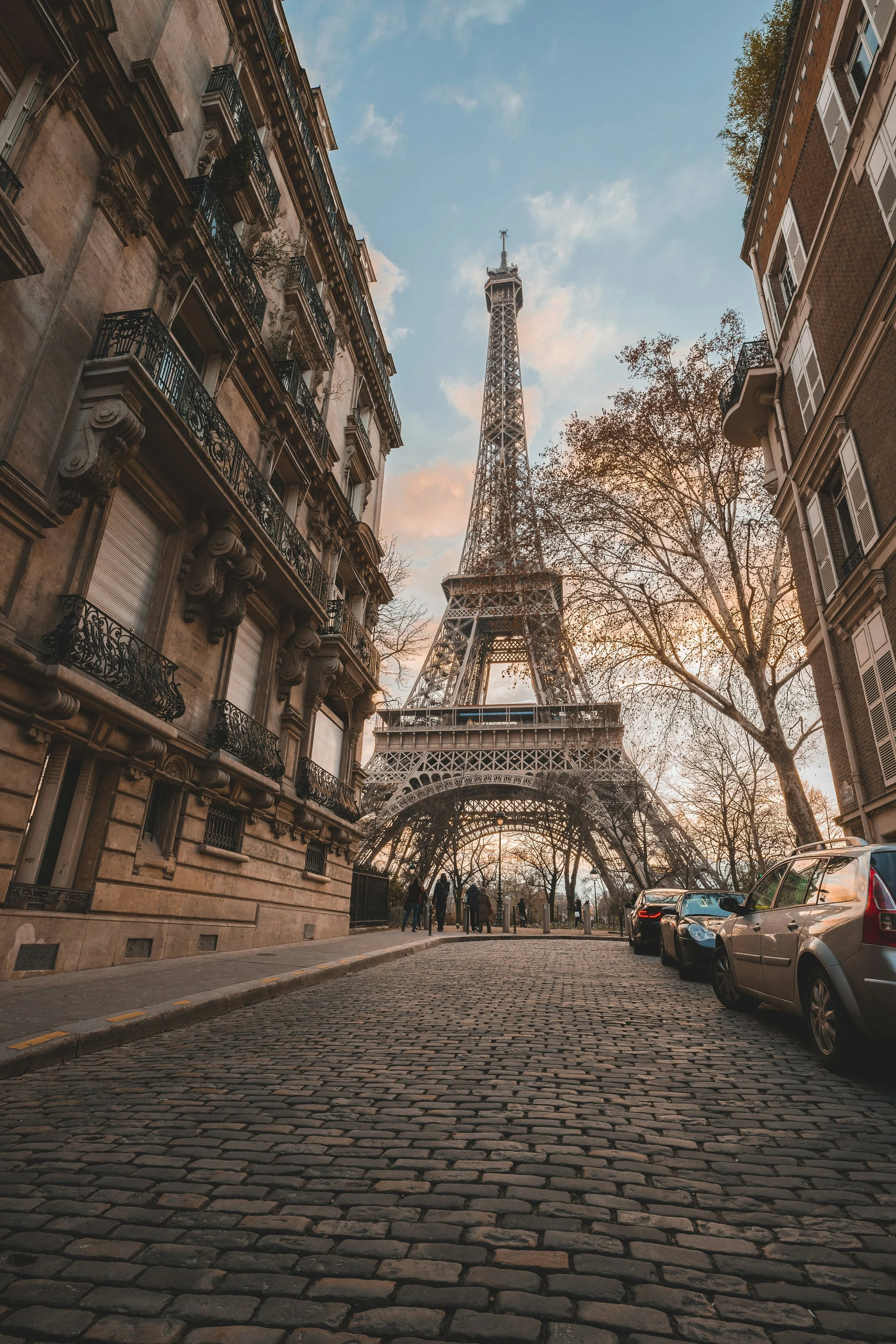
Because from that exact vantage point on the bridge, if the atmosphere is just right and the perspective matches perfectly, the Eiffel Tower ceases to be a monument. It shifts. It gathers the light and rises behind the stone arches not as a tower, but as a towering summit. A solitary peak of iron and illumination emerging from the urban mist. That was the mountain I had come for.
My mountain.
I set up the tripod. I assembled the Chamonix, slid the film holder into place, and ducked beneath the heavy black focus cloth.
In an instant, the roar of the Parisian traffic faded to absolute silence. The upside-down image on the ground glass was sharp, luminous, and perfect. The photograph had finally caught up to the dream that had dragged me across three countries.
Some people climb mountains. I suppose I prefer to pedal across borders just to look at them. And unlike the peaks in the Alps, this one comes with a crisp croissant, a glass of wine, and a bridge that, for a few fleeting minutes each evening, pretends to be the wildest summit on earth. That was enough for me.
Perhaps that’s the whole point of leaving home: not to arrive at a spot on a map, but to discover that the thing you were chasing was entirely different, and infinitely better, than what you originally imagined. Even if it’s just a mountain made of iron, waiting for you in the heart of Paris. That was the journey I set out to make.