Not Filing an Official Complaint
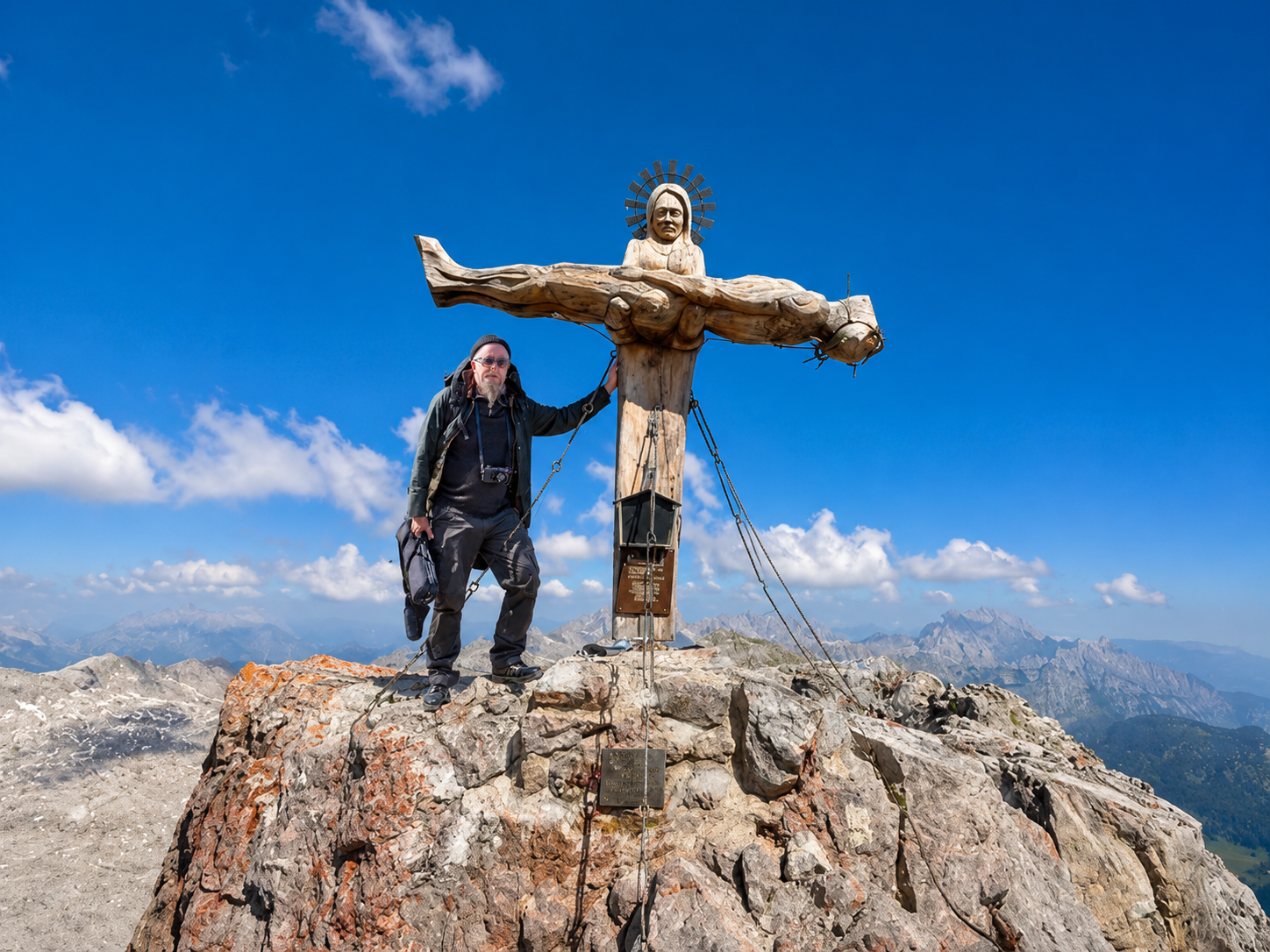
How to Climb a Mountain with an 8×10 Camera (Without Filing an Official Complaint)
In the hiking world, there are basically two kinds of people. The first group counts every gram, cuts toothbrush handles in half, and agonizes over the weights of freeze-dried meals. Then there’s the second group — people who willingly strap an 8×10 large format camera, a heavy tripod, six film holders, a spot meter, a dark cloth, a loupe, filters, water, food, and a probably unwarranted amount of optimism onto their backs. I am, obviously, in the second group.
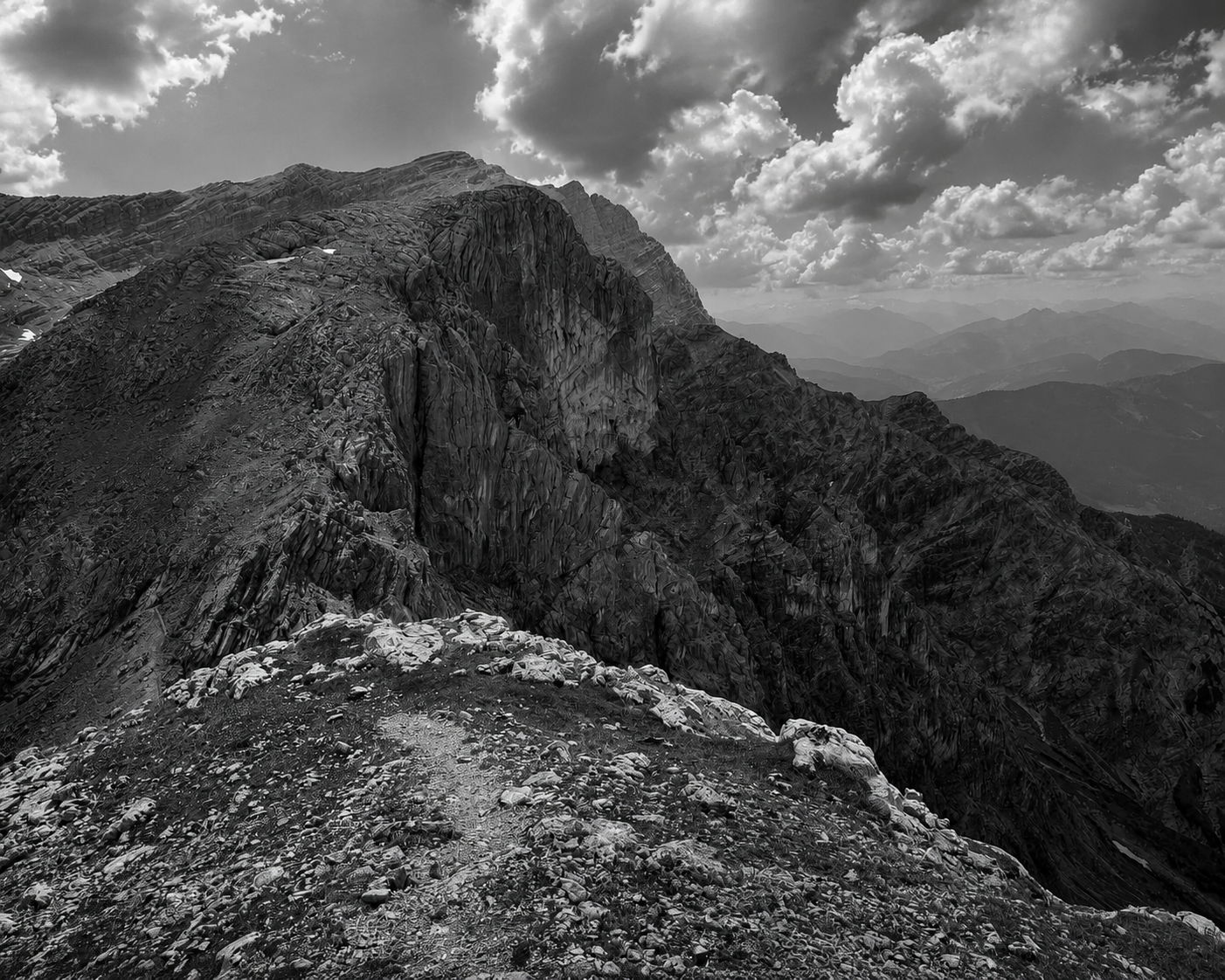
This time, the destination was the Schönfeldspitze above Maria Alm. On paper, it sounded fine: 13.7 kilometers, 1,527 meters of climbing, about seven hours and fifteen minutes, 37°C in the valley—great conditions, apparently, for hauling what amounts to a Victorian field laboratory into the Alps.
The Myth of the Heavy Camera
People always ask if hiking with an 8×10 is exhausting. Honestly? For the first thirty minutes, yes. After that, your body accepts the situation and stops complaining. Eventually, the camera doesn’t feel especially heavy anymore, because everything feels heavy.
The Great Advantage of Large Format
The best thing about shooting 8×10 is that you never have to worry about taking too many pictures. Not because of any noble discipline — purely because of the process. Before you can make a single exposure, you have to unfold and level the tripod, mount the camera, extend the bellows, focus upside down under a dark cloth, dial in your front rise and rear tilt, close and cock the shutter, insert the film holder, pull the dark slide, and finally actually shoot. By the time you’re ready to think about a second frame, the clouds have moved on entirely.
Surprisingly Comfortable
Despite the 37°C forecast and friends expecting a proper heatstroke story, the hike was genuinely fine. Steady pace, enough water, short breaks, no racing anyone. Under those conditions, the camera never really felt like a burden — it just set the tempo of the climb. Which, looking back, is probably how mountain hiking should work anyway.
Reaching the Summit
Getting to the top with an 8×10 feels completely different from getting there with a phone. There’s no impulse to machine-gun twenty identical frames. Instead, you look through the glass and ask yourself one thing:
“Is this worth one sheet of film?”
That question alone makes you a better photographer. Film costs money, the climb was brutal, and every exposure has to justify itself. The mountain doesn’t care either way. But you do.
Five Things I Learned
Travel lighter than your ego. Leave most of your lenses at home. One lens you actually know beats a bag full of options every time. I brought a single 300mm, which turned out to be nearly perfect for pulling in ridgelines and giving the mountains some real weight.
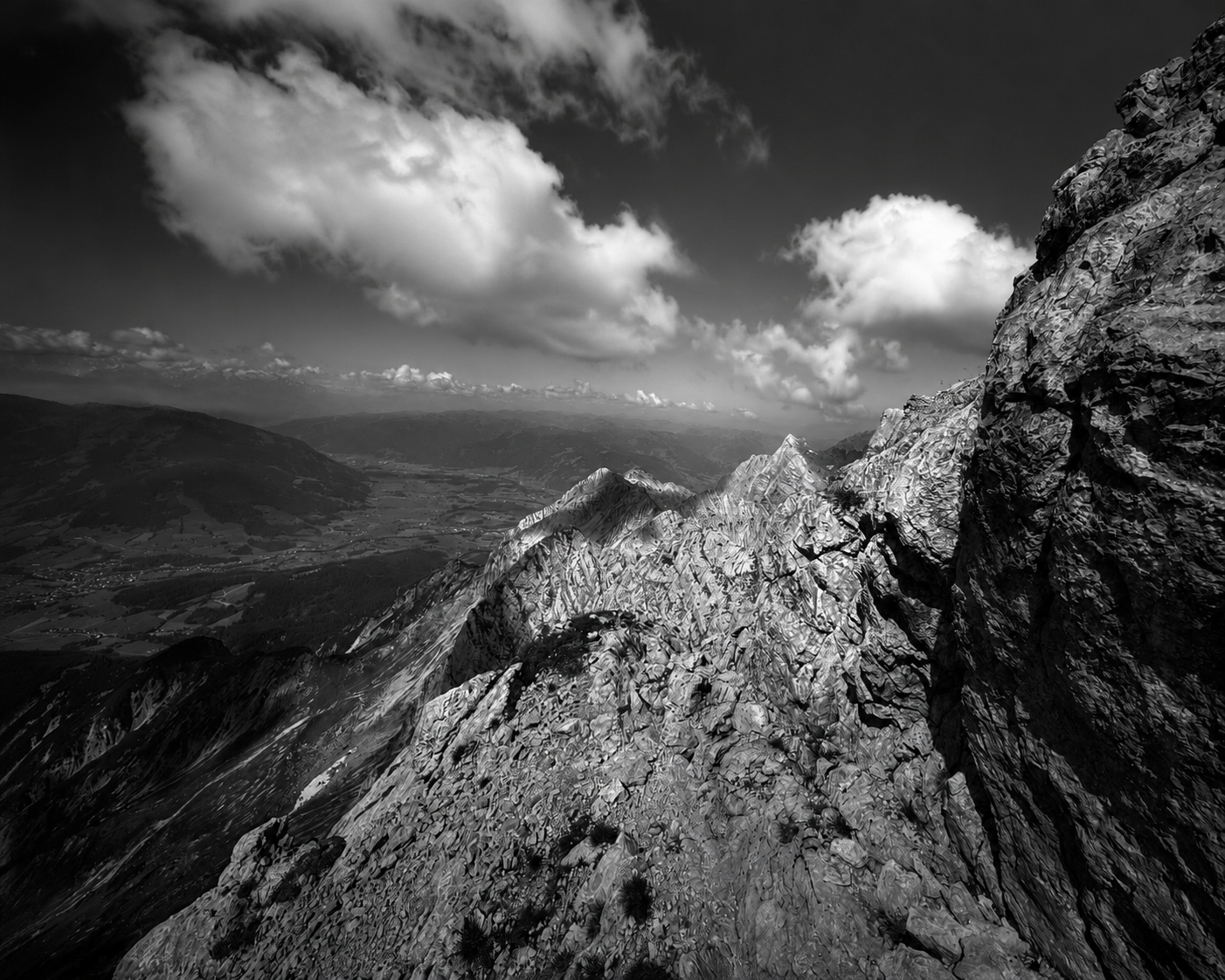
Clouds are your lighting crew. Harsh midday sun is usually a disaster, but moving clouds are great. They carve rock faces, add depth, and save landscapes that would otherwise look flat. Waiting five minutes for the light to shift is often better than walking another kilometer.
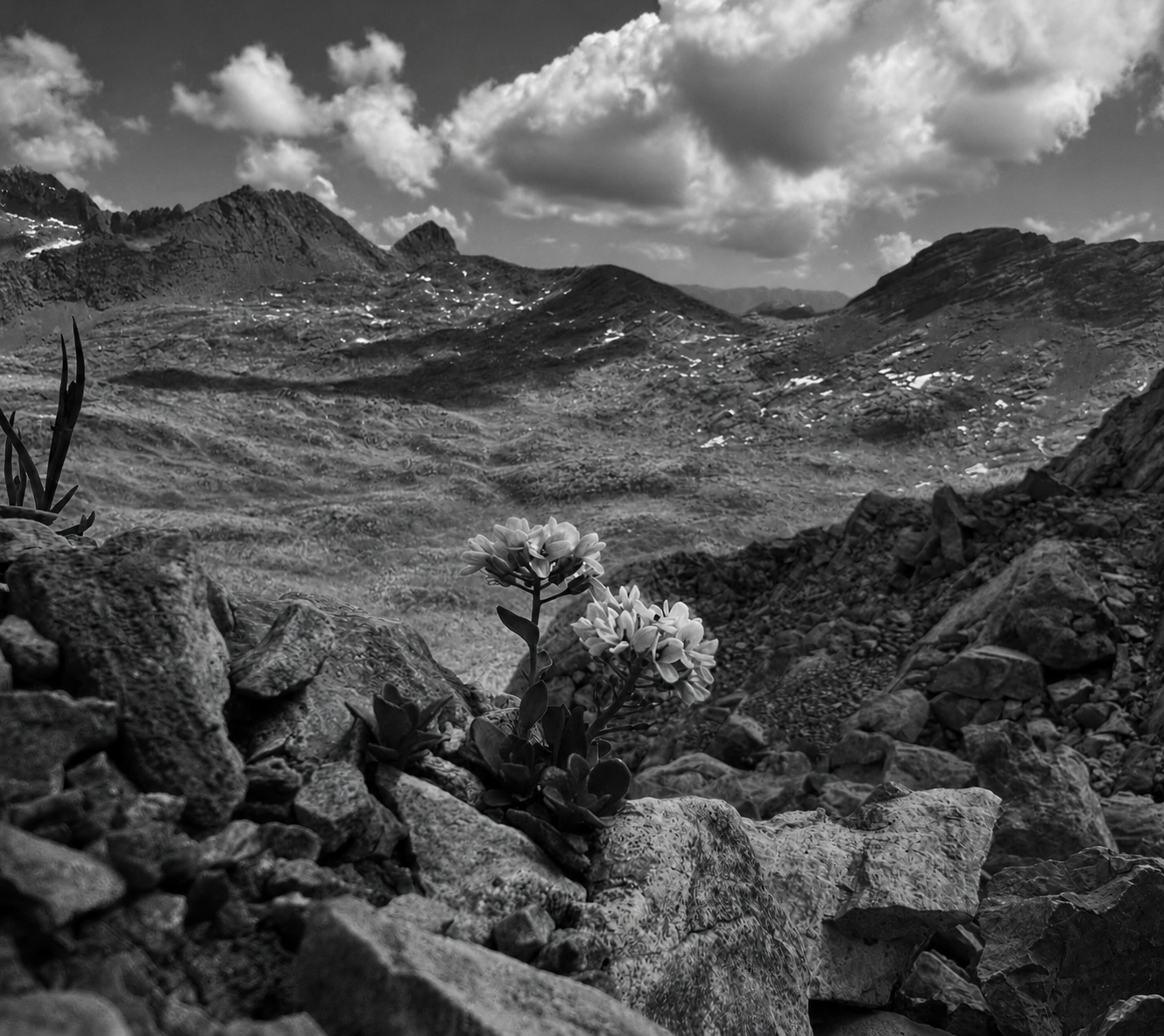
Stop looking for views. Look for relationships instead. Foreground rocks, a path through the scree, a shadow moving across a slope, some stubborn flower growing somewhere it has no business growing. That’s the stuff that makes a photograph rather than a postcard.
The dark cloth does a lot. Besides focusing, it works as a shade, a windblock, a weird little meditation tent, and a reliable way to make passing hikers decide you’re either very serious or mildly unhinged. Usually both.
One good negative is enough. Coming home with six sheets you actually thought about is better than 600 digital files that need sorting. Large format forces restraint, and the mountains tend to reward that.
The Walk Back Down
Going down was almost relaxing. The work was done, the camera had earned its keep, and the main challenge was talking my knees into accepting that gravity is, in fact, not optional.
Back in the valley, people asked the obvious question: “Wasn’t that camera really heavy?” It was. But I’d barely noticed. Somewhere between the trailhead and the summit, weight stops mattering much when every step is taking you toward a photograph you’ve been thinking about for hours.
That’s why I still carry an 8×10 into places where most people would leave it behind. The negatives are big, the memories bigger, and the story gets better every time the pack hits the floor.