Analog Art Affair
Acceleration Towards the Analog Art Affair
Preparing for an analog art fair is a curious exercise in optimism. It always begins with the innocent thought, *"I’ll just print a few cyanotypes."* Three weeks later, my studio resembles the aftermath of a diplomatic incident between nineteenth-century chemistry and an overenthusiastic stationery shop. Every horizontal surface has been promoted to an official drying rack, and someplace under an ever-growing sea of Prussian blue paper, I vaguely remember owning a floor.
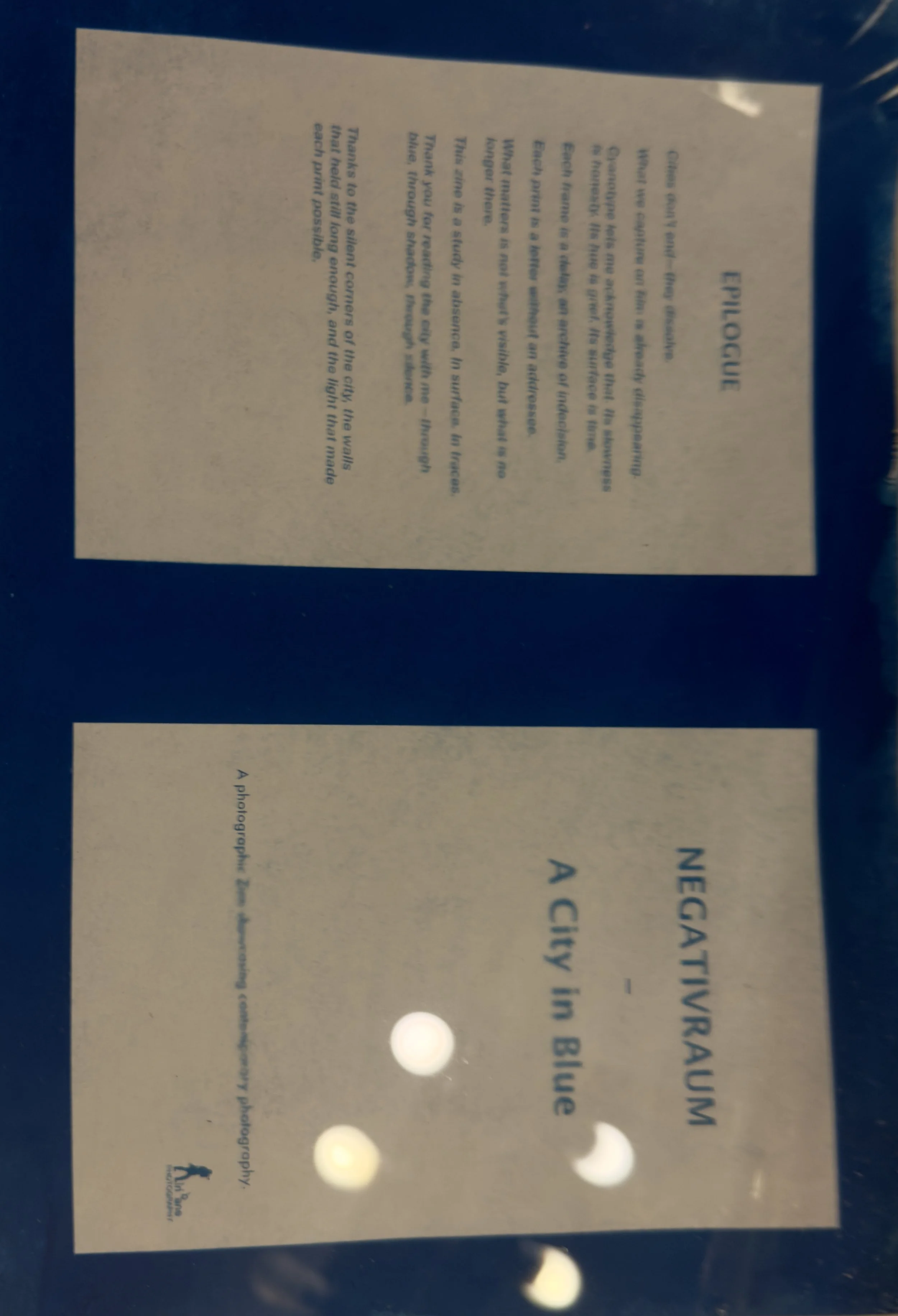
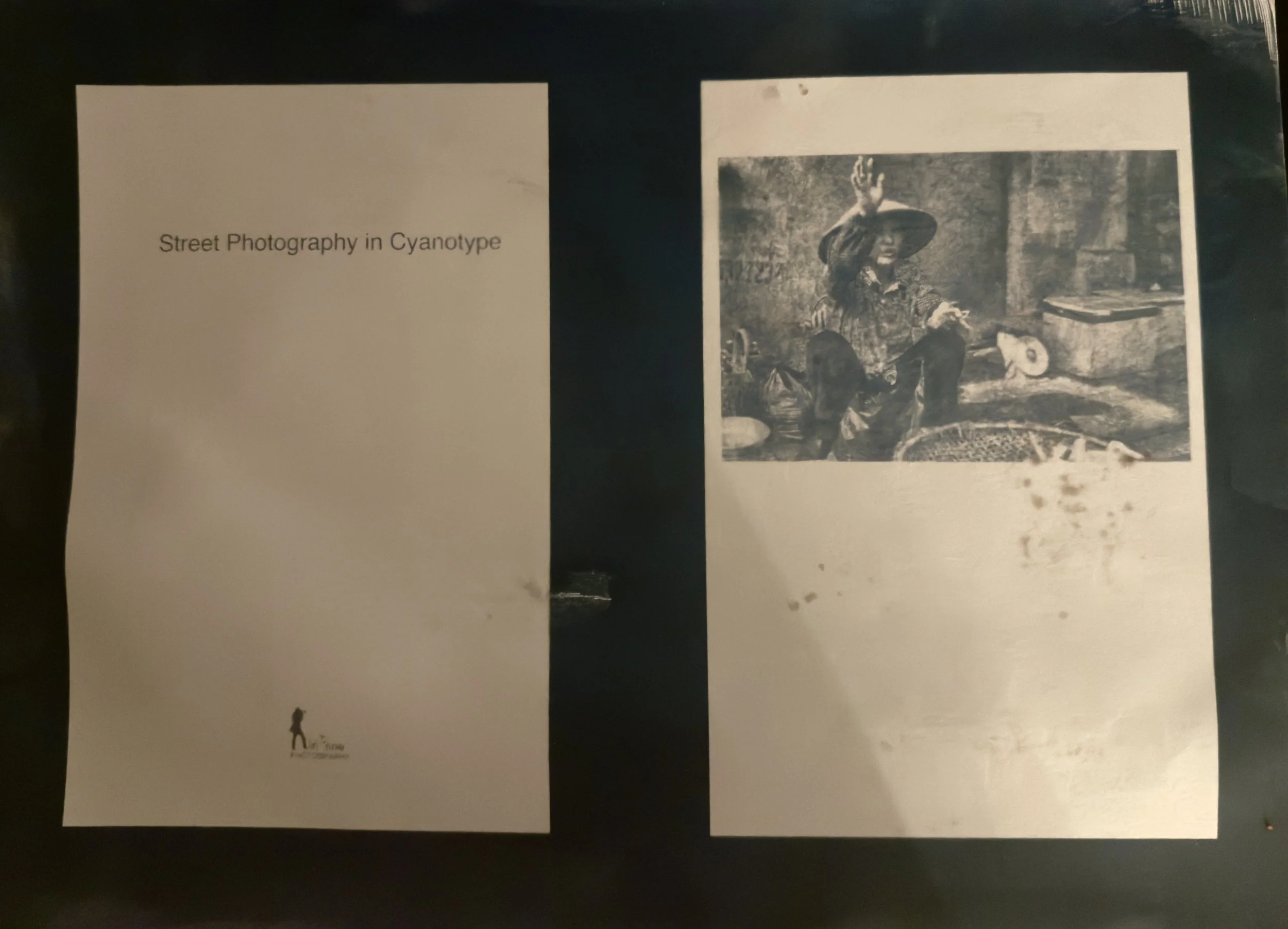
September’s Analog Art Affair is approaching, and preparations have entered what engineers would call full acceleration and what normal people would simply describe as complete chaos. This year, I’ll be presenting three distinct worlds centered on analog photography: cyanotypes, handmade photobooks, and large-format work.
The World of Blue and Chaos
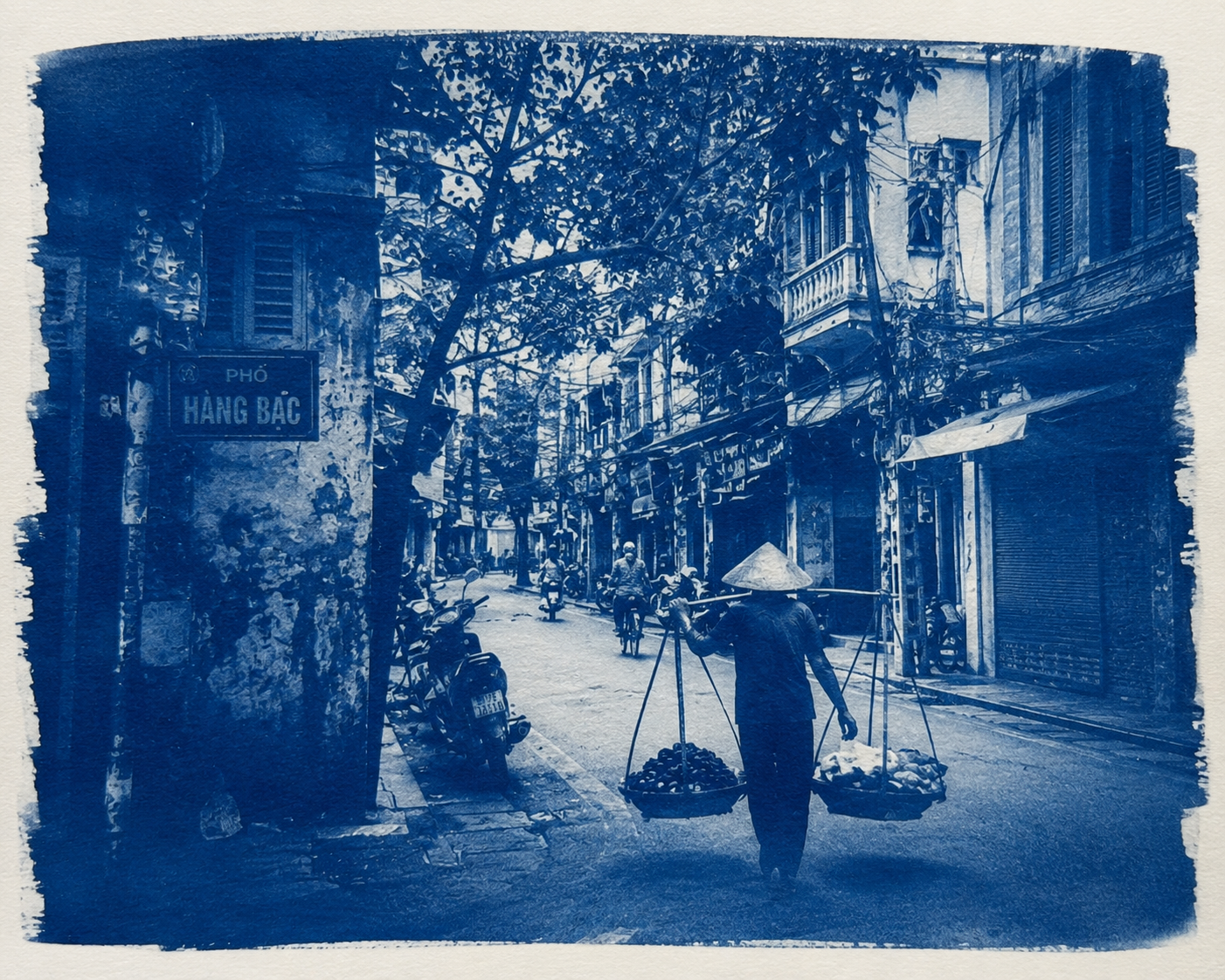
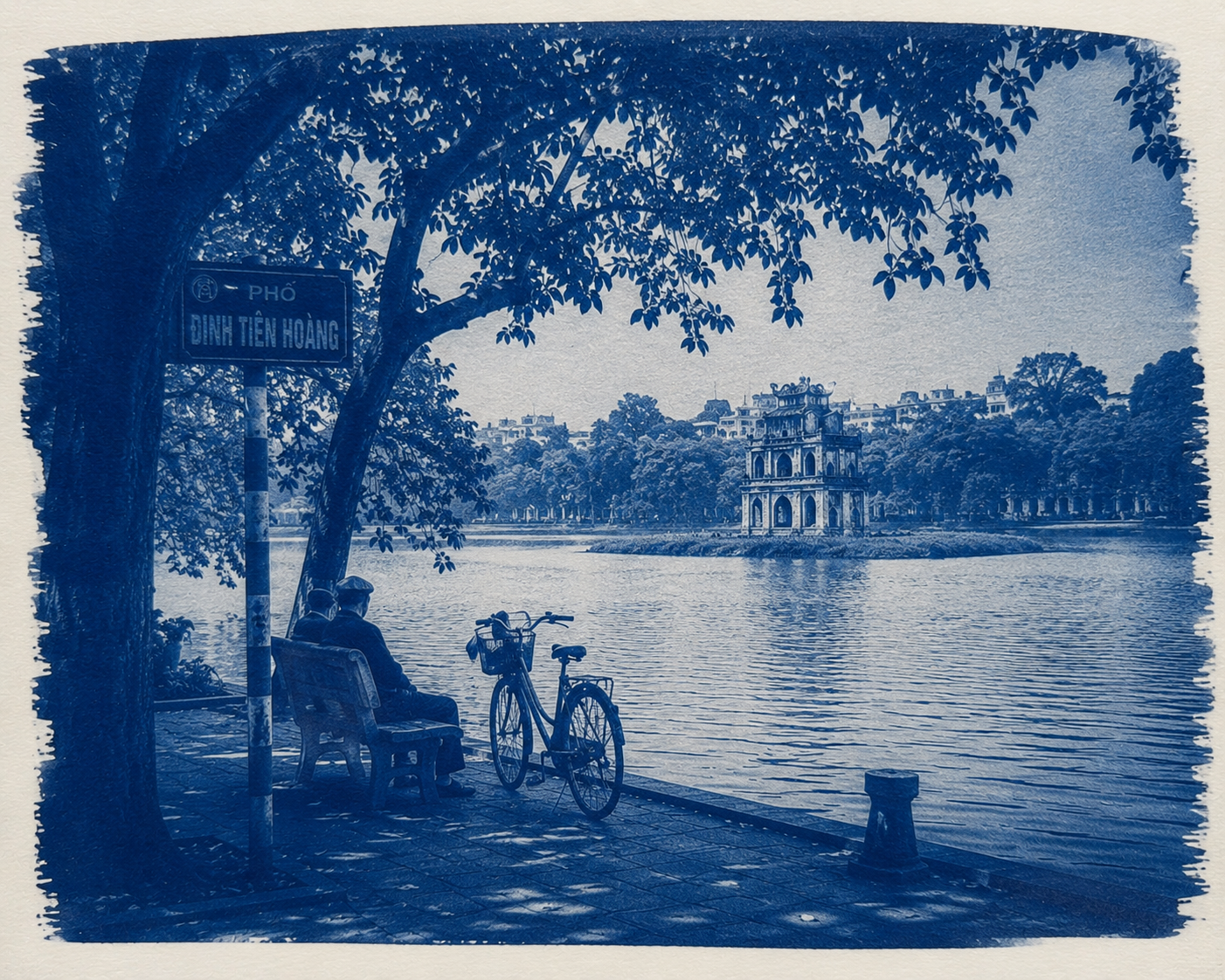
The largest part of the stand will be dedicated to my cyanotypes. These handcrafted blueprints explore fragments of the urban landscape: forgotten walls, architectural textures, peeling paint, hidden signs, and quiet details that most people walk past without noticing. Somehow, they all look considerably more philosophical once they’re transformed into deep Prussian blue.
Visitors won’t only see the finished prints; they’ll also discover test strips, failed experiments, coating samples, and intermediate stages. In other words, they will see all the evidence proving that beautiful photographs rarely happen by accident. Cyanotype is not simply about painting it blue and wishing for the best—although, admittedly, that is occasionally part of the workflow.
The actual process sounds wonderfully simple:
* Coat the paper.
* Wait.
* Expose it.
* Wash it.
* Wait again.
* Admire the blue.
Then, you repeat this sequence approximately 300 times because perfection has a deep personal dislike of first attempts. This leads directly into the daily inspection ritual: *"Beautiful contrast… Is that a dust spot? No… that’s a fly. Actually… I think the fly improves the composition."* Where modern photographers have Photoshop, cyanotype artists have optimism.
---
Books and Big Cameras
The second part of my stand will showcase something that has quietly become another passion: producing my own photobooks. I don’t just design them; I print them, fasten them by hand, build prototypes, make dummies, change layouts, print again, discover an error on page 47, doubt every design decision, print once more, and finally convince myself that perhaps the book was meant to look exactly like this all along. Visitors will be able to leaf through finished books while also seeing the mock-ups, production samples, and working materials behind them.
The third corner of the stand belongs to large format photography. Here, there will be original negatives, contact prints, and perhaps the greatest contradiction in photography: Instax images created with a large-format camera. It takes several minutes to set up an $8 imes 10$ camera, but only 90 seconds for the Instax to develop. The camera weighs enough to qualify as a strength-training exercise, yet the final image fits comfortably into your wallet. Photography has always had a wonderful sense of humor.
---
The Fine Art of Packing and Panicking
Meanwhile, back in the studio, the packing list continues to grow with frightening efficiency. Print sleeves, backing boards, portfolio boxes, labels, business cards, display stands, tape, gloves, cleaning cloths, pens, price lists, spare chemicals, and enough bubble wrap to safely deliver a rhinoceros to the Moon. The irony is difficult to ignore: I spend weeks creating handcrafted prints using a photographic process invented in 1842, only to wrap them in enough modern protective material to survive atmospheric re-entry.
Then comes the hardest decision of all: choosing which prints deserve to travel. This isn’t curation; it’s emotional hostage negotiation.
> *"This one has wonderful tones."*
> *"Yes… but look at that tiny edge."*
> *"Nobody will ever notice."*
> *"I know it’s there."*
Artists have an extraordinary talent for discovering flaws invisible to the entire human race. Visitors will stand in front of a print, admire its workmanship, and raise reflective questions, while I’m quietly wondering whether anyone else has noticed the microscopic fiber hiding in the lower-left corner. Probably not. But definitely me.
Naturally, after every print is finally approved, another ancient ceremony begins: signing them. Few activities increase the heart rate faster than applying permanent ink to several hours of careful work. One distracted signature and you’ve transformed an exhibition print into an exceptionally expensive bookmark.
---
Unimpressed by Efficiency
Yet, despite all the mild panic, damp paper, blue fingertips, and increasingly questionable organizational skills, I wouldn't trade this process for anything. In a culture obsessed with instant results, analog photography politely refuses to rush. These processes ask needing patience, attention, and repeated care. Nineteenth-century chemistry remains wonderfully unimpressed by twenty-first-century efficiency.
So the countdown continues. The stacks of blue paper keep growing, the books slowly fill their shelves, the negatives find their protective sleeves, and the Instax originals patiently wait beside cameras old enough to have witnessed multiple technological revolutions.
If all goes according to plan, visitors to the Analog Art Affair in September will discover a stand filled with handcrafted cyanotypes, handmade books, large-format photography, and instant images that somehow require remarkably little instant gratification. The exhibition is also a record of the work behind it: the test strips, the rejected prints, the notebooks full of ideas, the experiments that almost worked, and the carefully hidden chaos.
And, of course, they won't see one photographer quietly convinced that perhaps… only maybe… there’s still time to print one more cyanotype before September. History strongly suggests there probably isn’t, so the fair may be the best place to catch the work before it disappears back into the studio.
I’ll almost certainly do it anyway.