
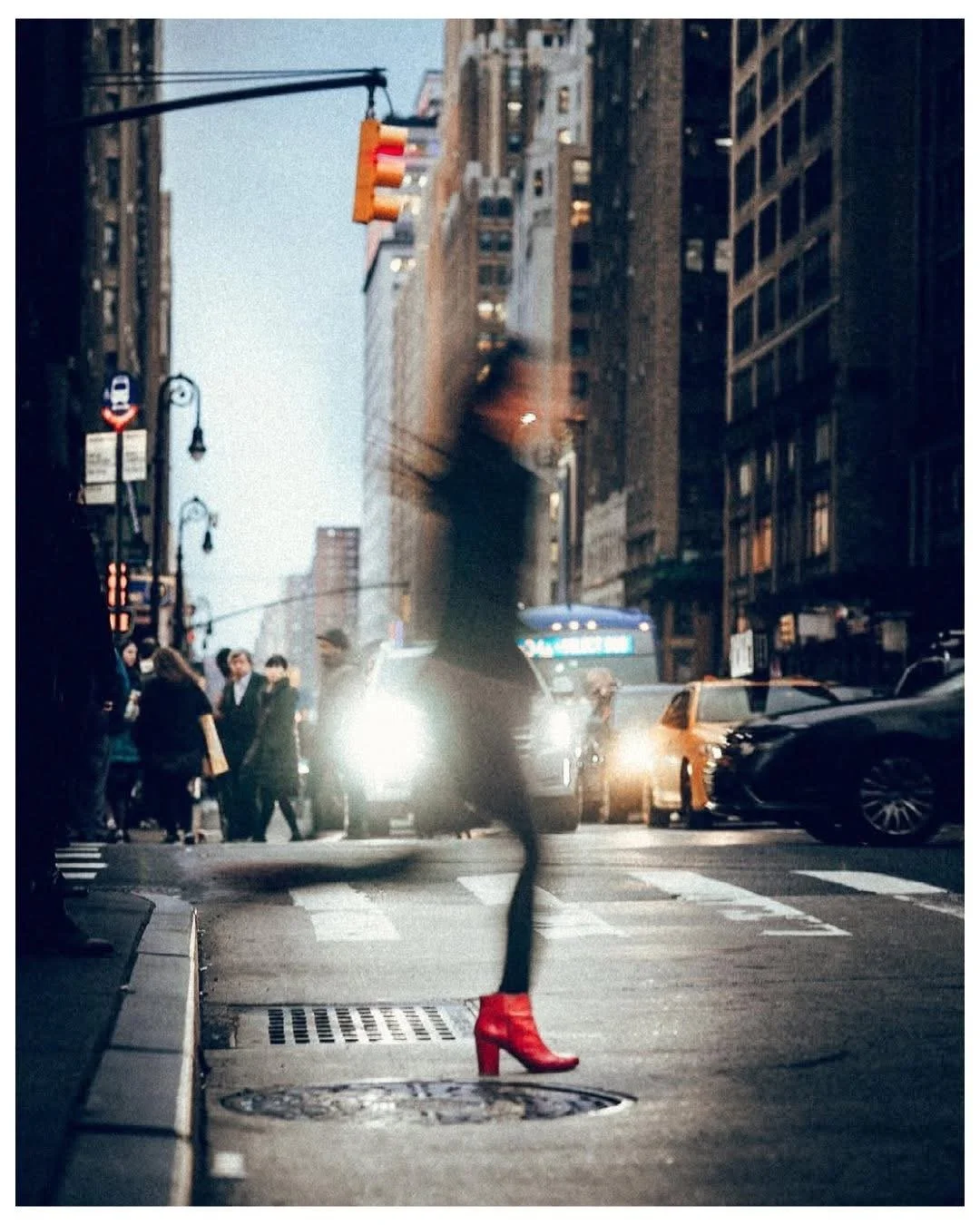
Street photography, for a long time, felt like a hunt. I walked the streets with a camera and a quiet hope that today would finally deliver that one perfect moment — the kind Henri Cartier-Bresson made look effortless. Like many photographers, I chased timing, geometry, and coincidence, convinced that meaning lived in a fraction of a second.
Eventually, that chase became exhausting.
What changed everything was letting go of the idea that a single image had to carry everything. Instead of hunting moments, I started paying attention to connections. Staying longer in one place. Watching patterns repeat. Letting photographs relate to one another. A short series of five images turned out to be enough to suggest movement, mood, and tension — without explaining anything outright.
This shift slowed me down. Photography stopped feeling like a competition and started feeling like observation. The camera became a notebook rather than a net. And it didn’t matter what tool I used. Analog, digital, medium format, phone — if it can create an image, it’s valid. The street doesn’t care what camera you bring. Only you do.
Working in series also removed pressure. Each image only had to do its part. Context, detail, pause, release. No hero shots required. Just clarity.
I began applying this way of thinking to different cities. Frankfurt became, for me, a place of order and control — efficient, calm, and emotionally restrained. Cologne felt like its opposite: informal, diverse, social, and gently chaotic. Hong Kong was something else entirely — dense, compressed, intense, with only brief moments to breathe before the pressure returned.
This journey is still unfolding. I don’t claim to have answers. But I do know this: slowing down, trusting sequences, and letting images talk to each other has made photography more honest — and more enjoyable.
If that sounds familiar, or if you’re questioning the chase yourself, you’re not alone.