Moments to Meaning serial
From Moments to Meaning
Short-Form Storytelling in Street Photography
For a long time, I did what many of us did. I walked the streets slightly hunched forward, camera ready, eyes wide, quietly hoping that today would be the day. The day of the moment. The Cartier-Bresson moment. Perfect timing, perfect geometry, perfect irony — history politely lining itself up just as I pressed the shutter. Effortless. Casual. Legendary.
Like everyone else, I was hunting and still do.
And like everyone else, I mostly came home with sore legs, a lot of “almosts,” and the uneasy feeling that the magic moment had happened roughly two seconds earlier, just outside the frame.
At some point, this chase became tiring. Not physically — mentally. Turning street photography into a constant search for the exceptional makes every walk feel like a job interview you didn’t prepare for. You start blaming your timing, your instincts, your camera, the weather, and possibly your life choices.
Eventually, I realized the problem wasn’t the street.
It was the expectation.
So I tried to stop hunting moments and to start paying attention to connections.
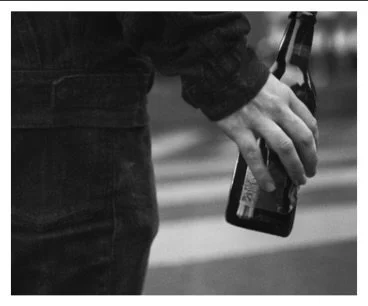
Instead of asking myself whether a single image was strong enough to stand on its own, I began asking whether it belonged to something larger. A sequence. A rhythm. A short visual sentence rather than a shouted word. Five images. Sometimes fewer. Rarely more. Enough to suggest change, tension, or mood — not enough to explain anything completely.
This shift slowed me down in the best possible way. I stayed longer in one place. I watched people repeat themselves. I noticed patterns instead of peaks. The camera became less of a trap and more of a notebook. Photography stopped being about winning and started being about noticing.
And yes, before someone asks: I genuinely don’t care what tool I use to do this.
For me, making images means using any device capable of creating them. Analog or digital. Medium format or phone. Expensive or embarrassingly simple. If it allows me to observe, frame, and respond, it’s valid. The street does not behave differently because I brought a different camera. Only I do.
Working in series also removed a lot of pressure. A single image no longer had to carry the entire meaning of the day. It just had to do its part. Context. Detail. Transition. Pause. Release. Suddenly, photography felt less heroic and much more honest.
Three Cities, Three Personal Filters
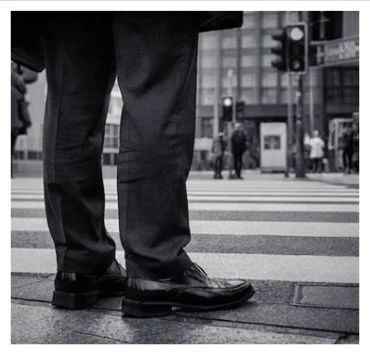
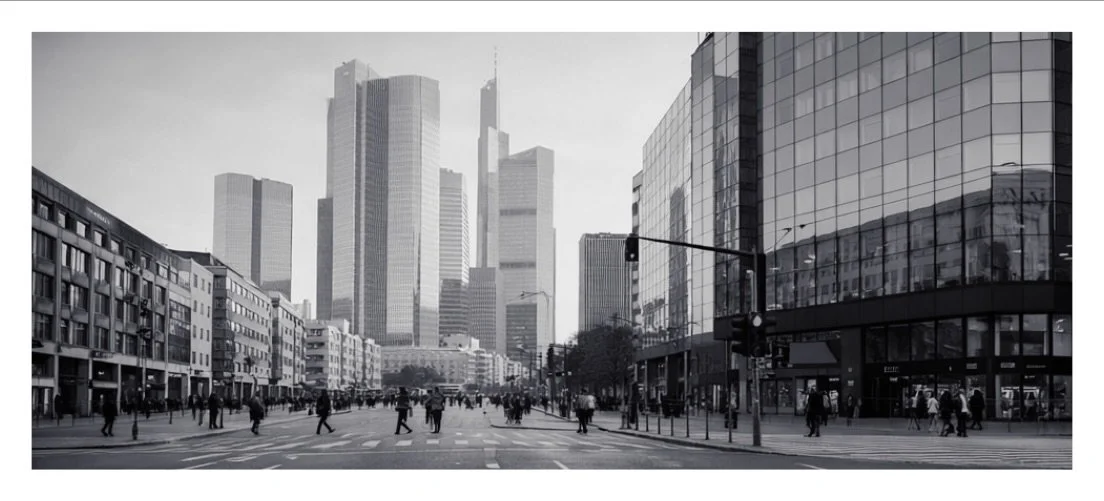
Frankfurt — Order, Pause, Control
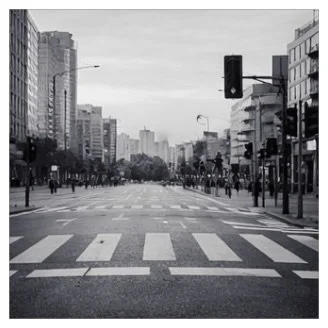
Frankfurt, in my eyes, is the city of banks, business meetings, access cards, and calendars that are booked long before you even think of calling. It values order, efficiency, and clarity. When I photograph there, I respond instinctively to that structure.
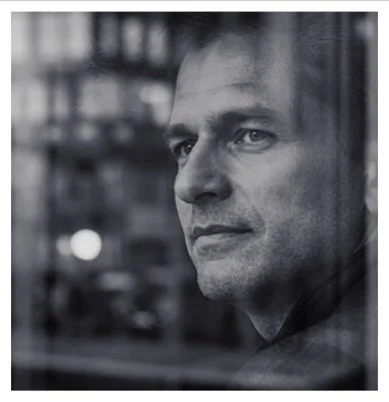
The Frankfurt series is about control. Everything functions. Movement is regulated. Interruptions happen, but they disappear quickly, like paperwork handled by the right department. Emotion is present, but filtered — through glass, steel, and routine. Just not around the central station - that’s a different universe in my humble opinion.
What interests me most are the pauses. The moments where nothing goes wrong, yet nothing moves. Frankfurt doesn’t explode. It waits. Calmly. Politely. And that quiet discipline is what the series revolves around.
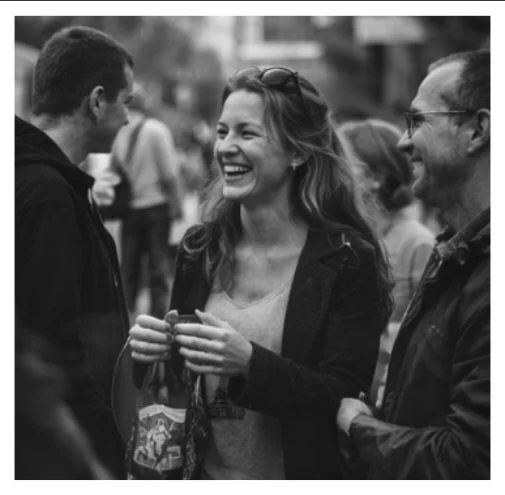
Cologne — Diversity, Carnival, Informality
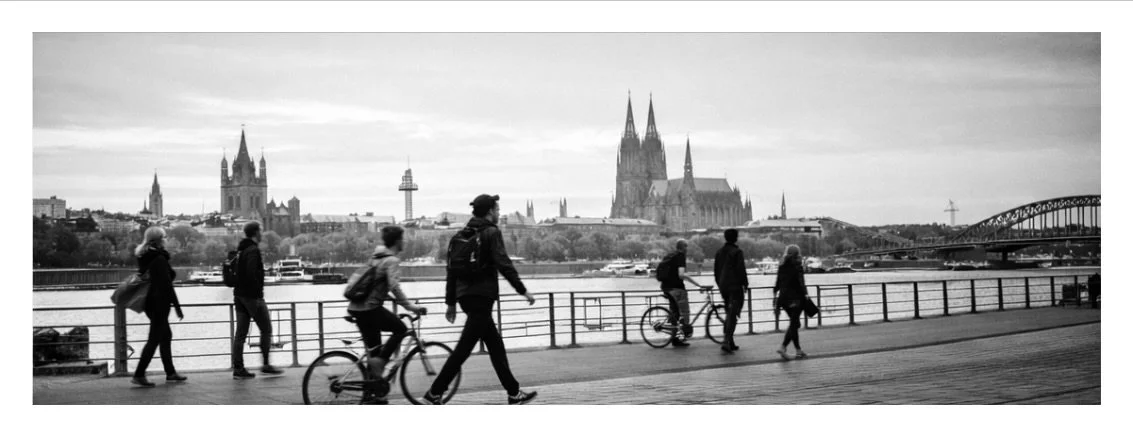
Cologne feels like Frankfurt’s relaxed counterpoint. Less polished, more open, and refreshingly unconcerned with perfection. My experience of the city is shaped by diversity, informality, and a constant sense that interaction is always possible — but never forced.
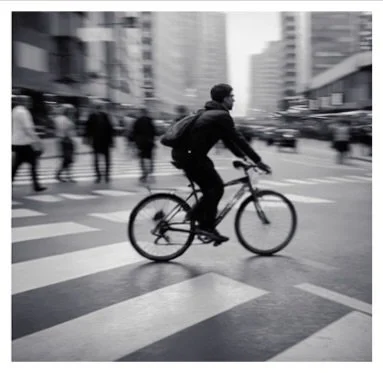
The idea behind the Cologne series is encounter. People share space intuitively. Small gestures matter. Brief interactions don’t need explanations or follow-ups. There’s a slightly carnivalesque quality to everyday life here — sometimes loud, often subtle, always human.
Cologne doesn’t aim for conclusions. It drifts. It adapts. It keeps going. The series reflects that openness: moments connect briefly, then move on, perfectly comfortable with not becoming anything more.
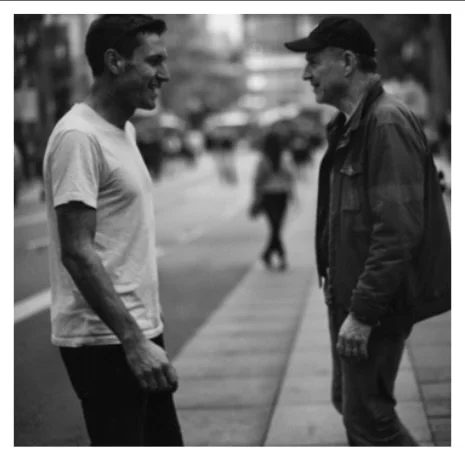
Hong Kong — Density, Compression, Release
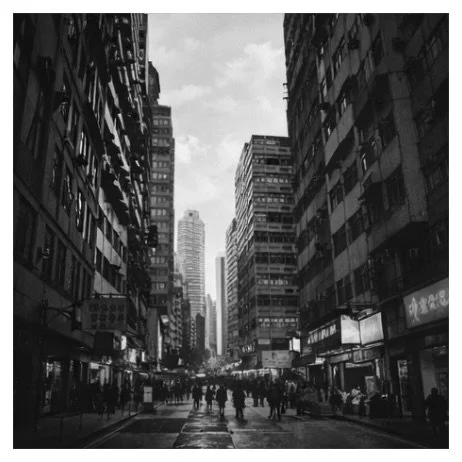
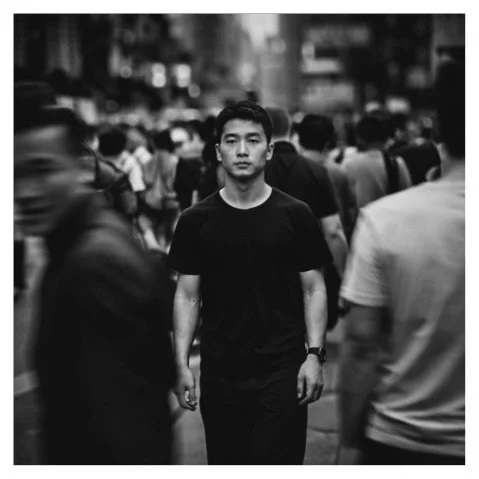
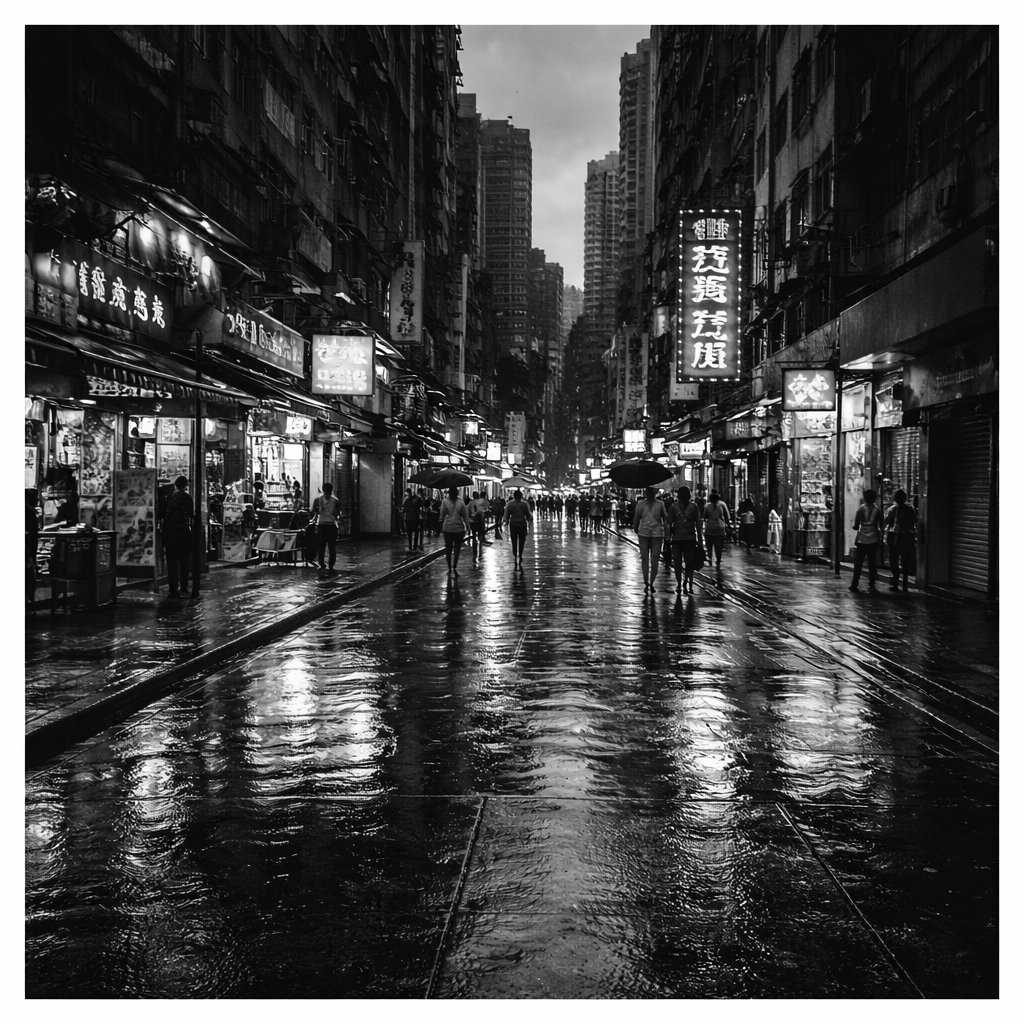
Hong Kong remains the most intense city I have ever photographed. Space is tight. Movement is constant. Standing still already feels like an act of defiance. Everything presses inward — buildings, people, schedules, expectations.
The idea behind the Hong Kong series is compression. I’m not trying to escape it. I’m trying to understand it. Stillness becomes meaningful precisely because it’s difficult. Release exists, but only in fragments — a shift in perspective, a brief pause, a short breath. Which you need in Kowloons jungle of densness.
The city never truly relaxes. It simply loosens its grip for a moment before tightening again. The series doesn’t resolve that tension. It acknowledges it.
Where This Is Going
I won’t pretend I’ve figured everything out. This move from single images to storytelling in series is still very much a work in progress. Maybe it will evolve. Maybe it will fail. Maybe I’ll occasionally fall back into chasing decisive moments on a rainy afternoon.
But right now, this feels right. Slower. More curious. Less heroic. More sustainable.
If you’re interested, you’re welcome to follow this journey through my blog posts. I’ll keep sharing thoughts, experiments, small failures, and the occasional quiet success. And if you have ideas, questions, or meaningful comments — don’t hesitate. Share them. With me, and with fellow readers who are equally fascinated by street photography and quietly unsure why.
The street isn’t going anywhere.
And neither, apparently, are we.
A hopeful Reusable Framework
Before shooting
one clear theme or emotional direction
one location or recurring situation
acceptance of ambiguity
While shooting
observe longer than you photograph
wait for relationships, not events
vary distance, not subject matter
simplify compositions
Editing
each image must add new information
avoid visual repetition
sequence for rhythm, not chronology
stop at five images, or earlier
Sequencing logic
context → detail → interaction → emotion → resolution
strongest image often works best in position two or three
final image should open, not close
Closing Reflection
A strong street photography series does not explain itself.
It relies on sequence rather than statement, on rhythm rather than emphasis.
Omission becomes as important as inclusion.
Five images are enough to suggest a world —
if each image understands its role,
and none are present by accident.