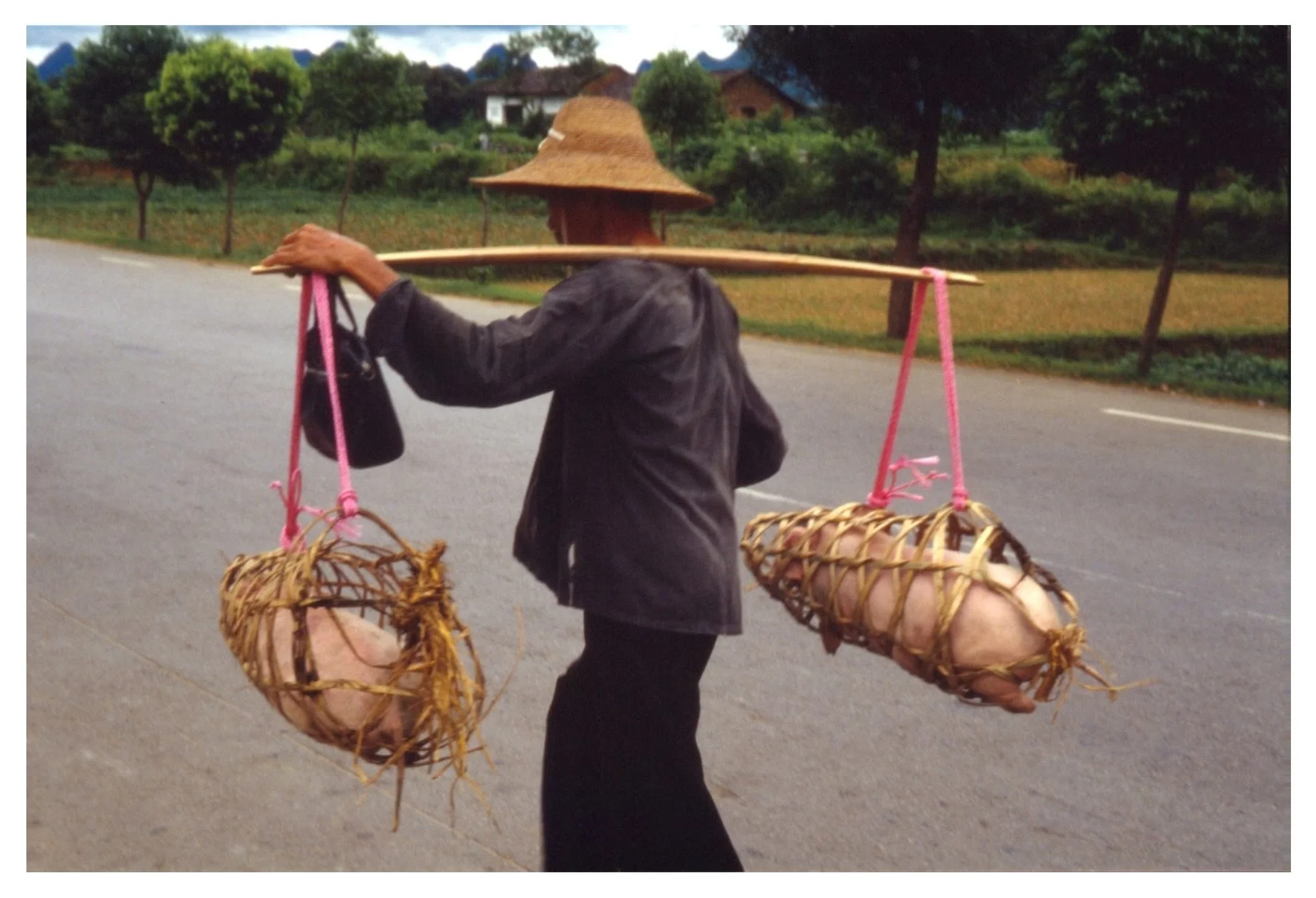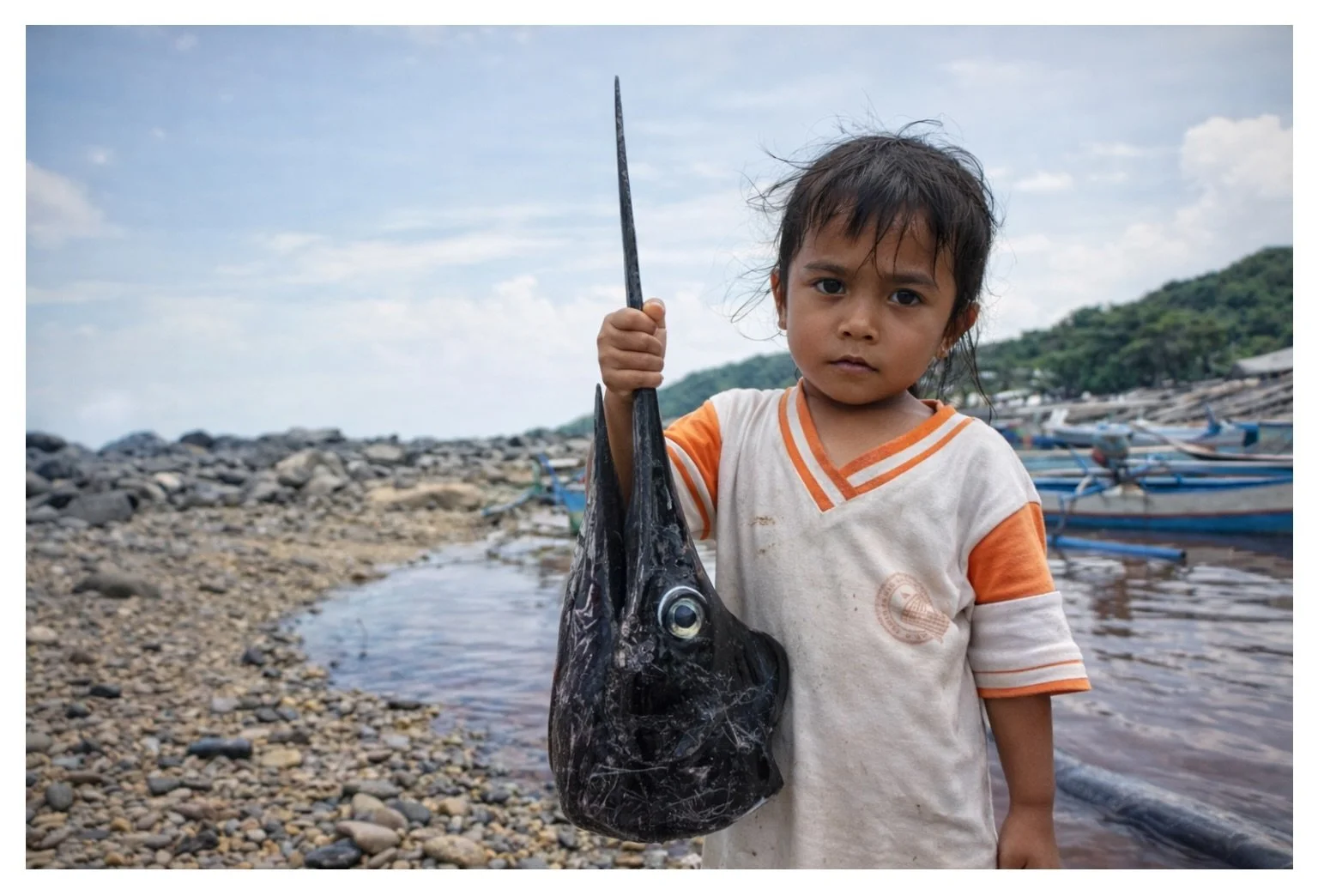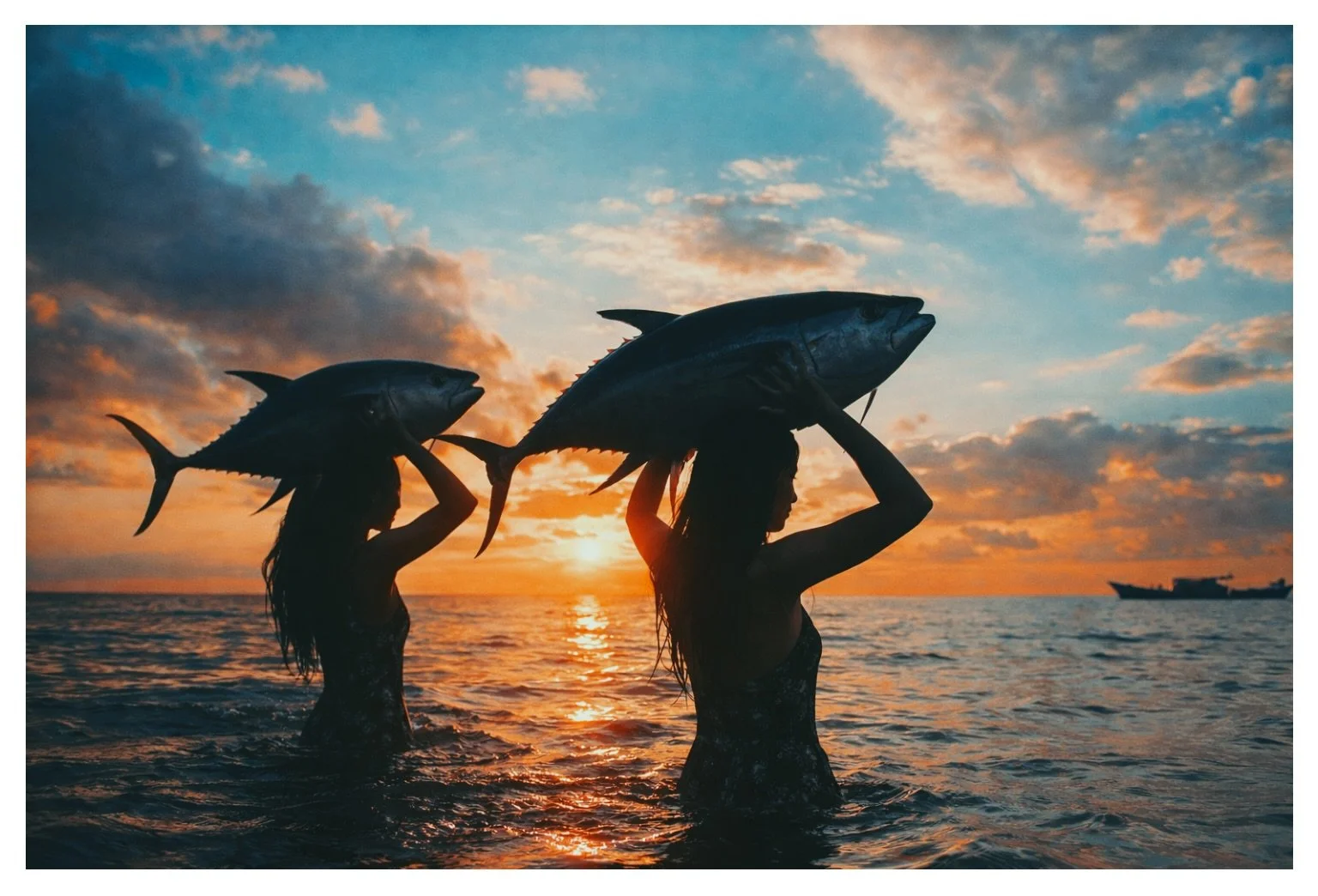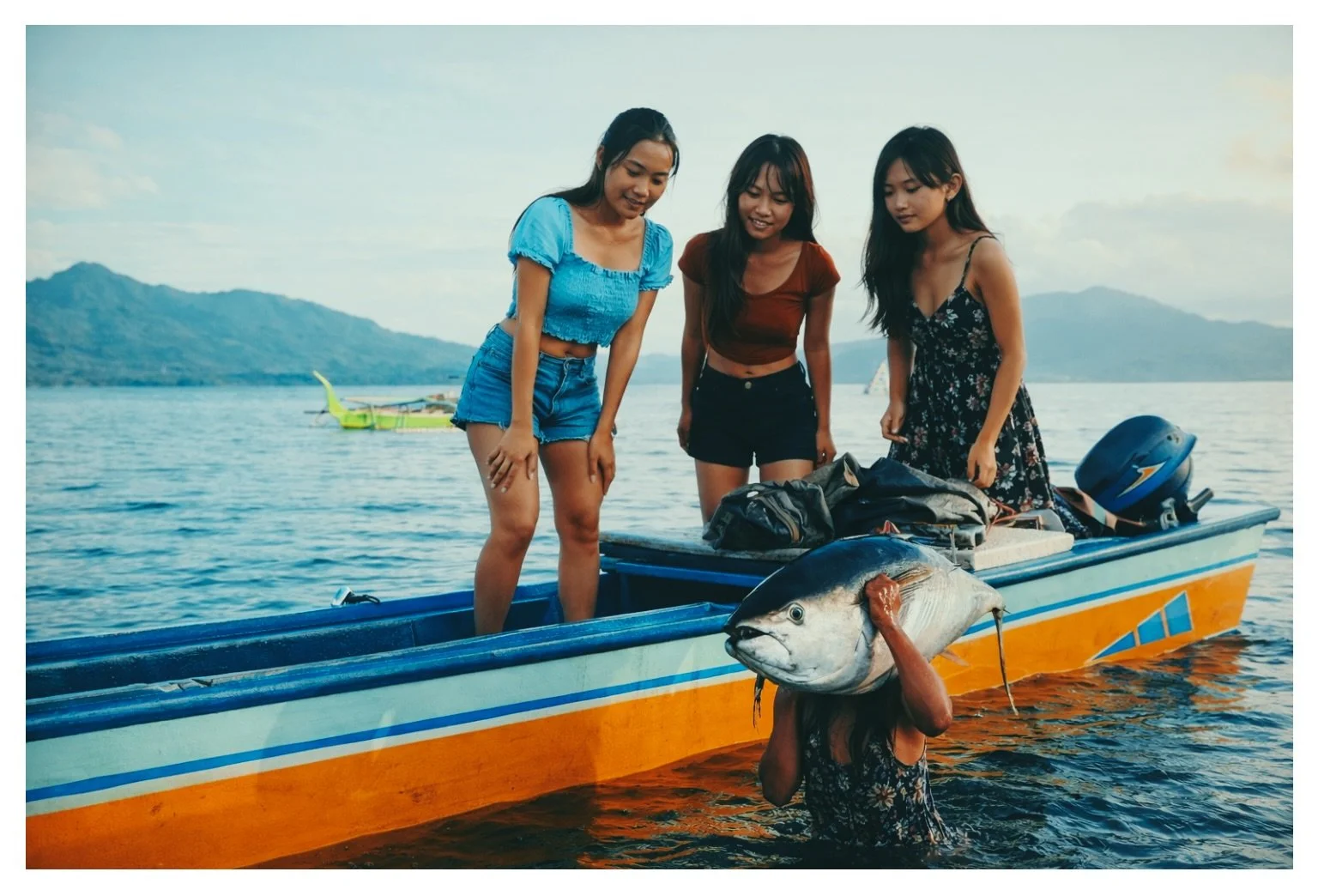
Fisherwomen and...
Cities are impressive places. They have glass towers, elegant cafés, carefully designed fountains, and people who believe a latte foam pattern counts as cultural achievement. Naturally, after a few days of urban admiration in Kuala Lumpur, someone suggested I visit a small fishing village on the coast.
“Just a simple place,” they said.
This usually means one of two things: either paradise or complete chaos. Occasionally both.
The invitation came through a friend of a friend who knew someone whose cousin apparently thought it might be interesting to have a photographer around for a day. The plan was simple. A boat, a few fishermen, the morning catch, and the chance to photograph everyday life on the water.
I accepted immediately. Photographers are like moths with cameras. Show us light, texture, or interesting faces, and we fly straight into it.
The Arrival
The journey itself already hinted that this would be a different kind of day.
You leave behind the highways and traffic, the orderly towers and malls, and eventually arrive at a pier that looks as if it were constructed during a particularly optimistic afternoon in the 1970s. Boats rock gently, wooden houses stand on stilts above the water, and the air smells of salt, diesel, and fish.
Lots of fish.
The village itself is quiet but alive in that slow, rhythmic way coastal places often are. Nets hang to dry between houses. Small boats move in and out like patient insects. Children appear out of nowhere and disappear again five minutes later.
And everywhere, people are working.
Fishing villages have a very efficient approach to the day. While cities slowly wake up with coffee and social media, here people have already been on the water for hours.
The Real Surprise
The real surprise of the day was not the boats, the nets, or the fish.
It was the fisherwomen.
While the romantic imagination often pictures fishermen in dramatic poses against the rising sun, reality proved slightly more balanced. Many of the women here were deeply involved in the daily work: sorting the catch, cleaning fish, repairing nets, organizing baskets, negotiating prices, and occasionally laughing at the confused photographer trying to stay out of the way.
Which, for the record, is harder than it sounds.
One woman lifted a basket of fish that looked heavier than my camera bag and asked if I wanted to take a photo.
“Of course,” I said.
She smiled politely, clearly aware that I was the only person present who thought holding a camera counted as work.
The Light
Photographers often talk about “perfect light” as if it were a mystical phenomenon that only appears for highly trained artists.
In reality, perfect light is what you get when you wake up early enough.
The morning light in the village was soft and warm. Boats returning from the sea reflected golden highlights on the water. The wooden houses cast long shadows across the narrow walkways. Fish scales shimmered like tiny mirrors in the baskets.
And occasionally a fisherman would walk past carrying something enormous that made the entire scene look like a painting.
At this point, I quietly realized something uncomfortable.
This small fishing village, with its peeling paint and uneven wooden planks, had more photographic potential than many carefully curated cities.
It was messy, real, unpredictable.
And absolutely wonderful.
Photographing the Catch
One of the most memorable moments came when a group returned with an exceptionally good catch.
Suddenly, the pier became lively. Fish were lifted, inspected, sorted, and placed into baskets. Someone shouted instructions. Another person laughed. A few children tried to help, but it mainly resulted in more chaos.
From a photographic perspective, this was gold.
Movement, expression, textures, reflections, and human interaction all occur simultaneously.
The trick was not to fall into the water while trying to capture it.
Practical Advice for Photographers
Now, if you are planning to photograph in fishing villages or similar environments, allow me to share a few extremely practical lessons learned that day.
Some of them were learned the easy way. Others slightly less so.
1. Keep your gear dry.
Water is everywhere in fishing villages. On the ground, on the boats, in the air, and occasionally falling from the sky to keep things interesting.
Use waterproof bags or dry bags whenever possible. Even a simple plastic rain cover can save a camera.
Saltwater and electronics are not friends.
They are more like distant relatives who avoid each other at family gatherings.
2. Bring minimal equipment.
Fishing boats are not photography studios.
Space is limited. Surfaces are wet. Everything moves.
A small camera and one or two lenses will make your life much easier. Large backpacks and elaborate setups tend to become obstacles.
Also, the lighter your gear, the easier it is to keep it out of the water.
Which is important.
3. Use straps. Always.
A camera strap is not just a fashion accessory.
When you lean over the edge of a boat to photograph a fisherman pulling in a net, gravity becomes very interested in your camera.
A strap keeps the camera attached to you rather than becoming a small artificial reef.
4. Watch your footing.
Wooden piers, wet ropes, fish scales, and water create an interesting combination.
Moving slowly and deliberately is highly recommended.
Falling into the water while carrying expensive equipment is a story that becomes much funnier for everyone else.
5. Respect the people first, photograph second.
Fishing villages are workplaces.
People here are busy earning a living. A friendly greeting, a smile, and a short conversation often make a huge difference.
Once people trust you, the photographs become much better anyway.
Genuine moments always beat staged ones.
The Best Part of the Journey
At some point during the afternoon, while sitting on the edge of the pier watching boats return from the sea, a quiet realization appeared.
This small fishing village had become the highlight of the entire trip.
Not because it was spectacular.
Not because it was famous.
But because it was real.
Travel sometimes pushes us toward the biggest sights, the most famous landmarks, the tallest towers.
But occasionally, the most memorable experiences happen in places that barely appear on maps.
Places where people work, laugh, repair nets, and carry baskets of fish while the tide slowly rises and falls.
Places where a photographer can quietly observe life unfolding without performance.
The Departure
When the day ended, and the boat headed back toward the city, the skyline slowly returned.
Glass towers, traffic, lights, noise.
Impressive again.
But something had shifted.
Because now I knew that somewhere out on the water, there was a small village where the day started before sunrise, where fish shimmered in baskets, and where the best photographs happened when nobody tried to make them special.
And for a photographer, that is sometimes the greatest gift a journey can offer.