Penang in Four Frames
Penang in Four Frames — A Photographer’s Small Escape from the Obvious
Every city that becomes popular with travelers develops a strange side effect: the same photograph gets taken again and again.
In Penang, it’s the trishaw in front of the colonial shophouses, the murals in Georgetown, the view of Kek Lok Si Temple from the standard lookout point. Beautiful, yes. But also slightly predictable.
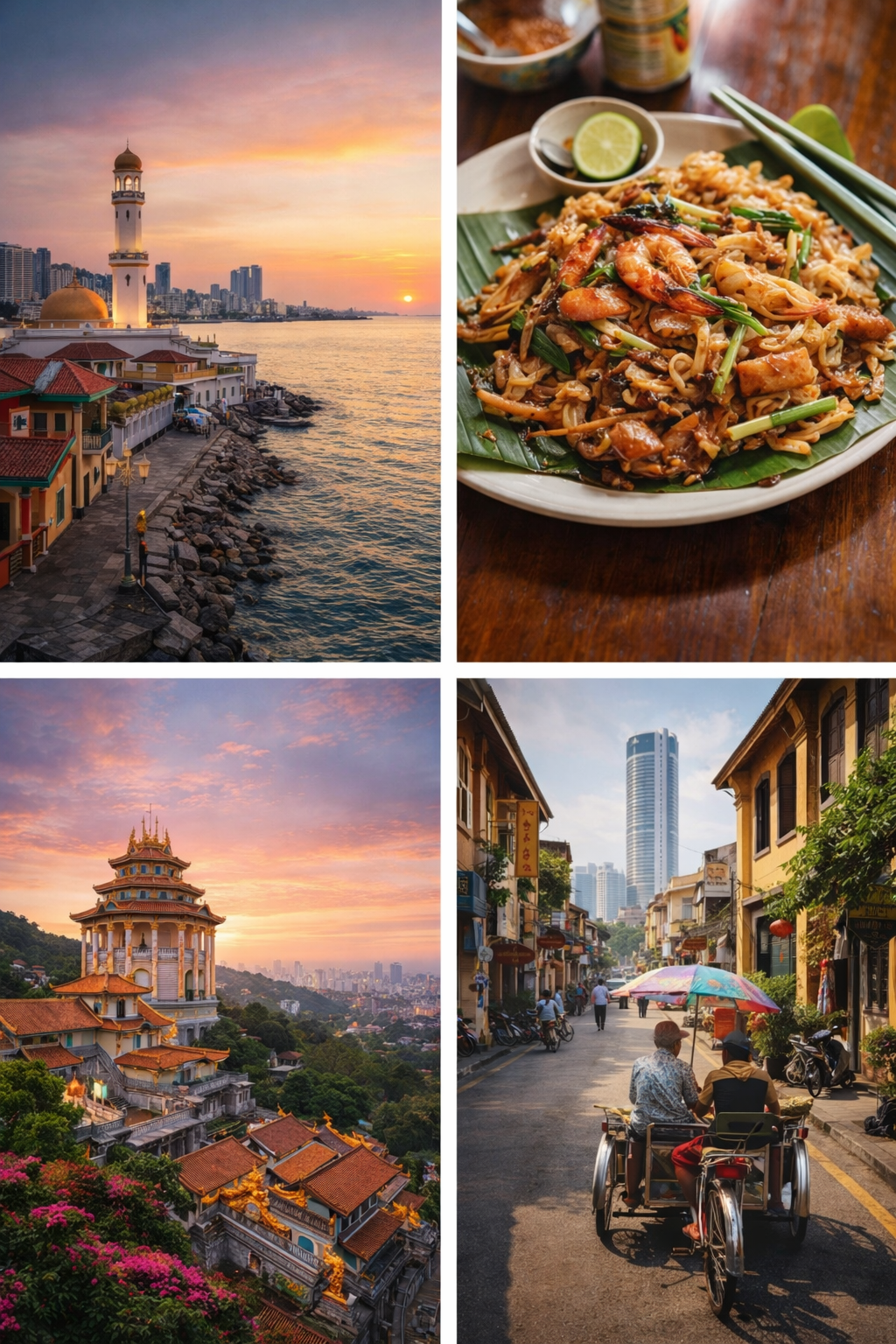
The poster above tries to do something slightly different. Four scenes, four small fragments of Penang life — not as a checklist of attractions, but as a visual mood board of the island.
What matters is not only where you photograph, but how you approach a place with a camera.
---
The Quiet Waterfront
One frame shows the edge of Georgetown where the city meets the Strait of Malacca. The old architecture, the waterline, the warm evening light — it feels calm compared to the bustling streets behind it.
Most visitors photograph the harbor from the busy promenade. A better approach is to walk a little further along the coastline or the smaller streets near the jetties. Old staircases, small fishing boats and weathered walls often create more intimate compositions.
Photographic tip
Instead of shooting the obvious skyline:
- frame buildings against the water at sunset
- use reflections on wet stone or harbor walls
- look for small human elements: fishermen, dock workers, evening walkers
A 35–40 mm lens works beautifully here. It gives enough context while keeping the scene intimate.
---
Food as Landscape
Another frame shows something Penang is famous for: food. Char kway teow, noodles glistening with oil and heat, lime and herbs adding color.
Food photography in Southeast Asia is not just about the dish itself. The environment tells half the story.
Try to include:
- wooden tables
- chopsticks and bowls
- bottles of sauce
- the chaotic beauty of the hawker stall
Photographic tip
Avoid the typical top-down “Instagram plate shot.”
Instead:
- shoot at table level
- use natural side light
- keep depth of field shallow to isolate textures
In many hawker centers, early evening light falling from the side creates surprisingly beautiful illumination.
---
Temples Above the City
The temple frame reflects another face of Penang: the spiritual landscape rising above the island.
Most people photograph Kek Lok Si Temple from the famous panoramic platform. It’s impressive but predictable.
A more interesting approach is to explore the smaller paths and stairways leading to the temple complex. From these angles, the architecture feels more layered and intimate.
Photographic tip
When photographing temples:
- look for repeating roof shapes
- include vegetation or flowers in the foreground
- photograph upward along staircases to add depth
Morning light works best here. The soft haze over Penang creates a natural atmospheric perspective.
---
Georgetown Streets
The last frame shows everyday street life in Georgetown — narrow streets, shophouses, a trishaw passing slowly through the scene.
Street photography in Georgetown is less about dramatic moments and more about rhythm: colors, shadows, people moving through narrow lanes.
Photographic tip
Walk the side streets rather than the main roads.
Look for:
- small workshops
- bicycle repair stalls
- laundry hanging above alleys
- street barbers or coffee vendors
A rangefinder camera or small mirrorless body helps because the streets are crowded and discreet photography works best.
---
A Simple Strategy for Photographing Penang
If you want to avoid the typical tourist images, follow a very simple rule:
Walk one street away from where everyone else is photographing.
Often that single step reveals:
- quieter scenes
- better light
- more authentic moments
Penang rewards curiosity more than planning.
---
The Island Between Sea and Stories
In the end, the four images in the poster are not meant to be a guide. They are fragments of atmosphere: sea, food, temples, streets.
Penang is a place where these elements blend together. A fishing harbor might sit next to colonial architecture. A temple appears above dense tropical vegetation. A street vendor cooks food that has been perfected over generations.
For photographers, that mixture is the real attraction.
Not the famous landmarks.
But the small, unexpected scenes waiting just outside the frame everyone else is chasing.