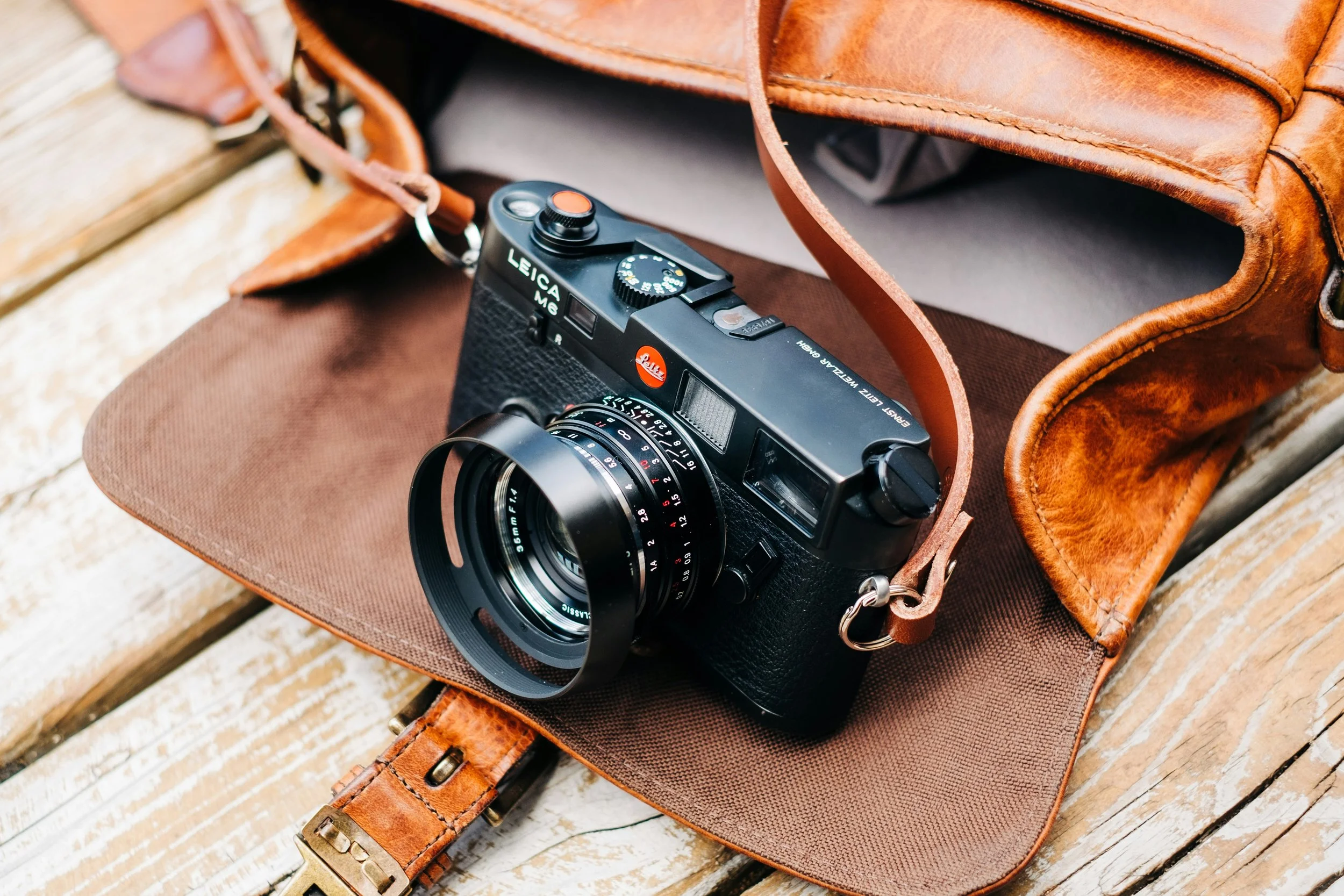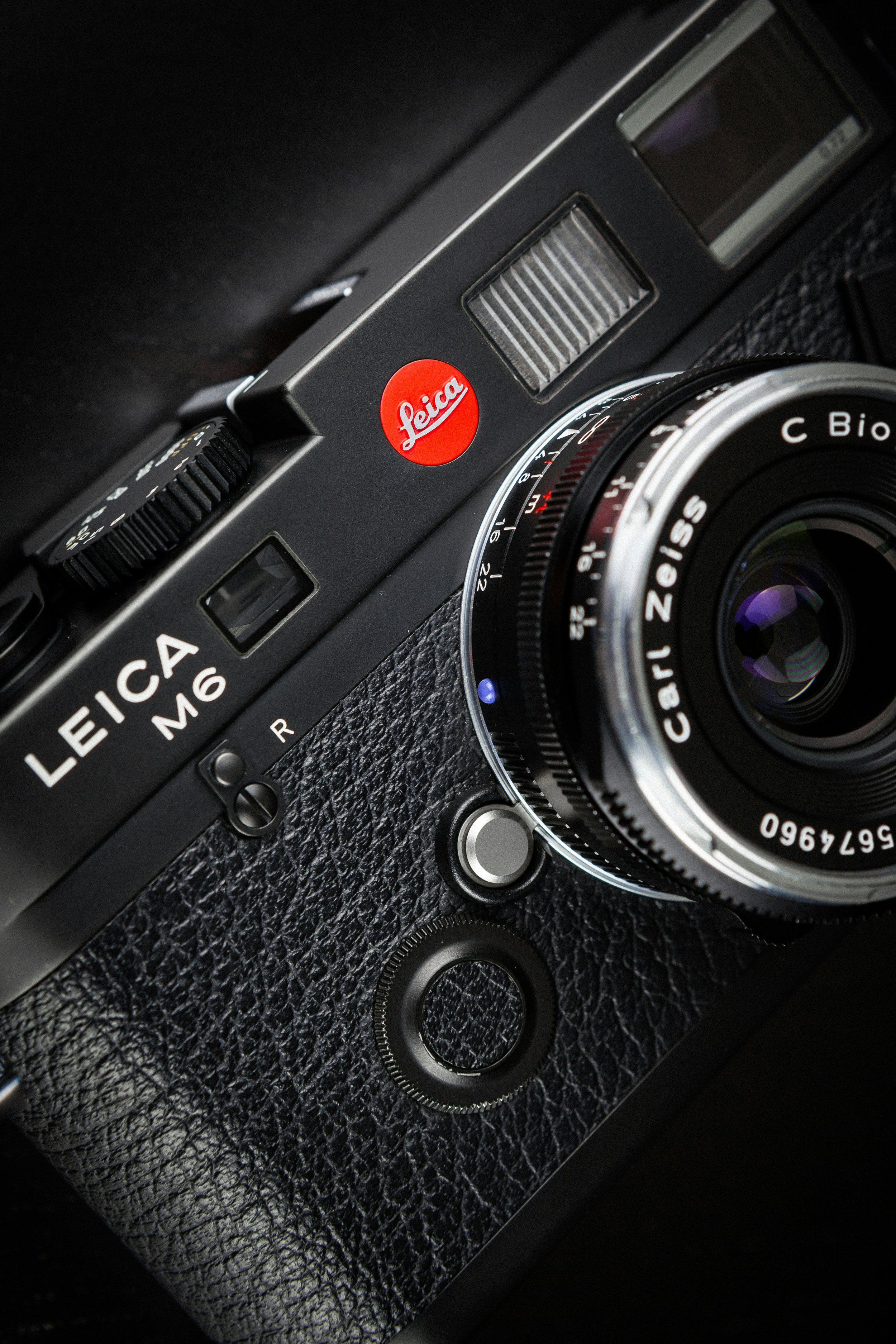
The Leica M6
Humanity has managed to build artificial intelligence, reusable rockets, and refrigerators that talk to smartphones. Yet some people still wander through cities proudly carrying a 35 mm film camera from the 1980s.
I know this because I am one of them.
The camera in question is the Leica M6, a machine that politely ignores almost every technological development of the last forty years and somehow becomes more charming because of it.
The Leica M6: A Camera That Refuses to Care About the Future
The Leica M6 first appeared in 1984 and was reintroduced in a modernized version in 2022. The core idea remained untouched: a compact mechanical rangefinder camera with manual controls and a built-in light meter.
That’s it.
No menus.
No autofocus.
No screen shows you the photo immediately after you take it.
The only electronic assistance comes from the light meter, which displays small red arrows in the viewfinder to guide exposure. If the battery dies, the camera continues working because the shutter and mechanics are fully manual.
Digital cameras panic when the battery reaches 5 %.
The Leica M6 continues calmly, as if batteries were merely a polite suggestion.
Loading Film: A Small Ceremony
Using the Leica M6 is less like operating a gadget and more like performing a ritual.
First, you remove the bottom plate.
Then you insert the film with a level of care usually reserved for fragile museum artifacts.
Then you advance the film lever while pretending this behavior is completely normal in the year 2026.
Meanwhile, the person next to you has already taken 200 photos of their cappuccino with a smartphone.
You will take 36 photographs of the entire day.
And strangely enough, that feels far more reasonable.
The Rangefinder Experience
Focusing with a rangefinder is an acquired taste. Instead of autofocus, you align two overlapping images in a small patch in the center of the viewfinder.
When the two images line up perfectly, the subject snaps into focus.
This process requires patience, coordination, and, occasionally, mild philosophical reflection on the meaning of sharpness.
But the moment it works, there is a tiny sense of victory. The photograph becomes a decision rather than a reflex.
Yes, It Is Expensive
Now we arrive at the uncomfortable part.
The Leica M6 is not cheap.
Buying one requires either careful saving, a slightly suspicious level of dedication to photography, or the calm conviction that mechanical precision is a legitimate life investment.
At first glance, the price can look absurd. A camera with no screen, no autofocus, and no video mode costing several thousand euros sounds like a prank played by the German engineering community.
And yet, oddly enough, it may be one of the more sensible long-term purchases in photography.
Expensive… but Not Disposable
Modern digital cameras tend to follow a predictable life cycle.
A new model appears.
It promises revolutionary improvements.
Two years later, another model appears promising even more revolutionary improvements.
Eventually, your perfectly good camera becomes “outdated technology” and quietly retires to a drawer next to the charger you can no longer find.
The Leica M6 plays a completely different game.
Its shutter, film advance, and controls are mechanical systems built with the kind of precision usually associated with Swiss watches. There is very little inside the camera that can become obsolete.
If properly maintained, the camera can function for decades.
In fact, many Leica cameras from the 1950s are still actively used today. They continue doing their job, unimpressed by the passing of technological trends.
The Strange Economics of Film
There is also another unusual factor: film limits you.
A roll typically contains 36 exposures.
That small number changes how you photograph. Instead of pressing the shutter endlessly, you start asking questions.
Is the light right?
Is the moment interesting?
Do I really need another photo of this coffee cup?
Every frame becomes intentional.
Ironically, the limitation often leads to stronger photographs.
And while film and development cost money, the experience discourages the modern habit of producing thousands of forgettable images.
The Leica M6 quietly encourages restraint—a rare personality trait among cameras.
A Camera That Ages With Dignity
Another interesting feature of Leica cameras is that they tend to age rather gracefully.
A digital camera becomes obsolete when new technology appears. The M6 does not care about such developments. Film photography today works exactly as it did decades ago.
Which means an M6 purchased today will function the same in twenty or thirty years.
In some cases, it may even increase in value, which is a concept most consumer electronics find deeply offensive.
Instead of depreciating rapidly, Leica cameras often circulate through the world like well-behaved mechanical heirlooms.
The Joy of Analog
Using the Leica M6 is strangely calming in a world obsessed with speed and efficiency.
You cannot immediately review your images.
You cannot shoot thousands of frames in a single afternoon.
You cannot fix everything in software later.
You look.
Focus.
Click.
Then you wait for the film to be developed, like it’s 1987 and the internet hasn't been invented yet.
And when the negatives finally return from the lab, every photograph feels like a small rediscovered memory.
Conclusion
The Leica M6 is not efficient.
It is not convenient.
It is definitely not cheap.
But it represents something rare in modern technology: a tool designed to last for decades and to encourage patience, attention, and deliberate photography.
In the long run, that initial price begins to look less like extravagance and more like an investment in a different way of seeing the world.
Which is why photographers still carry this stubborn little camera around cities today.
Not because it is the most advanced machine available.
But sometimes the quiet sound of a mechanical Leica shutter says everything a photograph needs to say.
A small click.
Thirty-five millimeters of optimism.