Summer, ORWO Film, and …
Summer, ORWO Film, Anja and Decisions
In the summer of 1982, I arrived in East Berlin with the kind of official purpose that sounded important enough to impress people at parties. Something …. Something administrative. Something involving offices, stamps, and men who had perfected the art of frowning professionally.
Naturally, none of that turned out to be the interesting part.
The interesting part began on a warm afternoon in East Berlin when I met a student named Anja.
She studied something practical and ideologically respectable at Humboldt University, though exactly what that was remained slightly unclear, because every time she tried to explain it, we ended up talking about lakes and her being my model instead. Brandenburg, as she informed me with the quiet authority of someone who had survived several summers there, contained more lakes than sensible governments had policies for.
“Hundreds,” she said.
This sounded like a challenge.
Anja and her friends had just finished a field study outside the city. Officially, it involved agricultural work, soil observation, and the noble socialist practice of helping with the harvest. Unofficially, it involved mud, laughter, and a general understanding that students everywhere prefer adventure to paperwork.
They invited me along one weekend.
Now, no one might assume that I, when visiting agricultural students in Brandenburg, would spend my time discussing international relations. In reality, I spent most of the afternoon trying not to fall into a lake while holding a camera loaded with ORWO color film.
ORWO film, for the uninitiated, had a personality.
Sometimes it produced beautiful soft colors that looked like memories even before the photograph was developed. Other times, it behaved like a rebellious artist with strong opinions about exposure and very little respect for your plans.
Still, it felt appropriate.
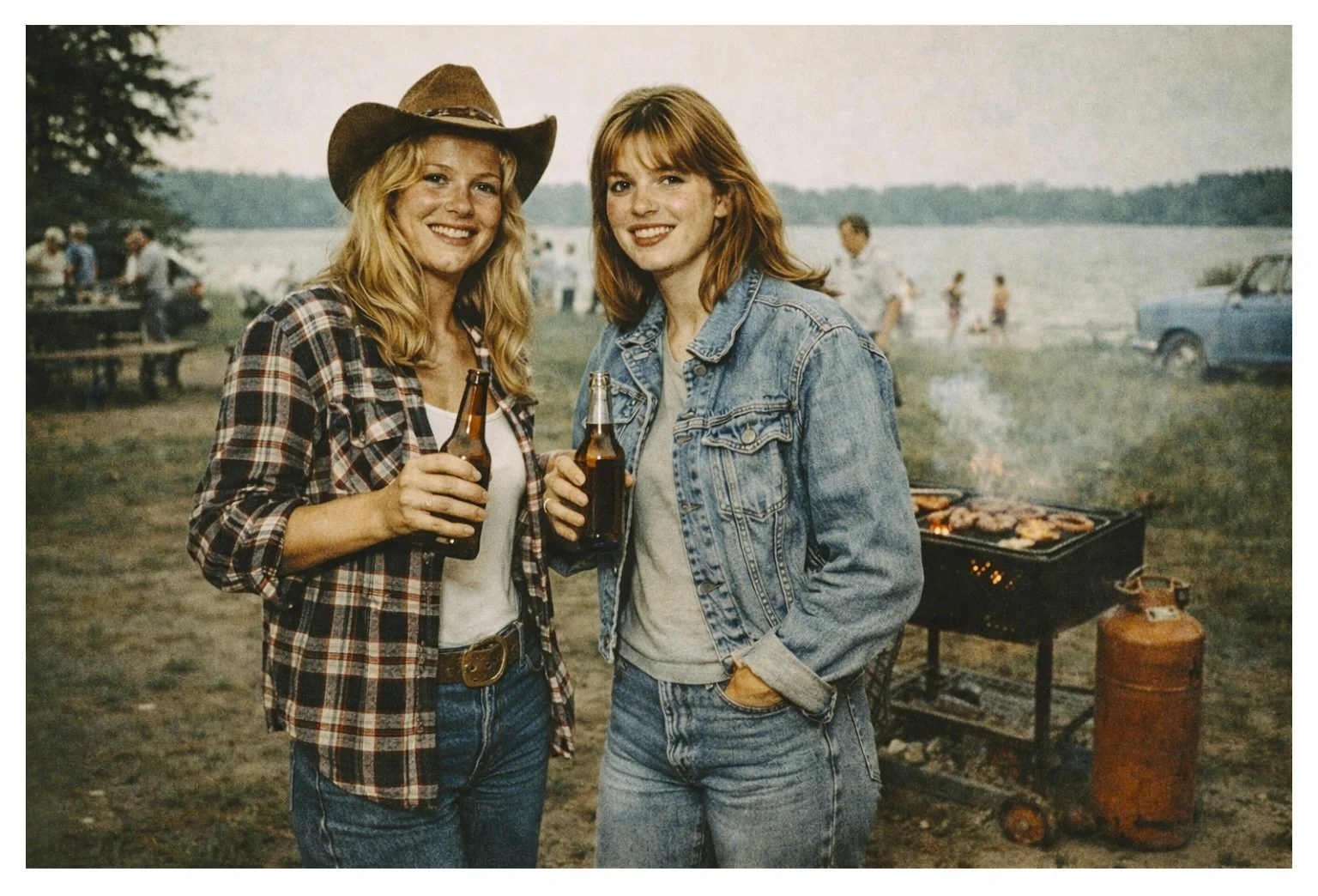
There we were: a small group of students, one slightly confused western visitor, a battered Praktica camera, and an endless Brandenburg landscape of forests, reeds, and quiet water. Someone produced beer. Someone else produced sausages. A portable grill appeared to have been summoned by ancient Brandenburg magic.
Anja stood beside the lake, sunlight catching in her hair, and looked into the camera with an amused expression.
“You should photograph the important things,” she told me.
“The lake?” I asked.
“No,” she said. “The beer, or maybe me. ”
This was, in retrospect, excellent advice.
By late afternoon, the lakeside had transformed into something between a picnic and a minor international summit. Students debated politics with the cheerful seriousness of people who knew the world was complicated, but the evening was beautiful. Someone played music from a small radio. Smoke from the grill drifted across the water.
I photographed everything.
Boots in the grass. Bottles on wooden tables. The soft orange glow of a Brandenburg sunset reflected on the lake. Anja was laughing at something one of her friends had said.
ORWO captured it all with that slightly faded color palette that makes the past look as if it had already decided to become nostalgic.
Later that evening, we returned to East Berlin.
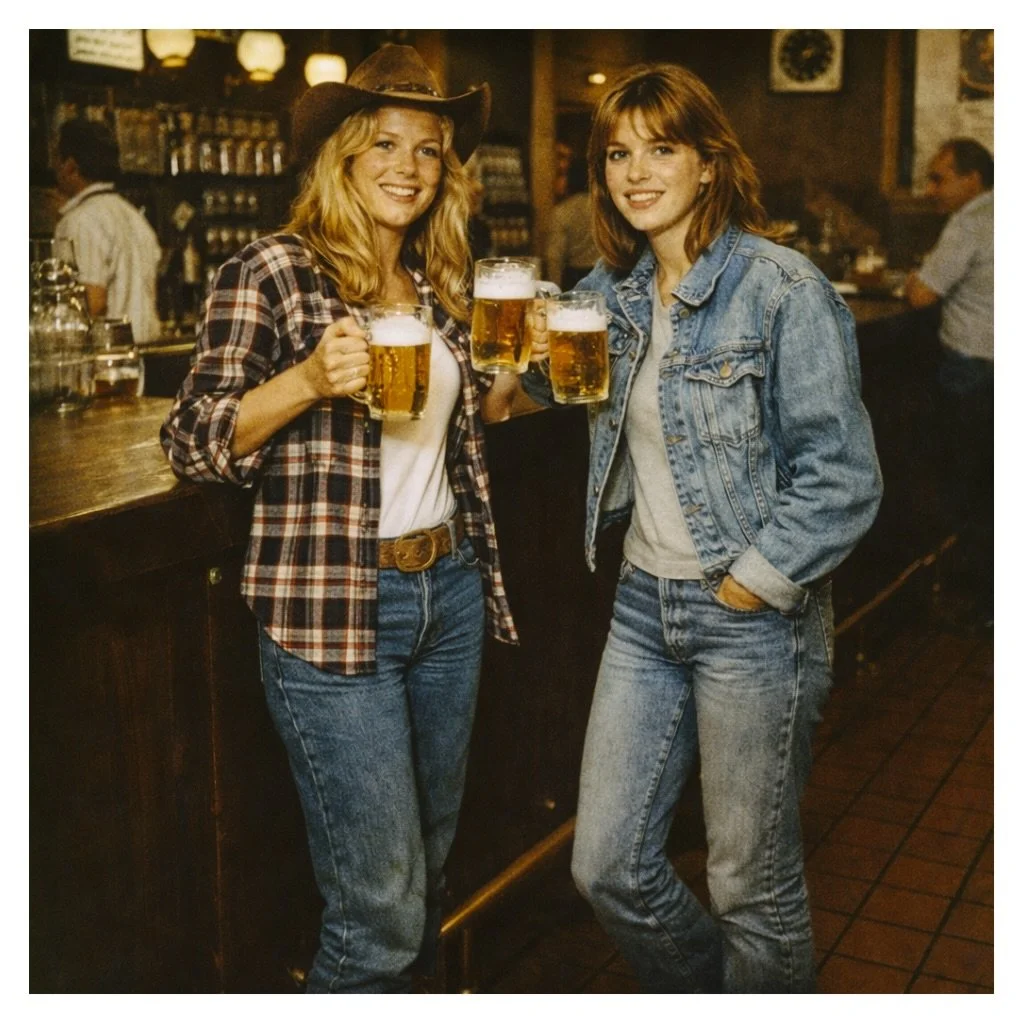
The city’s beer bars had their own rhythm. Wooden counters worn smooth by decades of elbows. Servers who moved with calm efficiency. The quiet clinking of glasses suggested socialism might have struggled with many things, but beer distribution was not among them.
Anja introduced me to a small bar near Alexanderplatz where her friends gathered.
“You will like it,” she said.
She was correct.
By the time the second round of beer arrived, Western ideas had evolved into something far more productive: stories. Stories about photography, studies, strange professors, impossible bureaucracies, and the universal mystery of why paperwork always multiplies when you least expect it.
I took photographs there too.
The ORWO film loved the warm bar light. Faces glowed. Glasses sparkled. Shadows softened.
Looking back now, those photographs contain a kind of quiet truth.
Not the official truth of reports or archives.
Just the simple reality of a summer evening in 1982: me, who accidentally became a weekend lake and Anja explorer, a group of students who knew the best places in Brandenburg, and a camera full of slightly grainy memories that still smell faintly of beer, barbecue, and warm lake water.
History tends to focus on walls, speeches, and images.
But if you ask me, the real story of that summer was much simpler.
It was a lake.
A grill.
A camera loaded with ORWO film.
And Anja from East Berlin, who insisted that the most important thing to photograph was the beer and herself.