Roots and Rüben
Roots, Rüben, and Accidental working – A Short Report from 1982
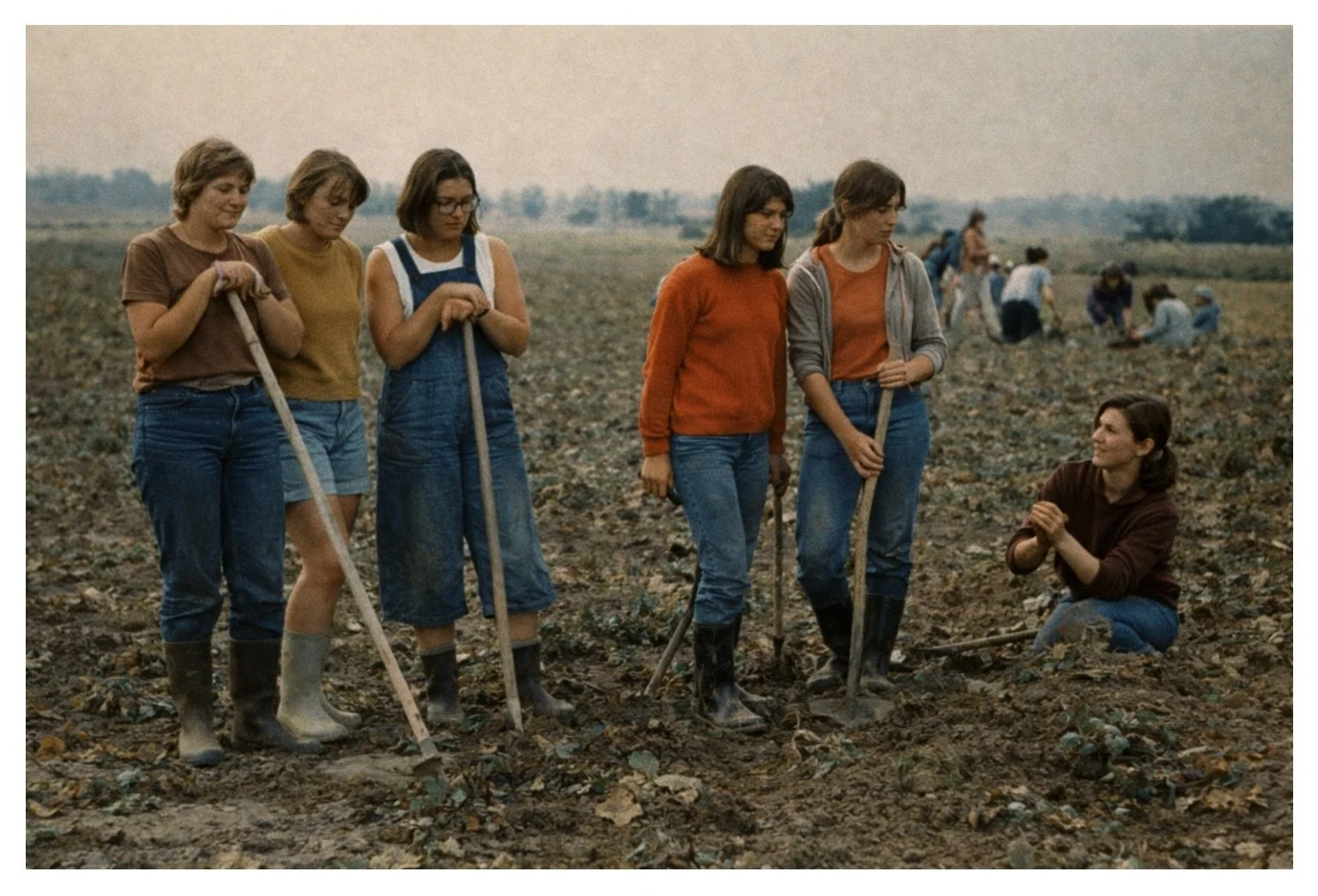
When I arrived in East Berlin in 1982 as a “kind of diplomat,” I imagined my days would involve serious conversations, sealed envelopes, and maybe the occasional dramatic look out of a rainy window. What I did not expect was spending my free time on a muddy field in Brandenburg, trying not to embarrass myself in front of a group of university students armed with hoes.
But life rarely respects expectations, especially on this side of the Wall.
I first met her—let’s call her Katrin—during one of those obligatory reception events where everyone pretends the punch is drinkable. She stood there in a corner, wearing a sweater that looked like it had survived three generations and a smile that suggested she knew exactly how absurd the whole spectacle was. Naturally, we became friends.
A few days later she invited me to visit her and her classmates during their “field study.” I had naïvely assumed this meant observing plants or discussing Marxist theories under a tree. What it actually meant, as I learned, was agricultural labor disguised as academic enrichment.
The bus to Brandenburg was a masterpiece of socialist engineering: loud, slow, and filled with people who had already accepted the futility of timetables. When Katrin’s group climbed aboard, they brought with them the distinct scent of damp earth and youthful disillusionment. They greeted her with cheers and greeted me with that diplomatic stare people reserve for foreigners they can’t quite categorize.
The field itself stretched into eternity. It had the exact color and emotional range of a gray winter morning. Katrin’s friends were lined up with their boots sunk deep into the mud, hacking away at stubborn roots as if the soil had personally insulted them.
“You can help,” Katrin said, handing me a hoe.
Diplomat or not, refusing would’ve been even more embarrassing than accepting. So I took the tool, immediately held it the wrong way, and achieved a heroic eye roll from one of her comrades.
“You’re not from here, are you?” she asked.
“Is it that obvious?”
“Yes,” she said, pointing at my shoes, which were about as field-appropriate as velvet gloves.
Still, they taught me how to get a beet out of the ground without starting an international incident. And I have to admit, there was something strangely charming about the whole thing—the mud, the miserable sky, the quiet camaraderie of people forced into the same absurd assignment.
During breaks we sat in a circle and drank coffee that tasted like it had been brewed during wartime and never refreshed. They told stories about university life: lectures on ideology, dorm rooms that somehow fit three human beings, and the perpetual hope that next year the cafeteria might improve. I shared vaguely diplomatic anecdotes that made me sound more official than I actually was.
Katrin sat next to me, elbows on her knees, still smiling that smile that made everything here feel less heavy.
“You wanted to see our field study,” she said. “Well… here it is. The glamorous academic life.”
“I’ve had worse assignments,” I replied. Which was true.
At the end of the day they were covered in mud, exhausted, and somehow still joking with each other. They waved as I headed back toward the bus, and Katrin called out:
“Come visit again! We’ll be here all week!”
I never figured out if she meant it sincerely or if it was East German irony, which tends to be delivered in a perfectly flat tone.
Either way, I returned to Berlin feeling oddly lighter. For a diplomat, I had done almost nothing diplomatic. But I’d gained something far more useful: a tiny glimpse into their world—tough, absurd, stubbornly hopeful—and a friendship that made it all feel strangely human.
Besides, anyone who can laugh while knee-deep in socialist mud deserves to be remembered.