Surreal in KL
I often claim that I am chasing light. In reality, I am usually chasing ideas that have not yet fully decided what they want to become. Sometimes those ideas behave politely. Sometimes they wait until I arrive in a fishing village in Malaysia and suddenly begin to cooperate in ways that feel slightly suspicious.
For my ongoing surreal photography project, which I try to develop in different places and environments around the world, Malaysia turned out to be one of those places where imagination seems to receive unexpected assistance. On this occasion, I also had the great advantage of working with my Malaysian model Zarah Nurul, who quietly collaborated with my imagination in a way that made the entire experiment feel surprisingly natural.
When we arrived together at the fishing village to meet her sisters, nothing initially suggested anything unusual. It looked like a completely ordinary coastal scene.
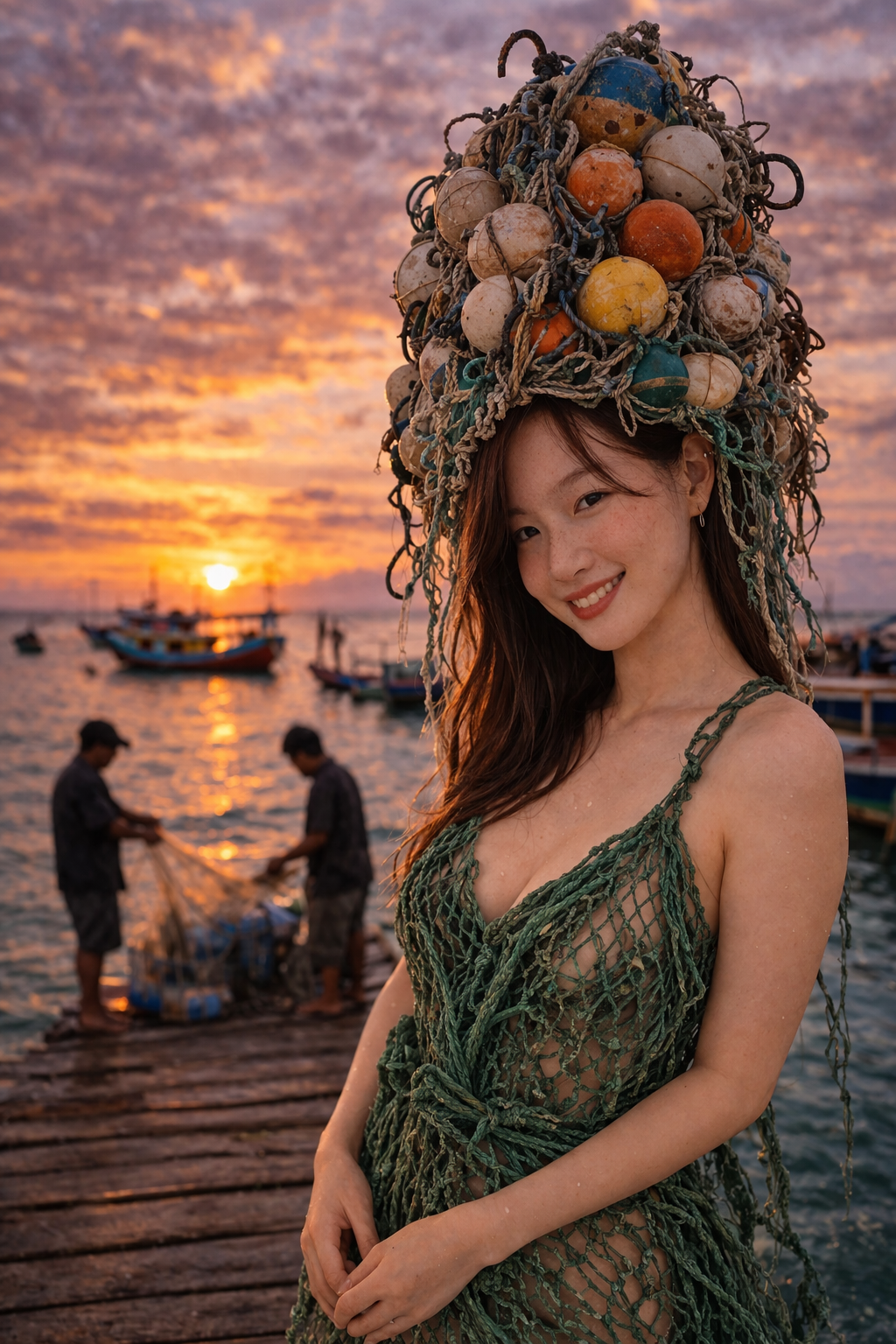
Fishermen were repairing their nets. Wooden jetties creaked in a language older than tourism brochures. Boats painted in colors that clearly came from someone who believed subtlety was unnecessary rested calmly in the water. The sea itself moved slowly, as if it had no appointments to keep and no deadlines to respect.
Malaysia does this to people.
At first, everything appears simple, almost mundane. But if you stay long enough with a camera in your hand, something slightly strange begins to happen.
While I was creating all the usual images, I was wandering along the shore looking for light, which was a very serious pursuit, and I began to notice a particular atmosphere that seemed to surround these fishing villages. It is difficult to describe directly. Not exactly a person. More like a presence that the sea itself might have invented.
The fishermen never spoke about anything unusual. They continued working. Untangling ropes. Stacking floats and preparing boats for the next journey. Yet there was a quiet rhythm in their movements that suggested they understood the ocean better than most people ever will. They worked with the water the way people work with an old friend whose moods they respect.
Somewhere between the jetty, the drifting nets, and the rising sun, the idea slowly formed.
What if there was a woman of the sea here?
Not a myth in the conventional sense. Not the romantic version that appears in children’s stories. Something far quieter and perhaps slightly stranger. A figure mov between the everyday lives of fishermen and the silent mechanics of the ocean. Someone who collects forgotten objects from the shore. Someone who gathers stories the way the tide gathers fragments.
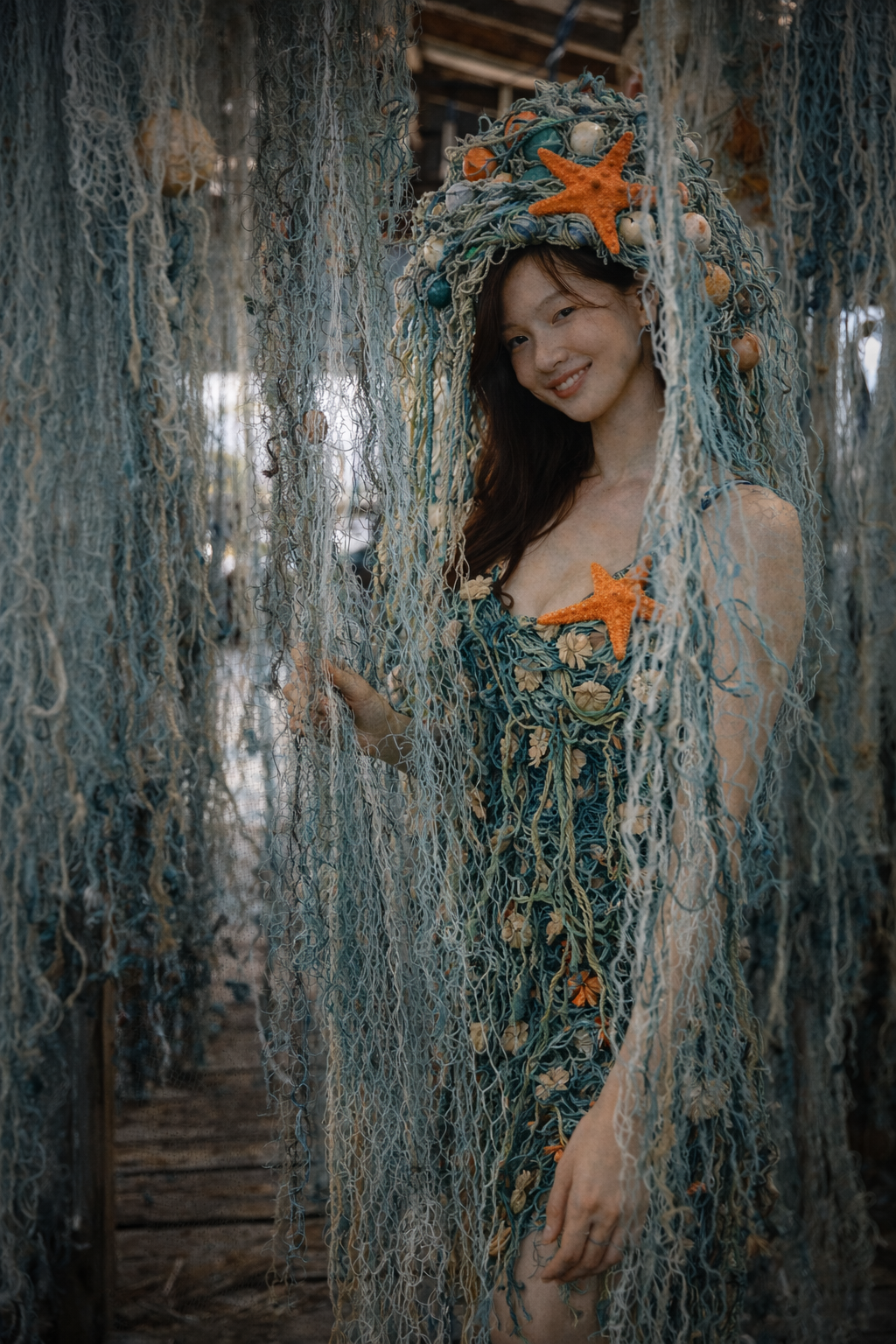
With Zarah stepping naturally into this imagined role, the idea began to take shape. She moved through the locations with a calm presence that seemed to belong there already. Nets, ropes, floats, old wood, and the endless horizon of the sea started to form a visual language around her.
In my imagination, this sea-woman became something like a wandering archivist of the coastline.
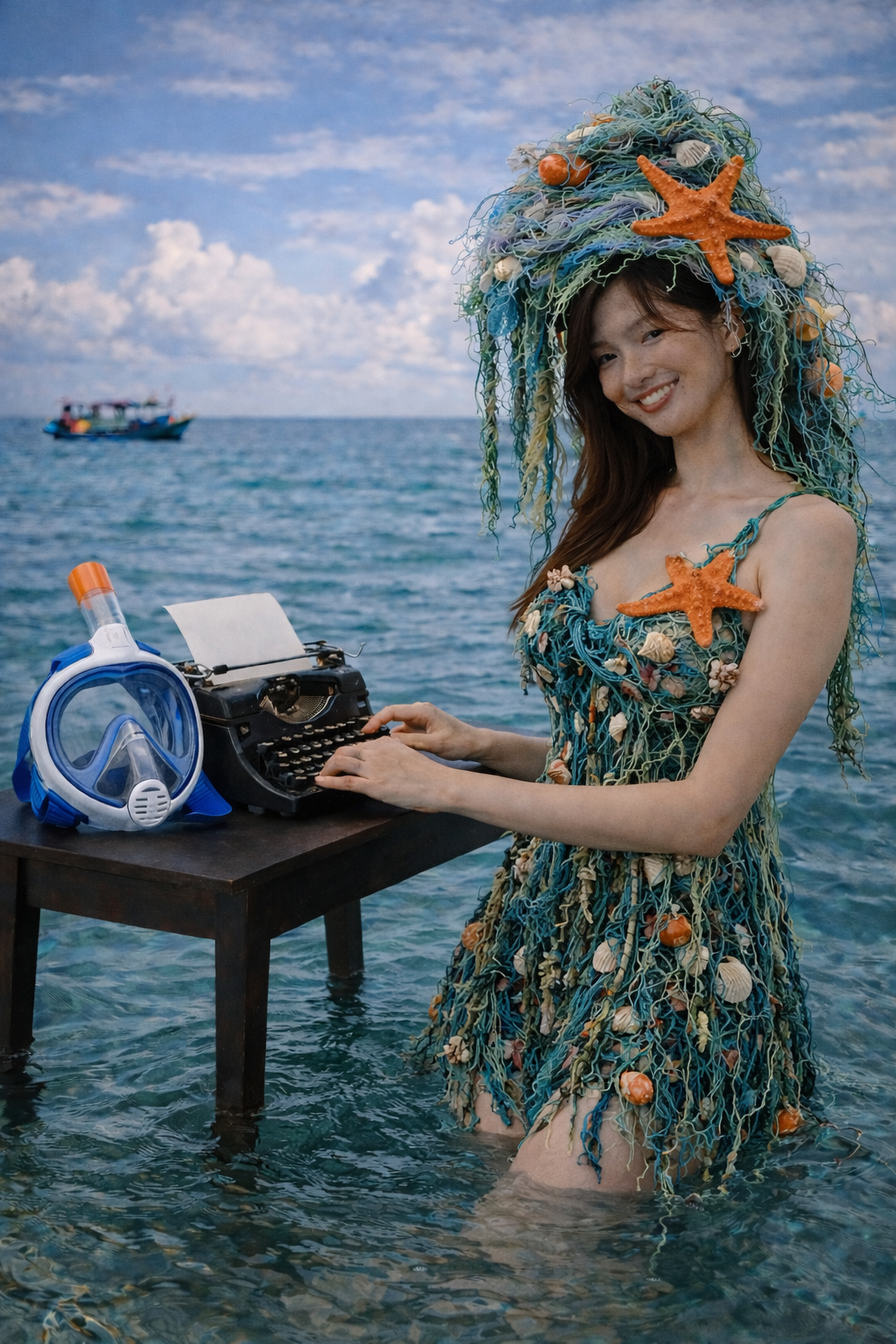
She appears at sunrise when fishermen return from the night sea. Sometimes she carries fragments of old nets tangled with buoys and ropes. Sometimes she moves through abandoned huts where nets hang from the ceiling like strange architectural curtains. At other times, she walks along the waterline where pages, objects, and lost words drift quietly through the tide.
No one ever sees her arrive.
But occasionally someone notices footprints in the sand that end exactly where the water begins.
For a surreal photography project, this coastline proved to be almost suspiciously cooperative.
Malaysia’s fishing villages offer an extraordinary combination of textures and atmospheres that exist somewhere between documentary reality and quiet dream. Weathered wood, tangled ropes, rusted hooks, floating buoys, patient fishermen, and soft sunrise light create scenes that already feel like fragments of a story waiting to be discovered.
This makes the environment ideal for exploring surreal imagery that remains grounded in real places and real people. Nothing here is artificial. The boats are real. The nets are real. The fishermen are real. Yet the narrative that slowly grows between them feels like something belonging to an unwritten myth.
And perhaps that is precisely the point.
Photography can be most interesting when it stops trying to explain everything and instead lets imagination wander freely through the scene.
Somewhere along these Malaysian shores, between nets, boats, and quiet morning tides, the imagined woman of the sea continues to appear in my frames, not as a performance, not as a staged character, but more like a moment where place, person, and imagination briefly align.
Working with Zarah Nurul in this environment felt less like directing photographs and more like discovering them together.
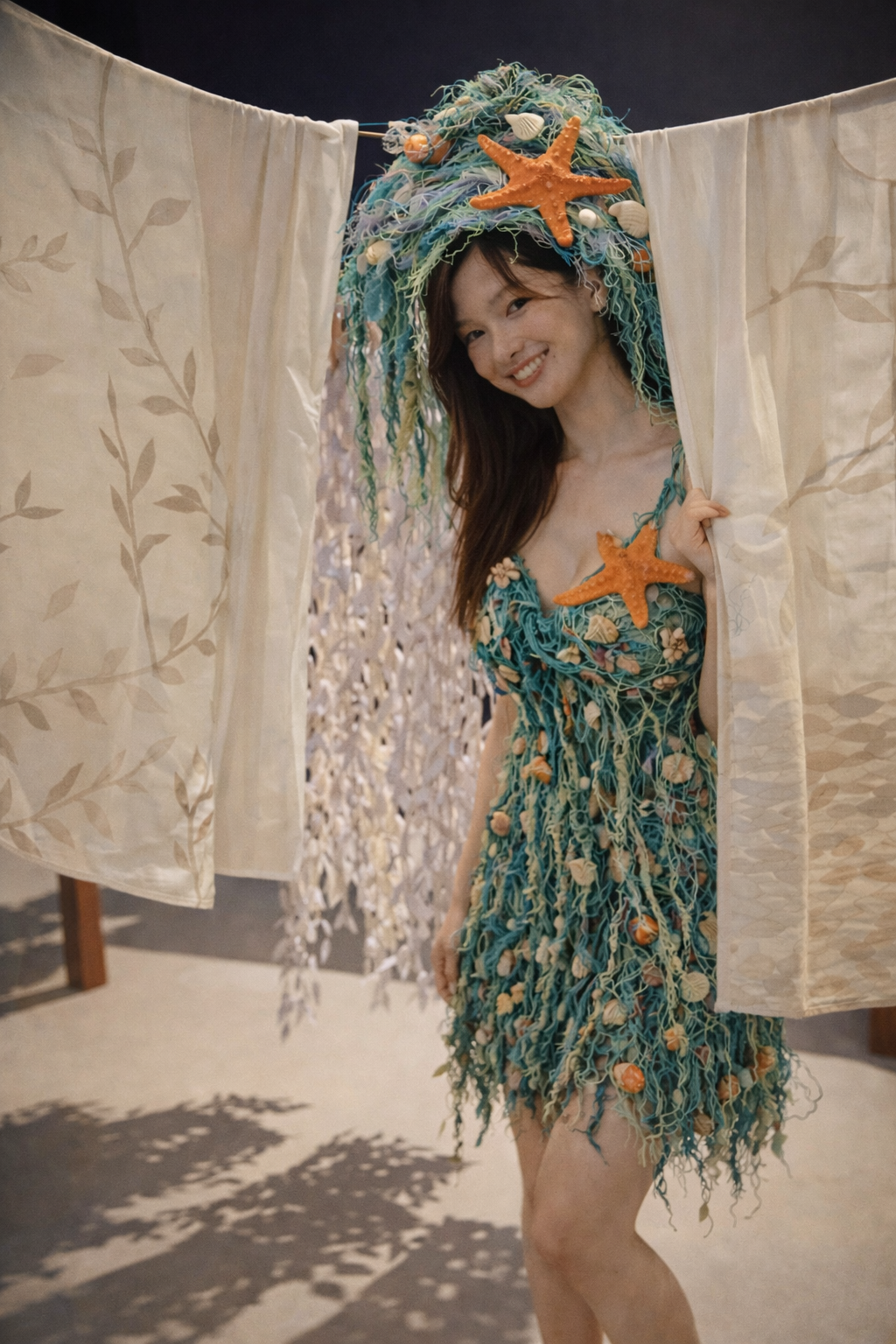
And here in Malaysia, it seems the tide of ideas is particularly generous, as my model, who performed similarly well in a gallery in KL